Image: Getty Images
THE OPERATION WAS a model of violent efficiency. Before dawn on January 3rd, American special forces seized Nicolás Maduro, Venezuela’s dictator president, and his wife from their residence, preventing them from reaching a secure bunker. They were whisked to the USS Iwo Jima, an amphibious assault ship, to face American federal indictments for narcotics trafficking and corruption. For a man who spent a decade styling himself as the indomitable heir to Hugo Chávez, the transition from presidential palace to federal defendant was breathtakingly fast.
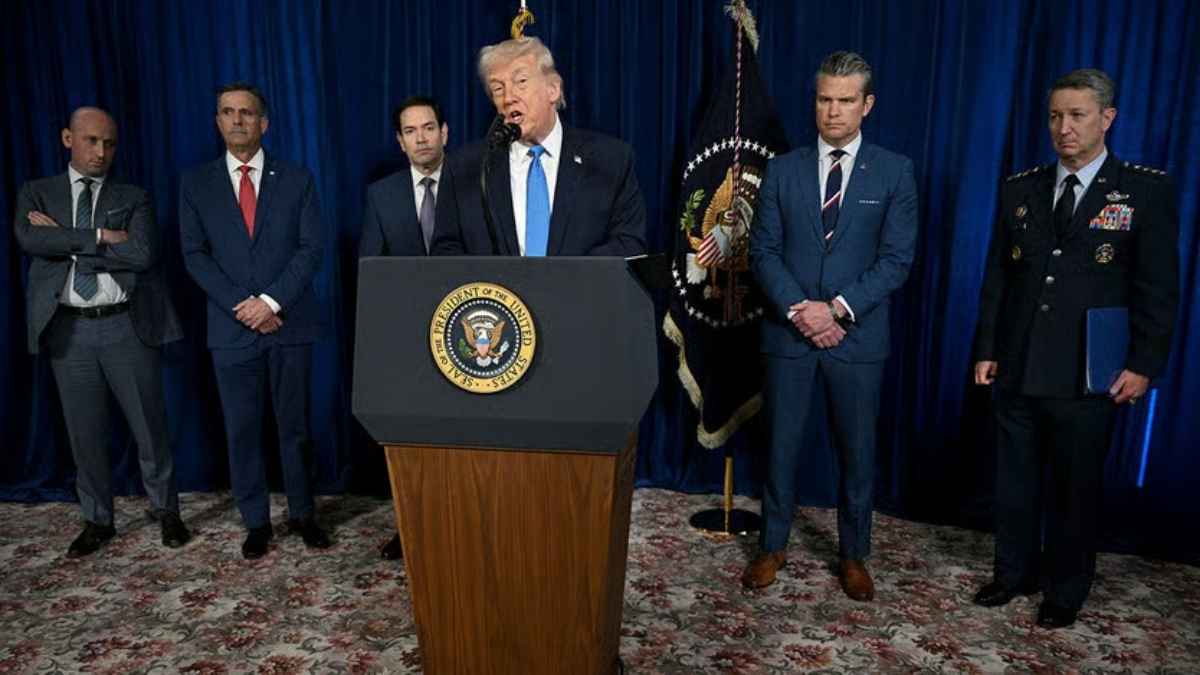
By the time the sun rose over a darkened Caracas, the capital, Donald Trump was at his private residence, Mar-a-Lago, explaining to the world that the United States would, for an indefinite period, “run Venezuela”.
The operation, involving some 150 aircraft and the precision of a Delta Force strike, has shattered the long-standing taboo against overt regime change in the Americas. It was, in the American telling, a law-enforcement rendition justified by indictments for narcotics trafficking. In reality, it looks much more like the revival of the Monroe Doctrine, albeit with a transactional, 21st-century gloss that Mr Trump has dubbed the “Donroe Doctrine”. The warning is that the Western Hemisphere is once again an American lake, and those who disturb its waters do so at their peril.
Yet capturing a president is a much simpler task than managing the country he left behind. By claiming a “guardianship” over Venezuela, Washington has assumed responsibility for a state in advanced decay. The immediate challenge is the power vacuum in Caracas. Delcy Rodríguez, the vice-president, has denounced the raid as a “kidnapping” and a violation of sovereignty, even as the Supreme Tribunal of Justice ordered her to assume the presidency. Mr Trump, however, appears to have little interest in the finer points of Venezuelan constitutional law. He has suggested that Ms Rodríguez is already cooperating with Marco Rubio, the secretary of state, saying that she “really doesn’t have a choice”.
The real goal of this intervention is not merely the disruption of drug routes or the halting of migration, though these are the public talking points. The true prize—and the thing that keeps the operation going—is oil. Venezuela sits atop 303 billion barrels of the stuff, roughly 17% of the global total. Under the mismanagement of the national oil firm, PDVSA, and the weight of sanctions, production has whimpered along at roughly a million barrels a day. Mr Trump has been explicit that the American taxpayer will be “reimbursed” through this mineral wealth. He views the oil as assets stolen from American firms like ExxonMobil and ConocoPhillips during the nationalisations of 1976 and 2007.
Reclaiming those assets will be a gargantuan task. The infrastructure of the Orinoco Belt is a graveyard of rusted pumps and neglected pipelines. Reviving production will need tens of billions of dollars in investment and years of work. Chevron, the only major American operator that maintained a toehold in the country through the Maduro years, is understandably cautious. Its executives know that while Mr Trump talks of “making money”, the legal disputes over ownership and the safety of workers in a fragmented security landscape are big risks.
The regional fallout is already turning toxic. To the south, Brazil’s Luiz Inácio Lula da Silva has condemned the breach of international law as a “step toward a world of violence”. In Bogotá, president Gustavo Petro sees the intervention as a threat to Colombian sovereignty. For the Latin American left, the prospect of American boots on the ground is a haunting return to the mid-20th century. The second-order effect may be a hardening of anti-American sentiment that outlasts the Maduro era, potentially pushing regimes in Nicaragua and Cuba into a more desperate, defensive crouch.
Within Venezuela, the risk of a messy entanglement is high. The military, the Fuerza Armada Nacional Bolivariana, is a pampered and politicised institution with deep ties to the illicit economy. If it fractures, the United States could find itself playing referee between rival militias rather than overseeing a transition. Meanwhile, the democratic opposition, led by María Corina Machado, finds itself in an awkward position. Having spent years calling for Maduro’s exit, they now find the Americans have not only done the job but have also indicated they have no immediate plans to hand over the keys. Mr Trump has already signaled he thinks Ms Machado lacks the “necessary support” to govern.
There is a certain irony in the fact that the United States, after years of trying to extricate itself from “forever wars”, has now effectively annexed the problems of a country of 28m people. The legal gap between a drug warrant and the occupation of a nation is wide enough to swallow any remaining pretense of international norms. For now, Washington has proved it can take Venezuela; the coming months will prove whether it can actually run it. American oil executives, often told they are the vanguard of this new era, should perhaps keep their suitcases packed—it is going to be a long year in the oil patch. ■