IMAGE: REUTERS
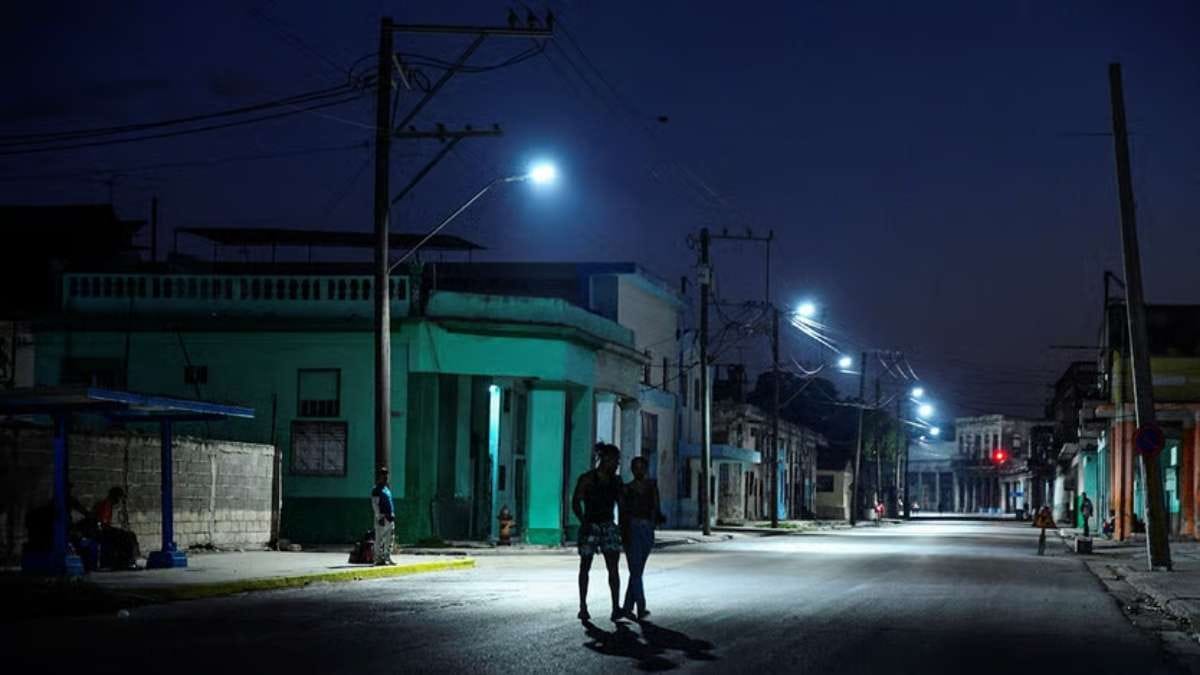
WHEN THE Soviet Union withdrew its subsidies in the early 1990s, Cuba plunged into a “Special Period” of bicycles and blackouts that still lingers as a collective trauma. Today the island is once again in deep trouble, brought on by a state that is failing to function. The arrest of Venezuela’s dictator president, Nicolás Maduro, by American forces last weekend has likely cut the last fragile lifeline keeping the Cuban state functioning. Venezuela had been sending about 35,000 barrels of oil a day to Havana, around a quarter of Cuba’s needs. With that supply gone, Cuba’s power system is failing and the lights are going out.
The numbers are as bleak as the empty shop windows in Old Havana, the historic heart of the capital, Havana. The economy contracted by over 4% in 2025, and though the government officially forecasts an optimistic 1% growth for 2026, few believe it. Since 2019 GDP has shrunk by 11%. But even that fails to capture the physical decay of a nation. Agricultural output and mining have collapsed by half over five years. The sugar industry, once the proud “engine” of the 1959 Cuban Revolution (when Fidel Castro and his allies overthrew the US-backed dictator Fulgencio Batista and established a socialist state), is now a ghost; the 2025 harvest barely scraped 150,000 tons, the lowest since the 19th-century war of independence. Once the world’s sugar bowl, Cuba must now import the stuff to sweeten its own coffee.
Also read: The capture of Nicolás Maduro and the birth of the “Donroe Doctrine”
Tourism, the intended saviour, is similarly bedridden. While the rest of the Caribbean hums with post-pandemic energy, Cuba’s arrivals fell by 20% in 2025 compared with the previous year. It is a vicious cycle: blackouts and food shortages deter travellers, whose absence further starves the state of the hard currency needed to buy fuel and food. Even the hotel generators, once a reliable buffer for the wealthy visitor, are running dry.
That economic unraveling has triggered a demographic exodus of historic proportions. Since 2020 nearly a quarter of the population has left the island. This is a catastrophic hollowing-out of human capital. The young, the educated as well as the entrepreneurial are voting with their feet, leaving behind an ageing population that the state can no longer afford to support. The loss of the workforce creates a feedback loop: as the most productive citizens leave, the prospects for a domestic recovery dim further, in turn encouraging more people to seek a future elsewhere.
Desperation has forced a rare admission of reality from the Central Bank. On January 5th it introduced a new daily “managed floating” exchange rate, effectively acknowledging the worthlessness of the official peg. Launched at 410 pesos to the dollar, it is a desperate attempt to bridge the gap with the informal street market, where the dollar is king and the peso a mere nuisance. But for the 90% of Cubans living in what observers now describe as extreme poverty, a more “realistic” exchange rate does not put meat on the table when seven in ten report skipping at least one meal a day. Meanwhile inflation, loitering between 20% and 30%, has gutted the real value of state wages. In this fractured market, those receiving remittances from abroad can feed themselves; those who do not are left scavenging among bare shelves and increasingly absent state rations.
The knock-on effects of Venezuela’s collapse will be savage. For years Cuba, which is under American sanctions, swapped doctors and security support for oil, a deal that dodged the global financial system. That arrangement is now ending. With the United States effectively in charge of Venezuelan oil policy, the flow is being redirected. Mexico, once a friendly fallback, has slashed its exports to Cuba by 73% after a visit from America’s secretary of state, Marco Rubio. Russia is the only backer with the muscle to step in, but it is tied up elsewhere and growing tired of Cuba’s unpaid debts.
President Miguel Díaz-Canel is boxed in by his own choices. To stay in power, the regime must pick between two bad options: a “China-style” opening to the private sector that would dilute Communist Party control, or slide towards state failure and risk unrest at home. For now, it has chosen to do little. Joaquín Alonso, the economy minister, calls this “overcoming with our own efforts”. For most Cubans, it rings hollow, for they have nothing left to give.
The revolution’s vaunted “resistance” has become its biggest weakness. By refusing meaningful reform when the economy still had room to breathe, the leadership has left the country without any buffers to weather a storm it always knew was coming. With the United States now focused intently on Havana and betting that Venezuela’s collapse will hasten the end of Cuba’s regime, ordinary Cubans are left to feel their way through worsening hardship. Policymakers and foreign diplomats should pay close attention in the weeks ahead: Cuba’s social contract is being torn to pieces. ■