
IMAGE VIA FACEBOOK
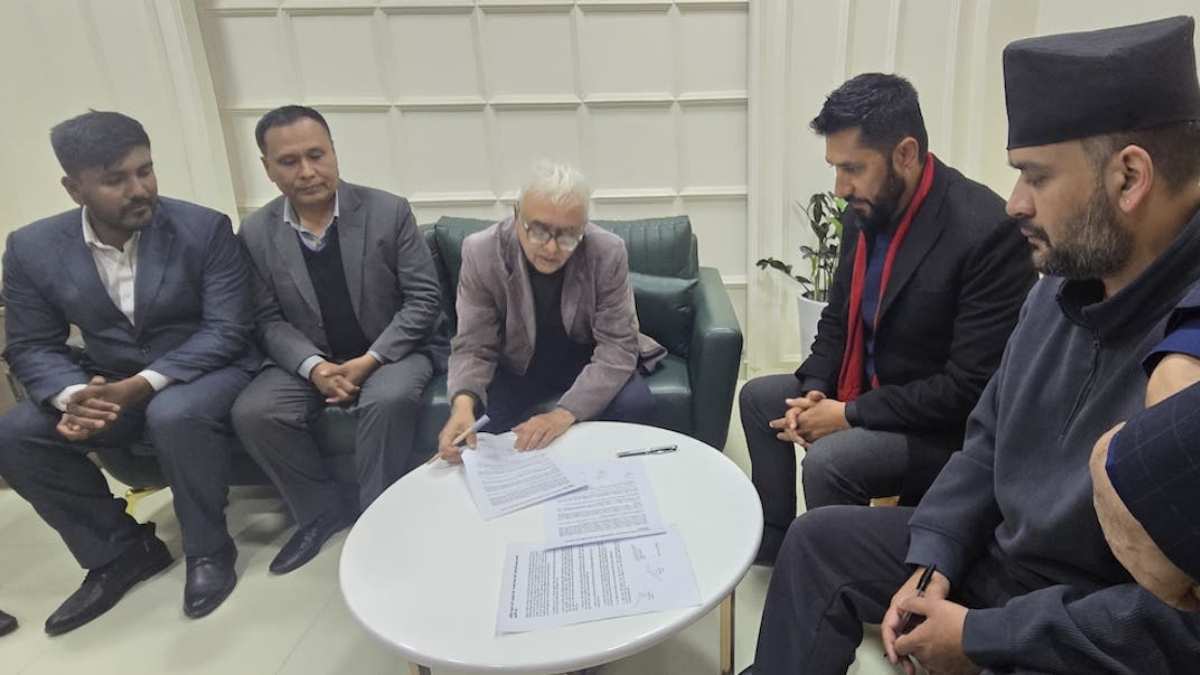
ON DECEMBER 29TH the mood in Kathmandu felt like the eve of a long-awaited revolution. In the space of two days, three of the most recognisable faces in Nepal—a TV-host-turned-populist; a technocrat famed for ending the country’s chronic power cuts; and a rapper-turned-mayor—appeared to have finally solved the puzzle of alternative politics. Rabi Lamichhane of the Rastriya Swatantra Party (RSP), Kulman Ghising of the newly minted Ujyalo Nepal Party (UNP) and Balendra Shah, the enigmatic mayor of the capital, had signed a unity agreement. To their supporters, it was a dream ticket: a blend of populist fire, administrative competence and youthful charisma. To the established “syndicate” of ageing revolutionary leaders who have run Nepal for decades, it looked like a genuine threat.
The euphoria lasted exactly twelve days. By January 10th, barring reclusive Mr Shah’s camp, the alliance between the RSP and the UNP had dissolved into a flurry of recriminations and failed last-ditch negotiations. The collapse was so fast that it left the Election Commission’s ink barely dry on the proportional-representation lists that had triggered the union in the first place. This suggests a total breakdown of trust, exposing an ugly truth about the “new” politics of the Himalayas. The very traits that make those figures attractive to a frustrated public—their outsider status and personal brands—are the same traits that make them almost impossible to organise into a coherent governing force.
The cause of the divorce was the most ancient of political grievances: the division of spoils. Under the terms of the merger, Mr Ghising was to dissolve his party and become the first-ranking vice-chair of the RSP. However, when the RSP submitted its list for proportional representation (PR) seats, the UNP side found itself pushed to the margins. Of the 18 slots verbally promised to Mr Ghising’s faction, only 14 appeared on the final filing. Worse still, only six of those names were placed high enough on the list to have any realistic chance of entering parliament. In the cold arithmetic of Nepali elections, the UNP leaders felt they were being invited not to a wedding, but to their own funeral.
Trust was further poisoned by the composition of the RSP’s broader list. The party, which rose to prominence by attacking the cronyism and nepotism of the old guard, found itself accused of the same sins. The list included wealthy, well-connected figures sheltered under “inclusive” categories meant for the marginalised. As public pressure mounted, several nominees withdrew in shame. For Mr Ghising and his allies, the list was proof that real power remained tightly held by a small core of RSP loyalists. The “new politics” was beginning to look suspiciously like the old bargaining, only with more expensive suits and better social-media management.
Beneath the squabble over seats lay a fundamental philosophical incompatibility that the leaders had chosen to ignore in their rush to meet the election deadline. The UNP had built its identity on explicit commitments to federalism and secularism, catering to the identity-based grievances that still simmer in the plains and the hills. The RSP, by contrast, has always been more ambiguous, preferring a brand of “post-ideological” efficiency that often codes as conservative or nationalist. Figures like Mahendra Lawati and Dakendra Singh Thegim, both influential in the UNP’s identity-focused wing, recoiled at a merger that would have forced them to drop their core demands. They accused Mr Ghising of dissolving the party without internal consent, a move that suggested the technocrat’s administrative brilliance did not necessarily translate to democratic party-building.
The most fascinating, if disruptive, element in this short-lived experiment was the “Balen factor”. Balendra Shah, known simply as Balen, remains the most popular man in Kathmandu, yet he operates outside the formal structures of any party. He was the silent pivot of the negotiations, acting as the de facto prime-ministerial face of the alliance. Mr Lamichhane had initially offered the top job to Mr Ghising; after he declined, it was offered to Balen. But the mayor is not a man for committee work. He reportedly insisted on being the sole candidate for the premiership and sought a five-year governing mandate before a single vote had been cast. Mr Ghising, who considers himself senior by age and ministerial record, found the idea of accepting third-rank status behind a media personality and a mayor unpalatable.
This was not a merger of programmes or a union of cadres. It was a temporary ceasefire between competing ambitions. The alliance lacked a shared system for resolving conflicts or a democratic mechanism for making decisions. Instead everything was negotiated in private rooms between three men who have each grown accustomed to being the smartest person in the room. In the absence of institutional guardrails, the merger effectively died the moment negotiations shifted from the abstract hope of “change” to the gritty reality of a takeover.
Their alliance was marketed as a clean break from the “seat-sharing” and “power-for-position” politics that have defined the Nepali Congress and the Maoists for a generation. Yet it collapsed for precisely those reasons. It turns out that protest energy is excellent for uniting people against an establishment, but it struggles to unite them with each other. Competence without institutions becomes mere personal authority, and rage without rules inevitably descends into bargaining.
For the voters of Nepal, the episode is a sobering reminder that personality is not a substitute for politics. The system did not defeat the alliance; the alliance proved that it had already internalised the system’s worst habits. Mr Lamichhane and Mr Ghising have gone their separate ways, leaving the door “open for future cooperation”, a phrase that in Kathmandu usually means the opposite. As the election season approaches, the old-guard leaders in their villas will be breathing a sigh of relief. They have long known that in Nepal, the only thing more dangerous than an enemy is a partner who thinks they are a king. ■




