IMAGE: CHIP SOMODEVILLA/GETTY IMAGES
FOR MUCH of the past year the attacks from the White House barely seemed to land. Donald Trump complained that America’s interest rates were too high; that the Federal Reserve, the central bank, was strangling growth; that Jerome Powell, the Fed Chair, was not up to the job. Mr Powell mostly kept quiet. Why argue? In his view, central-bank independence was better guarded by restraint than by fighting back.
That approach collapsed over the weekend of January 11th–12th. In a short but scathing video statement, Mr Powell accused the Trump administration of using criminal law to intimidate the Fed. The Department of Justice, he disclosed, had issued grand-jury subpoenas to the central bank. The ostensible subject was a spiralling renovation of the Fed’s headquarters in Washington. The real grievance, he suggested, lay elsewhere. The threat of criminal charges, Mr Powell said, flowed from the Fed’s refusal to set interest rates according to the president’s wishes.
No sitting Fed chair has ever spoken like this. None has faced the threat of criminal investigation while still in the job. Mr Powell sounded like someone who concluded that keeping quiet had become a liability. Silence, after all, works only when both sides accept the same rules.
The White House replied in its usual way. Mr Trump told NBC News that he knew nothing about the investigation. Moments later, he went back on the attack. Mr Powell, he said, was “certainly not very good at the Fed” and “not very good at building buildings”. Karoline Leavitt, his press secretary, said the Justice Department was “in charge”, suggested there might be criminal conduct and repeated the claim that Mr Powell was failing at his job.
At the centre of the quarrel sits the oldest of economic arguments: how high interest rates should be. Mr Trump has wanted them cut hard and cut fast. Last July when rates sat at 4.25–4.5%, he said they should be three percentage points lower. The Fed has since slashed them by 0.75 points, to 3.5–3.75%. That has not satisfied him. He has talked of rates near 1%, a level normally reserved for recessions or emergencies.
His arguments change depending on the audience. He points to rising share prices as evidence that rates are too high, even though strong markets usually signal the opposite. The political motive, however, is that lower mortgage payments win votes. Cheaper borrowing lessens the cost of America’s growing public debt. And a short-term boost in growth just before midterm elections this year is politically convenient.
Mr Powell’s caution rests on harder facts. The economy is running hot: output grew at an annualised 4.3% in the third quarter of 2025. The Atlanta Fed’s estimate for the fourth kissed 5.1%, skewed by trade quirks but still well above the economy’s normal pace. The labour market has softened slightly yet unemployment is historically low. Inflation by contrast refuses to fall to the Fed’s 2% target. Tariffs imposed by Mr Trump have yanked up prices. Tax cuts passed last summer promise to add more heat in 2026. In that context, deep rate cuts would be hard to defend without sparking a fresh bout of inflation or shaking financial markets.
Inside the Fed, debate is vigorous but contained. Some governors push for faster rate cuts; others question whether any easing is warranted. One stands out: Stephen Miran, Mr Trump’s sole second-term appointee, has consistently voted for hefty half-point reductions. Colleagues see his position as driven more by White House pressure than by economic evidence.
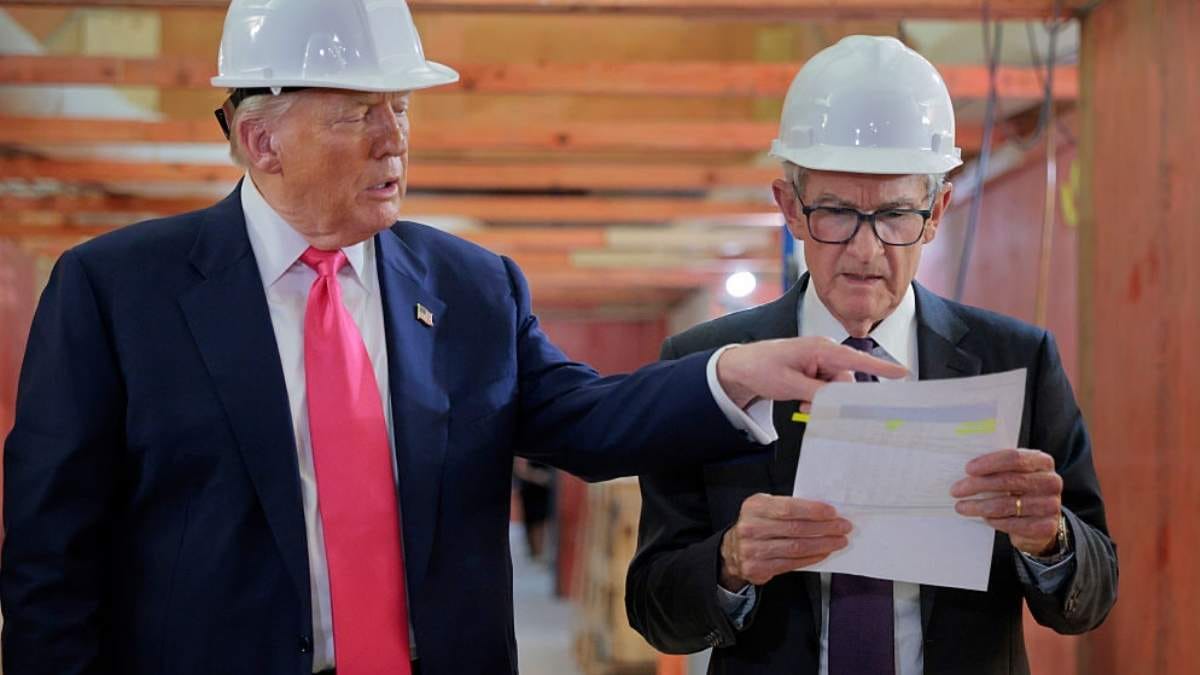
The legal pretext for the current showdown between Mr Trump and Mr Powell is a building site. The Fed’s headquarters renovation, started in 2022, is about $700m over budget, with total costs now projected at $2.5bn and completion not expected until 2027. Mr Trump seized on the overruns. He toured the site last July, painted Mr Powell as incompetent and hinted at wrongdoing. Cost overruns are common in huge public projects—his own White House renovations ran over, too. But lawyers point out that “cause” is the only legal basis for firing a Fed chair, and what counts as cause has never been tested in court. A bloated budget, recast as misconduct, provides a convenient excuse.
That the Justice Department would escalate to subpoenas changed everything. Mr Powell, trained as a lawyer, spent the weekend with senior staff and his new team at Williams & Connolly, a top Washington firm. Personal attacks could be ignored. A criminal investigation could not. Maurice Obstfeld, a former IMF chief economist, calls it the “nuclear option”. Once that line is crossed, staying silent starts to look like giving in.
Markets took note without losing their nerve. Equity futures dipped by about half a percent. Bonds barely moved. Gold rose more than 1%, to strike record highs; silver jumped almost 4%. The dollar softened. It was a classic hedge against institutional erosion, meaning investors appear to be watching for the next move rather than fleeing for the exits.
That next move may concern Mr Powell himself. His term as chair ends in May, though he remains a governor until January 2028. Chairs usually leave both posts together. That convention now looks uncertain. Staying on as a governor would let Mr Powell slow Mr Trump’s efforts to remake the board. Fed insiders believe the investigation makes an early departure unlikely. David Wilcox, a former senior official, says the chance of Mr Powell leaving in May has “gone to approximately zero”. Leaving under a cloud would hand the White House a victory in intimidation.
Mr Trump has left no doubt about what he wants. Potential successors like Kevin Hassett, a close adviser to Mr Trump, and Kevin Warsh, a former Fed governor appointed by George W. Bush, are seen as more compliant. On Truth Social, his social-media company, he declared: “anybody that disagrees with me will never be the Fed Chairman.” In his view independence comes with strings attached.
The fight is already spilling into the courts. The administration has also targeted Lisa Cook, a Fed governor, accusing her of mortgage fraud. She denies it: the Supreme Court will hear the case on January 21st. How the justices define “cause” could determine Mr Powell’s fate as well. On Capitol Hill response has been unusually bipartisan. Republican senators Thom Tillis and Lisa Murkowski warned against coercion; Kevin Cramer raised similar concerns. Democrats have been scathier: Elizabeth Warren says the president is openly weaponising the Justice Department.
Abroad, the alarm bells are louder still. The governor of the Banque de France has publicly backed Mr Powell. All living former Fed chairs, from Alan Greenspan to Janet Yellen, have issued a joint statement alongside former treasury secretaries spanning both parties. Their warning is that countries that politicise monetary policy begin to look like emerging markets with brittle institutions. And that inflation and dysfunction tend to follow.
For central bankers elsewhere, the lesson is ugly: legal protection means little if intimidation is used instead. Staying quiet may delay a fight but it does not guarantee safety. True credibility can require risking your job and your reputation.
For America this is about more than the next rate cut. The country that issues the world’s reserve currency is testing whether expert-led policy can survive a president’s personal whims. Markets have stayed calm. They may not even have to panic. Sometimes the harm arrives stealthily, step by step. ■