IMAGE: ONLINE KHABAR
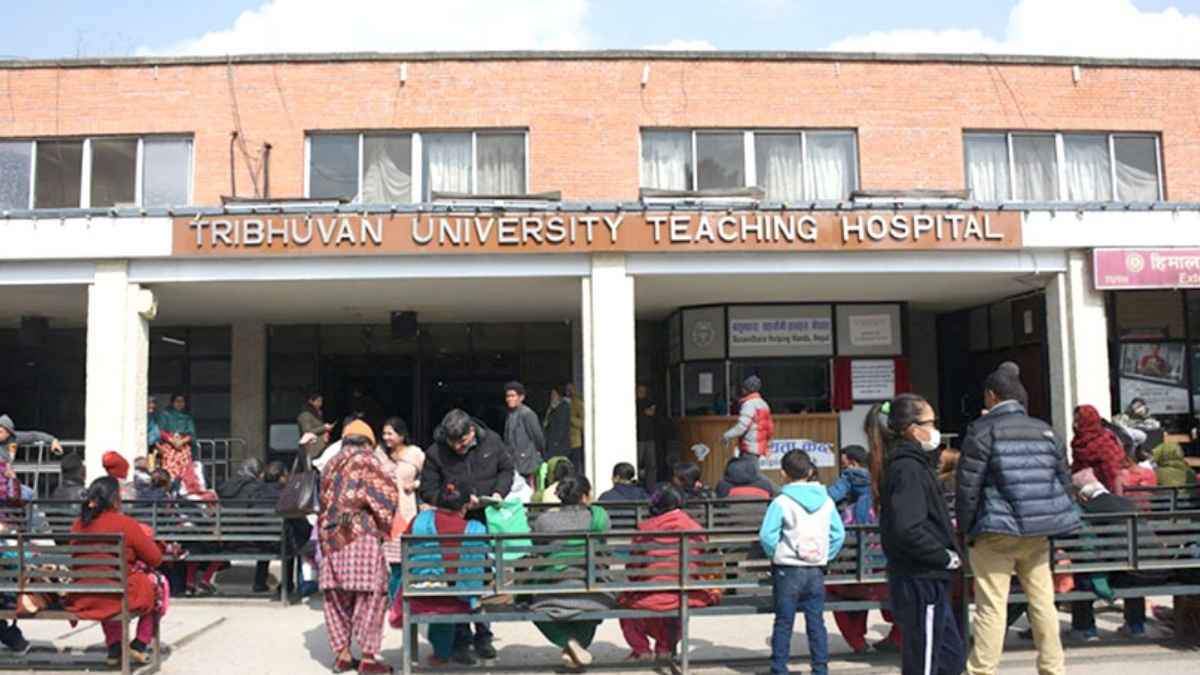
OUTSIDE KATHMANDU’S teaching hospital, patients queue with the patience of people who have learnt not to expect much. Inside, accountants are doing a different kind of triage: deciding which bills can wait. On January 15th Tribhuvan University Teaching Hospital plans to suspend all services under the government’s health-insurance scheme. It is owed some Rs400m. The state has not paid. Doctors still show up and patients still arrive. Yet the machinery is grinding to a halt.
Nepal’s National Health Insurance Program, conceived a decade ago as a pillar of social security, is insolvent. More than 10m citizens are enrolled. Some 510 hospitals across the country are owed more than Rs10bn. The problem is this: revenues from premiums and government subsidies fall dramatically short of the clinical liabilities the Health Insurance Board has promised to cover. Every year the programme spends almost double what it takes in. The result is a growing debt snowball that has left the board with empty coffers.
The scheme’s ambitions were always grand. Piloted in 2016 in three districts, expanded nationally by 2021, it sought to combine small premiums with generous benefits. Coverage for a family of five now tops Rs100,000; for critical illness, Rs200,000. The theory was sound: pool risk; protect the poor; and lessen catastrophic out-of-pocket spending. In truth patients complain about the quality of designated clinics; many abandon the programme altogether. Hospitals complain about delayed reimbursements and rejected claims. Enrollment grows; trust sags.
The financial mechanics are brutal. Member premiums bring in some Rs3.5bn a year. Federal subsidies add Rs10bn. Clinical claims consume roughly Rs24bn. The shortfall, more than Rs10bn, is unpaid and accumulating. The government’s allocation for this fiscal year has already vanished, entirely swallowed by previous debts. The Ministry of Finance refuses to release more funds, blaming fiscal constraints. Hospitals are left to choose between financial survival and the public good.
At Tribhuvan, the choice is no longer theoretical. The hospital reports that half of submitted claims are rejected—often on technicalities. Doctors subsidise the scheme from their own budgets, which in turn leaves suppliers unpaid. B.P. Koirala Institute of Health Sciences and Bayalpata Hospital face similar dilemmas. In remote provinces, patients are turned away or forced to pay fees they cannot afford. For rural Nepalis, insurance was meant to be a lifeline. It is now a mirage.
The crisis has uglier roots than cash flow. The Health Insurance Board is swamped by 9m unprocessed claims. Its manual review process, slow and error-prone, rejects 20–27% of submissions. Hospitals fight over the “Facility Bag”—pre-priced packages that tend to undervalue actual costs. Doctors fret over political interference and accusations of fraud. Trust is scarce, and so is innovation. Even small reforms, such as digitisation or AI-driven claim verification, arrive too late to stop the bleeding.
The government’s proposed remedy—the Paudel Action Plan—is bold, though its future is now uncertain. It would make health insurance mandatory, funded by payroll deductions of 1–2%, unify fragmented schemes, raise benefits for critical illnesses and integrate AI into claims processing. In theory these measures could stabilise the system. In practice the board first needs to clear the existing debt. Without immediate liquidity, hospitals will continue to pull out. A sustainable funding base cannot coexist with unpaid bills. The plan’s success depends moreover on execution—and the political will to see it through.
The consequences of failure are painful. Nepal already suffers high out-of-pocket spending; the collapse of the NHIP would push millions back into medical poverty. Urban hospitals would ration services. Rural clinics would close or charge what locals cannot pay. The political fallout could be quick: protests, strikes and further destabilisation. Globally, Nepal’s health system would stand as a cautionary tale of ambition outpacing capacity.
Nepal’s health-insurance crisis is, at its core, a story of promises made and promises broken. It began with optimism: a social programme intended to protect the poor, supported by subsidies and premiums. It ends with a simple problem the state cannot solve. Patients wait and hospitals count losses. The government debates reform. And 10m citizens are left wondering whether coverage was ever real. The queues outside Kathmandu’s teaching hospital may be patient, but patience has a limit. ■