
All along the watchtower | DAMAK
THE VIEW FROM the eighteenth floor of the Damak Business Complex is meant to be a vision of the future. Rising a hundred metres above the flat, fertile plains of eastern Nepal, the concrete spire—locally dubbed the Damak View Tower—was intended by its patron, Khadga Prasad Sharma Oli, to be a lighthouse of Himalayan modernity. Instead it has become a lightning rod. In September last year, as a digital-native generation took to the streets of Kathmandu and beyond, the tower was set ablaze. The arson was a visceral rejection of a political style that prefers grand monuments to functioning taps. It is here, in the ancestral and electoral backyard of Mr Oli, that Balendra Shah, the rapper-turned-mayor of Kathmandu, reportedly intends to stake his claim for the premiership in the general election of March 2026.
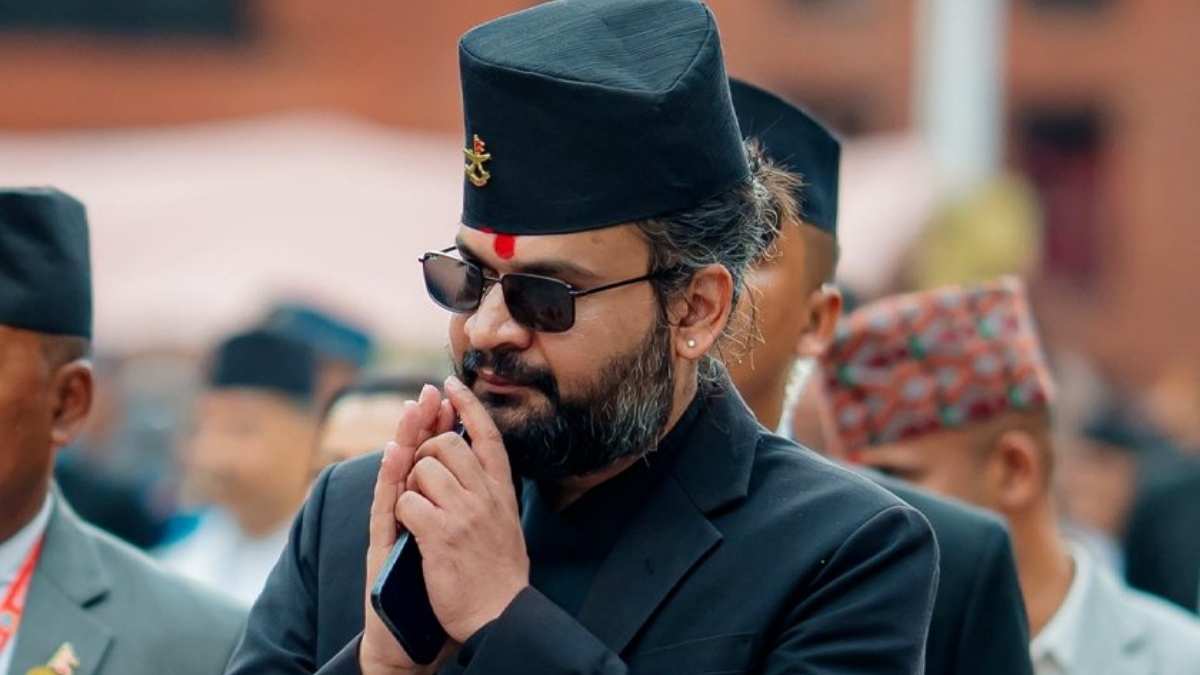
Mr Shah, known to all as Balen, is a man who understands the power of a spectacle. In Kathmandu he has built a political brand on the back of demolished illegal structures and live-streamed municipal meetings. He is a structural engineer by training and a populist by instinct. His decision to challenge Mr Oli in Jhapa-5 is a gamble of Shakespearean proportions. To the youth who stormed the federal parliament last year, Balen is the technocratic saviour. To the grey-bearded stalwarts of the Communist Party of Nepal (Unified Marxist-Leninist), or UML, he is a metropolitan upstart who does not understand the red soil of the Jhapali heartland.
Jhapa-5 is more than a constituency: it is the crucible of the modern Nepali left. The history of the region is written in the blood of the 1969 Jhapa Rebellion, a peasant uprising that sought to replicate the Naxalite movements across the border in India. A young Mr Oli was a product of that radicalism. He spent 14 years in prison for his troubles, emerging as the only leader of that era to maintain an iron grip on the party machine. In the decades since, he has transformed Jhapa-5 into a fortress of patronage. The UML’s dominance here is ideological, true, but it is also institutional. The party is the primary employer, the social safety net as well as the arbiter of local disputes.
The numbers show a stronghold that is ageing, though it continues to hold. In 2017, during the height of the “Left Alliance” euphoria, Mr Oli swept the district. He secured 57,139 votes, nearly double that of his closest rival from the Nepali Congress. By 2022 the tide began to recede. His vote count dipped to 52,319, and his share of the pie fell to roughly 55%. More tellingly, a new actor entered the stage. The Rastriya Swatantra Party (RSP), a fledgling outfit of urban reformers, grabbed 12.5% of the vote. It was a modest beginning, but it signalled that the UML’s monopoly on the Jhapali imagination was beginning to crack.
The catalyst for the current volatility was the catastrophic decision by the Oli administration last year to ban twenty-six social media applications. The ban was ostensibly to preserve “social harmony”, but it felt more like an elderly elite trying to pull the plug on a conversation they could no longer control. For Nepal’s youth, who are more likely to find work via a WhatsApp group than a party local committee, the ban was an existential threat. The ensuing “Gen Z” uprising led to 19 deaths on its first day and forced Mr Oli from office. The interim government of Sushila Karki, the former Chief Justice, now presides over a country that is demographically unrecognisable from the one that elected the old guard.
There are now 18.9m eligible voters in Nepal. Nearly a million of them have joined the rolls since 2022. These are voters who do not remember the civil war and feel no debt to the leaders of the 1990 movement. They are the “digital liquidity” that Balen hopes to tap. His alliance with Rabi Lamichhane’s RSP is an attempt to merge his executive record in the capital with a national party structure. Mr Lamichhane, a former television host who was recently released on bail following a cooperative fraud investigation, provides the organizational “Bell”—the RSP’s electoral symbol—while Balen provides the face of a potential prime minister.
Yet the mayor’s path is blocked by the very geography he seeks to conquer. Jhapa-5 is not Kathmandu. In the capital, an independent candidate can win through a surge of urban frustration. In the rural reaches of Kamal Rural Municipality and Gauradaha, elections are won through the “ground game”. The UML possesses a grassroots network that is almost paramilitary in its efficiency. Every village has a committee. Every committee has a list of every voter. On election day the party does not wait for people to show up: it fetches them. Balen’s reliance on digital mobilization and volunteer energy may find itself outmatched by a machine that has been refining its voter-turnout techniques since the days of the monarchy.
There is also the matter of the “outsider” tag. Mr Oli’s supporters are already painting the contest as a defence of local dignity against a “Kathmandu invader”. They point to the some Rs1.5bn spent on the Damak View Tower as evidence of Mr Oli’s commitment to the region, even if the building is currently a useless husk. To many older voters, the tower is still a symbol of prestige. They see Balen’s critique of such projects as the cynicism of a city dweller who already has paved roads and a view of the mountains.
The interim administration of Ms Karki has promised a “free and fear-free” environment, but the atmosphere in Damak remains tense. The “Gen Z Front”, led by activists like Raksha Bam, has been campaigning aggressively in the district since December. They are betting that the desire for a “new face” has permeated even the most loyal UML households. Their surveys suggest a psychological shift among young voters who are tired of the revolving door of elderly leaders. Mr Oli is seventy-three and has undergone two kidney transplants. Balen is thirty-six and wears aviator sunglasses. In a country where the median age is twenty-four, the visual contrast is a policy platform in itself.
The paradox of Balen’s candidacy is that he is using the same populist tools as the man he wishes to replace. Both leaders lean heavily on nationalist rhetoric. Both have a strained relationship with the traditional press. While Mr Oli famously spoke of bringing a “Nepali ship” to the Indian Ocean, Balen has spent his mayoral term banning Indian films and displaying maps of “Greater Nepal”. This brand of assertive nationalism plays well in the border districts of Jhapa, but it may not be enough to overcome the structural advantages of the incumbent.
For Balen to win, he needs a perfect storm. He needs the Nepali Congress to effectively stand aside, which is unlikely given their own ambitions. He needs a record-breaking turnout from first-time voters. And he needs to convince the agrarian population that a rapper from the capital understands the price of chemical fertilisers better than a son of the soil. If he fails, his defeat will be used as a cautionary tale for any urban reformer who thinks they can skip the hard work of building a rural base.
The most likely outcome is a narrow, laboured victory for Mr Oli, followed by a period of instability. If the old guard survives by its fingernails in its most loyal stronghold, it will be a pyrrhic victory. The September uprising proved that the streets are no longer afraid of the state. The 2026 election will prove if the ballot box can catch up. Mr Oli may well keep his seat but he has already lost the argument. The Damak View Tower may yet endure—but as a reminder of how yesterday’s ambitions outlived their usefulness.
Political consultants in Kathmandu are already looking past March, wondering how a weakened UML will govern a country that is increasingly looking for the exit. They would do well to remember that the next few years in Nepal are unlikely to be quiet. ■




