IMAGE: THE KATHMANDU POST
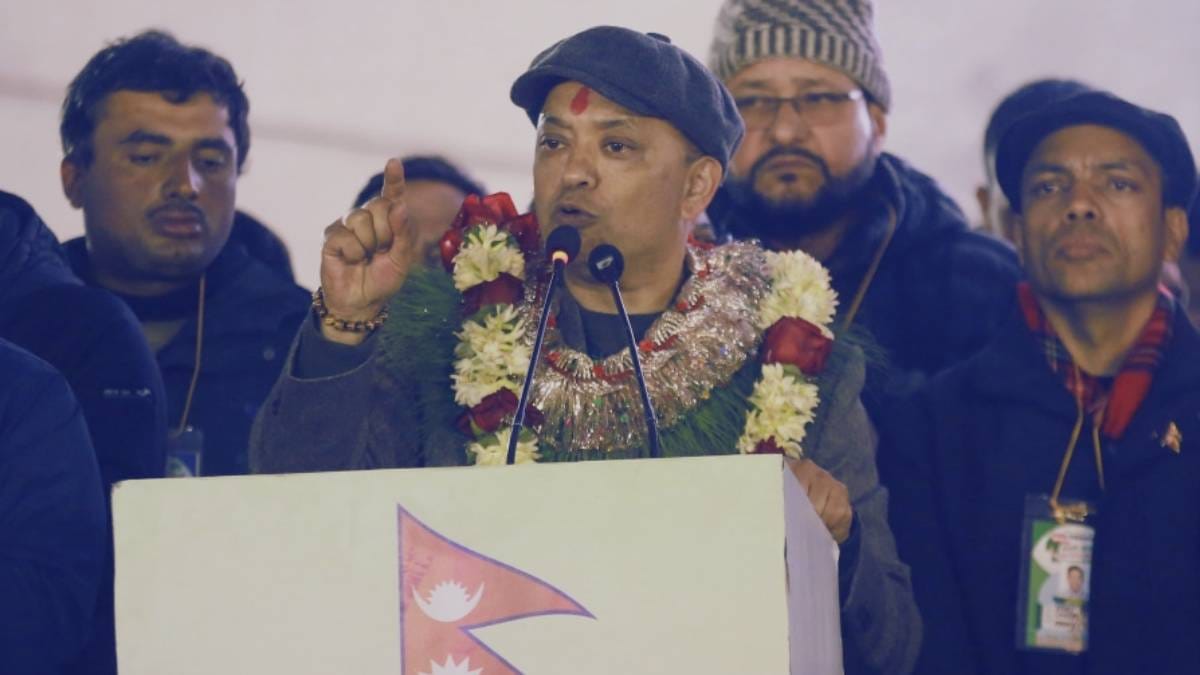
ON THE afternoon of January 14th, Kathmandu briefly hosted two Nepali Congresses. In one hall, party elders loyal to Sher Bahadur Deuba, a five-time prime minister with a talent for survival, voted to expel their own general secretaries. Across town, in a larger, noisier venue, hundreds of elected delegates cheered as Gagan Thapa, a reformist standard-bearer, was chosen to lead them. One party flag and one election symbol. Two claims to authority. Nepal’s Election Commission now holds the tiebreaker.
Conventional wisdom urges caution. When parties split, referees are advised to cling to the rulebook, defer to courts and avoid choosing sides. Yet the reality is bleaker. In this case hesitation would amount to a choice, one that favours incumbency over legitimacy and paralysis over clarity. The Commission should recognise Mr Thapa as the new leader of the Nepali Congress, and do so fast.
Start with the party’s own constitution. The Nepali Congress statute is plain about where authority lies. The general convention, made up of elected delegates, sits at the top. It outranks the central working committee, which handles day-to-day affairs. Clause 17(2) allows 40% of those delegates to summon a special general convention when the leadership drags its feet. That threshold was crossed comfortably: 54% formally demanded it, and organisers say more than 60% turned up. The adjective “special” refers to timing not status. Once convened lawfully, the body wields the same sovereign power as a regular convention. To argue otherwise would make the safeguard meaningless when it matters most.
Mr Deuba’s camp replies by pointing to its majority in the central committee. That matters for running the party day to day. It does not decide who leads it. Leadership questions belong to the elected delegates, who represent the wider membership. If committee numbers override convention votes, a party president could stay in place indefinitely while delegates have no real way to remove him. In most democracies, that would be treated as a dead end, rather than a source of stability.
What of the law? Critics note that Nepal’s Political Parties Act does not explicitly mention special general conventions. That is true but it does not decide the issue. The Act leaves internal party governance to party statutes, stepping in only when rules are missing or violated. Here the rules are clear. The statute sets the threshold; gives delegates the power to act; and places the convention at the top. The Commission’s role is to check that these rules were followed. When the law is silent, it is stepping back not blocking the process.
Section 44 of the Act, much cited by the establishment, is a fallback. It tells the Commission what to do when factions squabble without a decisive internal forum. That is not the present mess. A convention met, dissolved the old committee and elected new leadership. Applying Section 44 regardless would mean preferring a subordinate body over the sovereign one whose legitimacy is under dispute. That is institutional self-contradiction.
The expulsions of Mr Thapa and his ally, Bishwa Prakash Sharma, fare no better. Worse still, they came after the special convention had already convened and after Mr Sharma had resigned his post. Disciplining someone from an office he no longer holds, on the authority of a committee whose mandate is being dissolved, is nonsense.
History cuts against the elders, too. The Nepali Congress was born in 1950 through extraordinary conventions rather than through tidy committee votes. BP Koirala, its founding figure, rose through such a gathering. Parties across democracies reset themselves this way when calendars collide with reality. Institutions that forget how they were born rarely age well.
Timing sharpens the case, meaning Nepal is weeks from elections. The regular general convention pencilled in for April is useless for March. A party cannot campaign, pick candidates or project leadership while waiting for a meeting after the vote. Recognising a delegate-backed leader now reinforces internal democracy and answers a public mood soured by patronage politics—especially among younger voters who filled the streets last September. Defaulting to committee numbers smells of incumbency protection and deepens cynicism.
There is also the practical matter of elections. Dragging feet or hiding behind uncertainty would jam candidate selection and leave voters guessing which symbol belongs to whom, as well as invite chaos. A firm decision, even if challenged later, gives real authority and keeps the election on track. Courts can fix errors but elections cannot be rerun at will. In democracies clarity in administration matters more than perfect legality.
Nor would recognition block reconciliation. It would enable it. Once legitimacy is clear, talks can proceed and compromise becomes possible. Endless uncertainty only encourages hardline positions on both sides. Clarity steadies the ship.
The Election Commission likes to describe itself as an umpire. In truth it is also a constitutional guardian. Guardianship sometimes requires a firm call. Backing Mr Thapa is not a wager on youth or a taste for reform. It is the least arbitrary, most coherent reading of party rules and democratic sense. The threshold was met and the delegates decided. In democracies, that is usually the end of the argument. When it is not, the consequences are decided by voters at the ballot box. ■