IMAGE: GAGAN THAPA/FACEBOOK
THE IMAGE OF a military helicopter lifting off from the smoke-shrouded grounds of Budhanilkantha last September was more than a rescue mission for Sher Bahadur Deuba, Nepal’s five-time prime minister. It was a visual obituary for a political era. Nepal’s governance for decades has been a closed-shop arrangement between three ageing men: Mr Deuba, K.P. Sharma Oli and Pushpa Kamal Dahal. They treated the premiership like a library book, renewing it between themselves while the country’s youth waited in a queue that never moved. But as the flames at the “Big Three’s” residences proved, the queue has finally lost its patience.
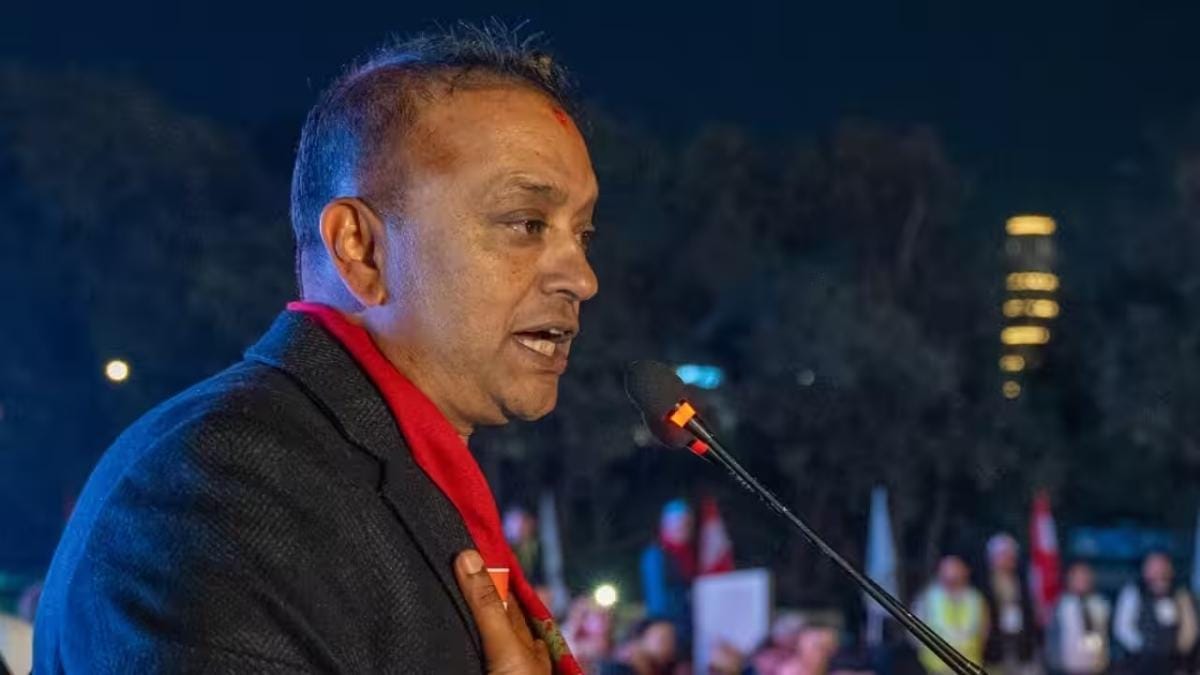
The institutional earthquake that followed reached its epicentre on January 16th, when the Election Commission formally handed the keys of the Nepali Congress (NC) to Gagan Thapa. By recognising the “Reformist” faction over Mr Deuba’s establishment guard, the Commission has ratified a generational coup. Mr Thapa, a 49-year-old former student leader who once faced sedition charges for suggesting Nepal might do better without a king, is now the custodian of the country’s oldest political institution. He has the party’s four-star flag and the iconic “tree” symbol. Yet his real trouble is to prove that the tree is not merely a hollow trunk, rotten with patronage and decades of drift.
Nepal’s traditional politics collapsed because it became a gerontocracy that mistook digital silence for stability. The “Gen Z” uprising last year was triggered by something as petty as a ban on social-media platforms, but its fuel was a deep, visceral rage against a system that rewarded loyalty over merit. When the state began shooting students in school uniforms, the social contract disintegrated. Mr Thapa and his ally, Bishwa Prakash Sharma, were the only senior figures with the wits to apologise. They understood that in the age of the #NepoBaby hashtag, a party run by a family clique in a closed room is a liability not an asset.
The reforms Mr Thapa has pushed through the party’s special convention are, on paper, revolutionary. The “1-2-3-4” system—restricting a person to one term as president and two as prime minister—is a direct assault on the “leader-for-life” culture that has crippled South Asian democracies. Moving to internal primary elections for candidates is an even bolder gamble. It threatens to dismantle the “ticket-selling” machinery where wealthy donors and local dons buy their way into parliament. If Mr Thapa succeeds, the Nepali Congress could transition from a patronage-delivery vehicle into a modern social-democratic party.
Yet the path from a Kathmandu convention hall to a functioning government is strewn with wreckage. The first hurdle is legal. Mr Deuba’s faction, showing an unusual gift for miscalculation, has vowed to fight the Election Commission’s decision in the supreme court. A judicial stay could leave the party without a clear signatory just as the January 19th nomination deadline looms. In this country where the “Big Three” have a history of leaning on the judiciary, a tactical legal stalemate is a real threat. If the “tree” symbol is frozen by a court order, Mr Thapa’s revolution will be stillborn before the March 5th elections.
Even with the symbol in hand, Mr Thapa faces a transformed electoral map. The old binary between the Congress and the communists has been shattered. The rise of populist forces, such as the Rastriya Swatantra Party headed by Rabi Lamichhane and Harka Sampang’s Shram Sanskriti Party, as well as younger challengers like Sagar Dhakal and Kathmandu’s reclusive mayor Balendra Shah means that simply being “not the old guard” is not enough. To the TikTok-literate voter, Mr Thapa is still a man who spent twenty years inside the tent he now claims to be tearing down. He risks being caught in a pincer movement: viewed as a traitor by the party’s traditional base and as “establishment-lite” by the radical youth.
The bigger truth shown by Nepal’s mess is that patronage is a depreciating currency. For years the NC survived by distributing jobs and contracts. But when the economy stagnates and the youth look to Dubai or Dallas for their futures, the promise of a government clerkship in a district office loses its lustre. Mr Thapa’s “New Congress” must provide a platform that goes much further than internal rule-changes. It needs a plan for an economy that actually produces things, rather than one that merely exports its best people and imports their remittances.
Moreover rebuilding the Congress is not only about winning an election: it is about preventing the total collapse of institutional politics in Nepal, too. If the country’s oldest party cannot reform itself, the vacuum will be filled by populists who offer easy anger but no governance. Mr Thapa has spent his career as a “Young Turk” shouting from the sidelines. Now that he is the man in the centre of the frame, he must show he has the guts to prune the tree he has inherited. The country’s future depends on whether he can turn a party of the past into a vehicle for the tomorrow its youth were willing to die for. ■