ILLUSTRATION: GETTY IMAGES/KATMANDU JOURNAL
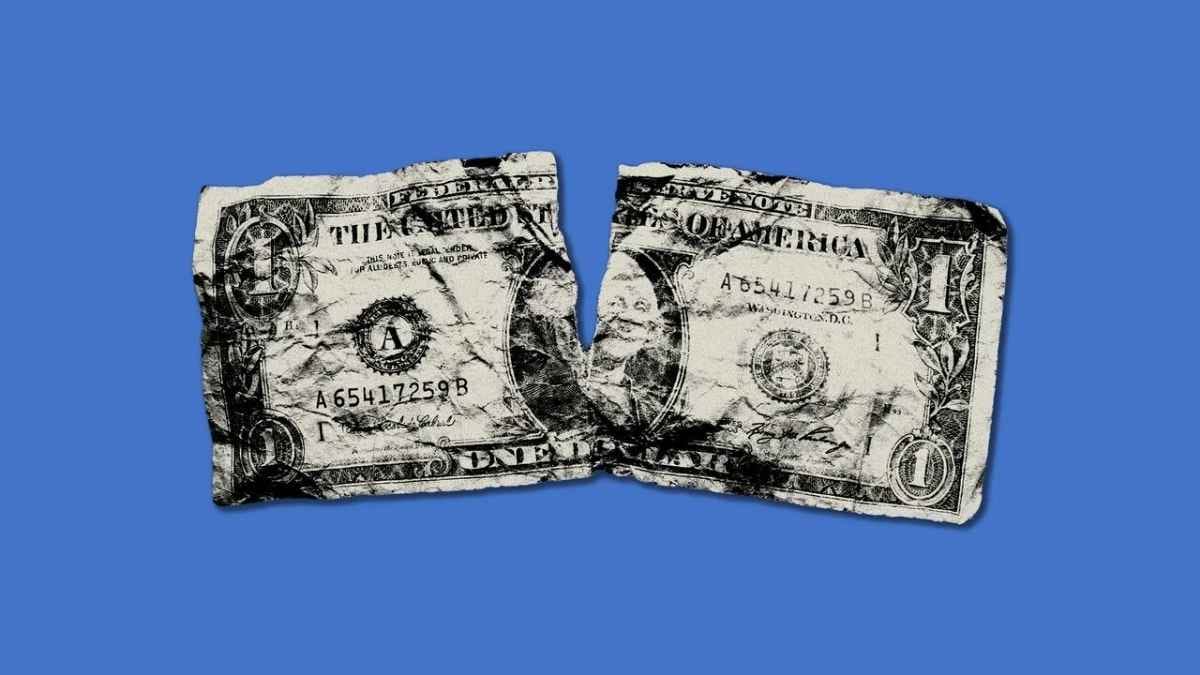
ON A TYPICAL day, nearly $10trn sloshes through the foreign-exchange markets. In nine out of every ten trades, one side of the transaction is the American dollar. By that measure of liquidity, the currency’s hegemony appears unassailable. Yet in the vaults of the world’s central banks, trouble is brewing for the greenback. The share of global reserves held in dollars has drifted back to where it was in 1995. For the first time in three decades, central banks as a group now hold more of their reserves in gold than in American government debt. The dollar is not tumbling from its pedestal. It is, however, being chipped away at from all sides.
The system is as fragile as it is resilient. The dollar has functioned as the indispensable operating system of global commerce for eight decades. The arrangement bestowed an “exorbitant privilege” on America, allowing it to borrow cheaply and project power through financial sanctions. That privilege rested on a triad of trust, convenience and a lack of alternatives. Today each leg of that stool is wobbling. Trust is frayed by America’s disturbing fiscal direction and the weaponisation of its financial infrastructure. Convenience is being challenged by new digital settlement rails that bypass traditional banking channels. And for the first time, alternatives are appearing: not as a single competing currency but as a group of systems that provide a way out.
Consider the revolution in how countries pay each other. For many years China has painstakingly built an alternative plumbing network. Its Cross-Border Interbank Payment System (CIPS) now processes over $24trn a year. More important is Project mBridge, a collaboration between the central banks of China, Thailand, the United Arab Emirates, Saudi Arabia and Hong Kong. Using distributed ledger technology, it allows for near-instantaneous settlement in digital currencies, stripping out the middlemen of the correspondent banking system. So far it has processed over $55bn in transactions, 95% of which were in digital yuan. It is not yet a threat to the dollar’s daily dominance but it is a functional blueprint for one. “It proves the technical viability of a parallel system,” notes a European central banker involved in similar experiments. “The barrier is not engineering. It is political will.”
That will is hardening in unexpected places. Russia, expelled from the SWIFT messaging system (the network banks use to send money worldwide) in 2022, has become a laboratory for de-dollarisation. By the end of last year 99% of its trade with China was settled in roubles or yuan. Its domestic financial-messaging system, SPFS, now connects over 550 entities across 20 countries. More extraordinary is the behaviour of America’s allies. Although they are not seeking to overthrow the dollar, they are hedging against its perceived risks. The Reserve Bank of India has sharply slashed its Treasury holdings, swapping them for gold, which now makes up 13.6% of its reserves. Even Japan, long America’s most reliable creditor, has hinted at a gradual reduction in dollar assets to fund domestic needs. Rather than an effort to break from the dollar, that is risk management, and possibly the dollar’s biggest problem.
The hedging is a response to two worrisome shifts. The first is geopolitical. The aggressive use of financial sanctions after Russia’s invasion of Ukraine was a brutal demonstration of dollar power. It also served as a global wake-up call. “Every finance minister on earth watched that and thought, ‘I need a Plan B,’” argues a former International Monetary Fund official. The second shift is fiscal. America’s debt mountain, now surpassing $38trn, is changing the calculus for investors. Net interest payments kissed $841bn in 2025, rivalling the defence budget. With vast amounts of debt maturing soon, America faces a refinancing trap, forcing it to issue new, higher-yielding bonds to pay off old, cheaper ones. That trajectory hints at a future of currency debasement, undercutting the dollar’s store-of-value function.
Market psychology is already adjusting. A troubling episode occurred in April last year, when America announced a sweeping new tariff regime. Historically, such geopolitical shocks triggered a “flight to safety”, boosting the dollar and depressing Treasury yields. This time the dollar fell and long-term yields leapt. The market seemed to be pricing American policy risk as a greater threat than global instability. “The safe-haven reflex is broken,” observed a strategist at Goldman Sachs in the aftermath.
America’s political discourse is not helping. Last year a controversial policy blueprint dubbed the “Mar-a-Lago Accord” gained attention. It proposed deliberately weakening the dollar to boost manufacturing, including by strong-arming allies into currency appreciation and even imposing a “user fee” on foreign official holdings of Treasuries. Though still theoretical, the mere discussion of such ideas by senior figures of the Trump administration introduces a corrosive policy risk. It suggests America might transition from a benign provider of global liquidity to an active manipulator of its currency for domestic gain. “Nothing would accelerate the search for alternatives faster,” says a senior Asian reserve manager, “than the belief that the rules are being rewritten for American benefit.”
And yet: declaring the dollar’s demise is a fool’s errand, at least for now. Its dominance is protected by ferocious network effects. Because it is the most liquid currency, firms use it for trade; because firms use it banks provide dollar liquidity; because banks deal in dollars, central banks hold reserves to backstop them. Exiting this ecosystem is prohibitively expensive unless done in concert. Furthermore, America is fortifying its currency on a new frontier: the digital world. Dollar-anchored stablecoins, with a market capitalisation outstripping $220bn, have become de facto mediums of exchange in countries with weak local currencies. Private innovation is extending dollar dominance into the internet of value.
The depth and legal security of American capital markets are also unmatched. The Eurozone’s are fragmented; China’s are constrained by capital controls. For a reserve manager, the ability to sell $100bn of an asset in an afternoon without moving the price is non-negotiable. Only the Treasury market confers that exit liquidity. “It’s not just about what you own,” explains the head of investments at a Middle Eastern sovereign-wealth fund. “It’s about being able to get out of it when you need to. Nothing else comes close.”
The most likely future, therefore, is a gradual fragmentation rather than a dramatic dethroning. The system is becoming a set of separate but connected parts. The dollar will stay the primary currency for transatlantic finance and high-frequency trading. The renminbi, underpinned by systems like CIPS and mBridge, will dominate settlement within China’s economic orbit. Gold and regional currencies will play bigger roles in bridging other trades. In this world the dollar’s share of global reserves might stabilise around 50-55%, well below its peak but still pre-eminent. America’s borrowing costs would rise, perhaps by 100 basis points or more, as its captive audience of official creditors shrinks. Financial sanctions would become a costlier tool with targets able to route around them.
In other words the greatest threat to the dollar is not China’s digital yuan or a hostile coalition. It is America’s own fiscal incontinence and the temptation to treat the currency as a tool for short-term domestic advantage. The dollar’s position was built on its reliability as a global public good. Preserving it means recognising that that role demands strategic restraint. The exorbitant privilege is a benefit that must be continually earned. In the interim the world still reaches for the dollar out of habit and for lack of a better option. But as any banker knows, habits can be broken, and options have a way of multiplying. ■