PHOTO: REUTERS
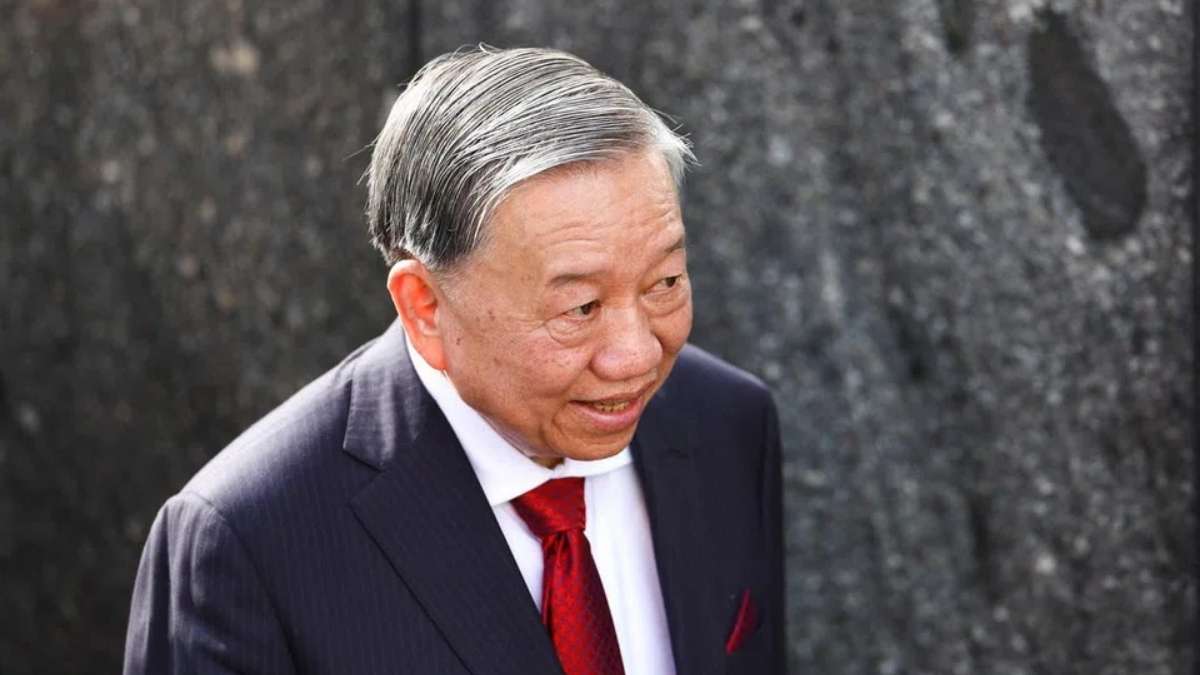
THE COMMUNIST PARTY congress in Hanoi concluded two days ahead of schedule. For Vietnam’s political elite, this was the first sign of a change. Lengthy negotiations over senior appointments were curtailed. When the new Politburo was announced, it confirmed widespread expectations. To Lam, already the party’s general secretary, would also take on the presidency. By discarding the long-standing “four pillars” system that divided authority among the top offices, Mr Lam has amassed power to a degree not seen in decades. He argues that this concentration is needed for Vietnam’s next phase of growth.
Vietnam in the past decades avoided rule by a single dominant figure. Collective leadership was put in place to preserve stability and limit personal power. That approach has now been set aside. Mr Lam, a former minister of public security known for his discipline and resolve, occupies the country’s two most influential posts. His allies hold a commanding presence in the Politburo. The new prime minister, Le Minh Hung, a 55-year-old former financier, is widely regarded as his protégé. Institutional restraints have been removed with unusual speed.
The justification is economic rather than ideological. Vietnam is pressing for momentum. Growth reached 8% last year, though unease remains. The government has set a target of high-income status by 2045. Achieving it means coping with several pressures at once: an ageing population; elevated property prices; and a global trade system strained by American tariffs and China’s industrial dominance. In speeches at the congress, Mr Lam described a programme of “streamlining the revolution”. He pledged to free up economic activity, digitise public administration and cut through bureaucracy. Fragmented authority, in this view, slows decision-making. A single centre of command promises faster execution.
“To Lam has been given a strong mandate to accelerate reform,” says Nguyen Khac Giang of the ISEAS–Yusof Ishak Institute in Singapore. “Vietnam is likely to pursue development more vigorously than doctrine.” The programme includes restructuring inefficient state-owned firms; drawing in higher-value manufacturing; and managing an influx of Chinese capital that provides employment while challenging domestic producers. Mr Lam addresses these issues more openly than his predecessors did. His backers, including many younger and Western-educated Vietnamese, describe him as a practical reformer.
The methods used to secure power shape expectations of how it will be exercised. Mr Lam’s ascent was driven by an anti-corruption drive known as the “Blazing Furnace”, which removed rivals and remade the leadership. His career was built in the security services, which have expanded their reach into commerce and digital monitoring. Concentrated authority can push through reform while narrowing the space for dissent. Alexander Vuving of the Asia-Pacific Center for Security Studies points to the risk of weakened legitimacy, which could encourage heavier reliance on coercion if opposition emerges.
The economic tests are at hand. American tariffs have thrashed export growth. The strategic partnership with the United States has produced fewer gains than Hanoi anticipated. Rapid expansion at home has brought urban sprawl, as well as environmental strain and a financial system that lags behind the country’s ambitions. Centralised control confers the capacity to act urgently. It also increases the likelihood that warnings are overlooked, critics sidelined and security prioritised over experimentation.
Mr Lam has placed his faith in central authority as the engine of a promised “new era of prosperity”. The strategy carries huge risk. Success would set Vietnam’s future on a different course. Failure would rest with one man alone. ■