IMAGE: REUTERS
TO THE casual visitor moving through the dust and clatter of Kathmandu, Nepal appears to be a country in a perpetual state of construction. Scaffolding surrounds new hotels like wooden cobwebs, and the streets are choked with the imported SUVs of a burgeoning middle class. The nightmare of the pandemic—which at its nadir saw the economy shrink by nearly 14%—is a receding memory. The tourists have returned to the Annapurna circuit and the hydro-electric dams of the Himalayas are churning out more power than ever before. Officials describe that as a resilient recovery.
Yet the underlying economic position is far less dynamic. A granular look at the past fifteen years of Nepal’s national accounts shows a troubling pattern: the country has not so much recovered as it has reverted to a low-growth equilibrium that it seems unable to escape. After a brief, gravity-defying rebound in 2022 and 2023, where growth rates spiked on the back of statistical “base effects”, the momentum has faded. The economy is now settling into a sluggish rate of 3% or 4% growth (see chart below). For a developing nation with a young population and a desperate need for infrastructure, that amounts to stagnation.

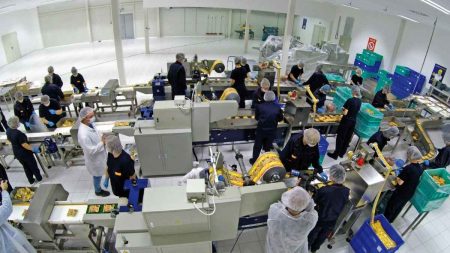
The central tragedy is the hollowed-out middle of the Nepali economy. Whereas the world frets over the deindustrialisation of the West, Nepal has managed to skip the industrial phase altogether. Manufacturing, the traditional engine of development that turns peasants into productive urban workers, is in a state of chronic decay. Over the past decade, its contribution has been defined by volatility and neglect. When shocks hit, manufacturing bends and breaks, with contractions of 20% or 30% being uncomfortably common. Even in the “good” years, growth in that sector is anaemic, shackled by high transport costs, erratic policy as well as a lack of competitive guts.
The result of that industrial failure is a country that has perfected the art of exporting its most valuable resource: its people. Nepal’s growth model is essentially a massive, circular trade. It sends millions of young men and women to build skyscrapers in the Gulf or serve coffee in Europe, and in return, it receives a torrent of remittances. These funds then flow directly into consumption—buying food, fuel and gadgets from India and China—and into land speculation. This keeps the lights on and the shops full, but it builds nothing of permanence. It is a “Dutch Disease” without the benefit of having any actual oil in the ground.
Agriculture, which still employs the majority of the workforce, remains a stabilising floor but a low one. There is much talk in the halls of power about mechanisation and “transformation”, but the data suggests a sector that is merely treading water. Productivity growth is weak, leaving rural incomes capped and domestic demand dependent on the next cheque from a son working in Qatar. When the monsoon is kind, the numbers look better; when it is not they don’t. This is survival not a strategy.
Even the real successes are curiously isolated. Nepal’s electricity sector has seen eye-watering growth rates recently, sometimes surpassing 80% in a single quarter as new hydropower projects come online. In any other country, a surplus of cheap, green energy would be the catalyst for an industrial boom. In Nepal it is a surplus in search of a purpose. Because the domestic manufacturing base is so withered, the country is left trying to sell its power to India, essentially exporting another raw commodity rather than using it to fuel value-added production at home.
The financial and construction sectors, meanwhile, act as a boom-bust machine. They are acutely sensitive to the whims of credit cycles and the occasional, clumsy interventions of the central bank. The state has an unusual gift for miscalculation in this regard, often tightening the screws just as the economy needs to breathe or allowing credit to flow into unproductive property bubbles that eventually pop with a messy thud. Recent data shows construction remains subdued and the property market suspiciously flat—suggesting a sector that is frozen rather than stabilised.
What can be done? The conventional wisdom suggests more “investment climate” reforms and “single-window” systems. But the ugly truth revealed by Nepal’s stalling growth is that the country is caught in a trap of its own making. The ease of the remittance-led model has removed the urgency for difficult reforms. Why fix the mess of the manufacturing sector when you can simply import everything? Why improve the schools when the most ambitious students are already planning their exit?
Nepal is in a state of drift. A growth rate of 4% might sound acceptable in London or Paris, but here it is a recipe for a permanent exodus. Unless the government can find a way to link its newfound hydropower wealth to a real industrial revival, the country’s economic story will continue to be written elsewhere, by people who had to leave home to find a future. Nepal is a country standing still on a high plateau, watching the rest of the world climb higher. ■