IMAGE: NIRANJAN SHRESTHA/AP
A FREE PRESS is meant to comfort the afflicted and afflict the comfortable. In Nepal it has forgotten how to do either. Consider the silence that said it all. In 2017 the country’s second-largest mobile operator, Ncell, was accused of evading $500m in taxes. Most newspapers ignored the story, because the firm’s advertising budget dwarfed their annual revenues. To bite the hand that feeds you is a poor survival strategy. The scandal eventually surfaced, but the lesson endured: that Nepal’s press had shown it could be muzzled for the price of a few full-page ads.
It is brutal economics, rather than journalistic cowardice, that explains the silence. Nepal suffers from a textbook market failure. Its entire advertising pie is worth perhaps $150m, less than a single mid-sized American local-television station. That meagre sum must be divided among more than 4,300 registered news outlets. Sustainable journalism is a mathematical impossibility. Each survives on scraps, perpetually one lost account from ruin. Independence becomes an unaffordable luxury.
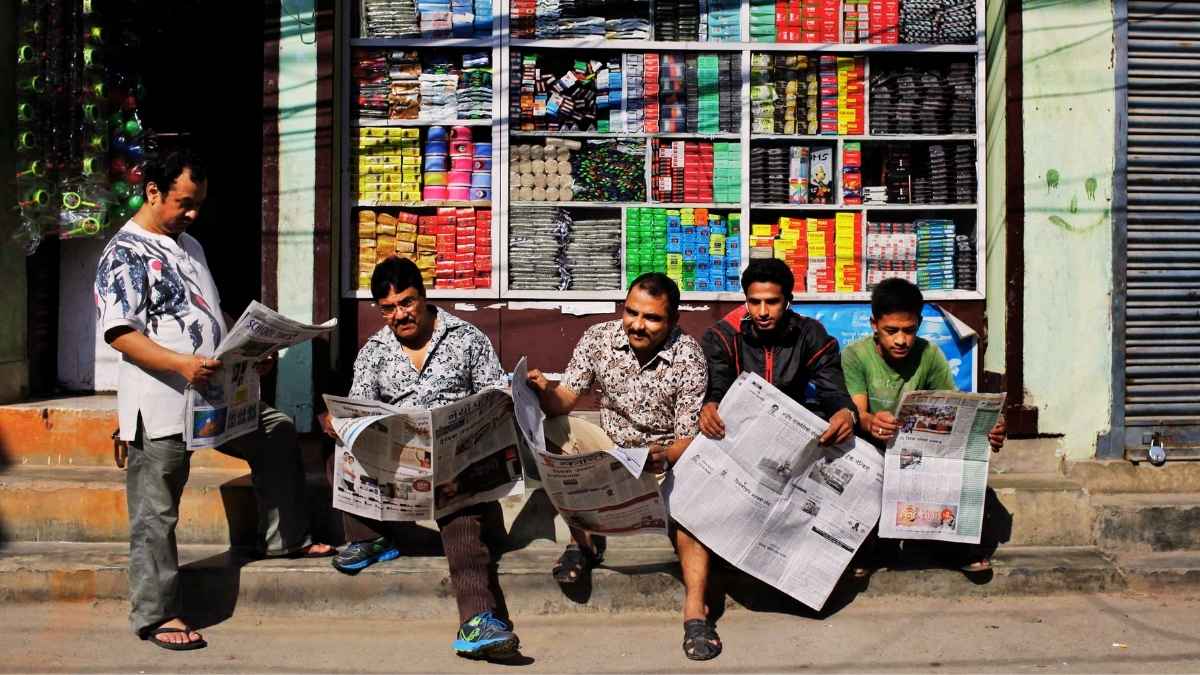
The numbers are grim. Newspaper readership has halved since 2020. Audiences have fled to Facebook, which commands 87% of Nepal’s social-media traffic, and to YouTube channels peddling rumour as reportage. That shift is regional, but Nepal’s tiny market makes it catastrophic. When The New York Times loses subscribers, it can sell crosswords or cooking tips. When The Kathmandu Post loses readers, it stares into the abyss.
What follows is a race to the bottom. Unable to charge readers (trained by the internet to expect everything for free) and unable to attract enough ads, outlets now look like public-relations firms. Banks and telecoms, which provide the bulk of advertising, receive fawning coverage. Scandals are buried. In 2018 four major papers suddenly published exposés about a Ford dealer’s alleged tax evasion—but only after he had cancelled his ad contracts. That was commercial revenge faking as an investigation.
If corporate capture were the only ill, the cure might be straightforward: diversify funding and erect editorial firewalls. But a second, viral strain has infected the system. Social-media platforms reward engagement over accuracy, and cash-starved newsrooms have internalised that logic. A study of nearly 49,000 stories found that over 95% of misleading content involved misused citations or copied claims. Headlines are click-bait, and petty squabbles become national crises. Veteran reporters moonlight as YouTubers, chasing views and micropayments directly.
The incentives are perverse but rational. A journalist at a legacy outlet might wait months for a salary. Membership in the Federation of Nepali Journalists has plummeted. Only 7% of journalism graduates now enter the profession. Why labour on a 2,000-word investigation when a three-line Facebook post can go viral and pay more? The result is an ecosystem where pages like Routine of Nepal Banda—activism with a news feed, not journalism—wield more influence than most newspapers. Fact and opinion, news and propaganda, blur into noise.
A democracy can survive many afflictions: corruption, hyperinflation and even occasional authoritarianism. But it cannot survive an uninformed public. Nepal is testing that proposition and the results are alarming. Trust in the media has cratered: nearly a third of Nepalis are dissatisfied with reporting quality. Citizens increasingly turn to civil society for accountability, bypassing politicians as well as the press.
The dangers turned tangible last September, when the government banned social-media platforms, sparking deadly unrest. Protesters organised on Discord, evading censorship. But decentralised mobilisation also spread false rumours: hotels were torched on unverified claims they were owned by politicians’ children. Without gatekeepers, public anger can spiral into mob violence. Misinformation does not only poison debate: it burns down buildings, too.
The government’s response has been predictably authoritarian. A proposed Media Council Bill would place a new regulator under the thumb of the Ministry of Communications. Fines of up to $7,500 for “ethical breaches” could bankrupt small outlets. The bill describes the council as “dignified” rather than “independent”—choice of words matters. A separate social-media bill would ban anonymous profiles, a death sentence for investigative journalists who rely on sources. That is the autocrat’s playbook: first, let market forces hollow out the press; then take control of the gutted remains.
Well-meaning prescriptions such as grants and subscriptions miss the point. Nepal’s crisis is not a market imperfection to be corrected. It is a feature of late-stage digital capitalism in small, poor countries. Journalism’s old business model is dead. Subsidies will not resurrect the corpse. Honesty demands a harder question: what information infrastructure can possibly survive here?
Three imperfect options stand out. One is to accept hybridity rather than resist it. Social-media pages now do much of the work once done by newspapers, and dismissing them only worsens the problem. Set basic standards such as attribution and disclosure of interests and offer light-touch training for large digital creators, since most misinformation comes from incompetence rather than from malice.
Another is ruthless selectivity. Channel transparent public or donor funding to a handful of newsrooms doing work the market will never sustain but democracy requires, such as investigating corruption and scrutinising courts. Let the rest survive, or fail, on commercial terms. The third is reputational pressure. Rebuild a genuinely independent press council to expose bribery, as well as undisclosed advertorials and fabricated reporting. Make corruption embarrassing without giving the state new tools of control.
None of that will solve the problem outright. Together it might only slow the decline. But hanging on to the fantasy that traditional journalism will magically return is worse than useless: it prevents clear thinking about the bleak choices ahead.
Nepal’s press is dying but information production continues. The question is not if the country will have media, but if that media will serve democracy or destroy it. The answer, for now, leans ominously towards the latter. The crisis is not unique to Nepal, but its scale makes the stakes undeniable. If democracy requires informed citizens, and if market forces cannot sustain the institutions that inform them, then democracy itself becomes unsustainable under certain economic conditions.
The world should watch closely. What is unfolding in Kathmandu will soon reach a hundred other small, poor countries. The fourth estate is not being shut down by tyrants. It is being killed by economic reality. And no one has yet found a formula that adds up differently. ■