
IMAGE VIA FACEBOOK
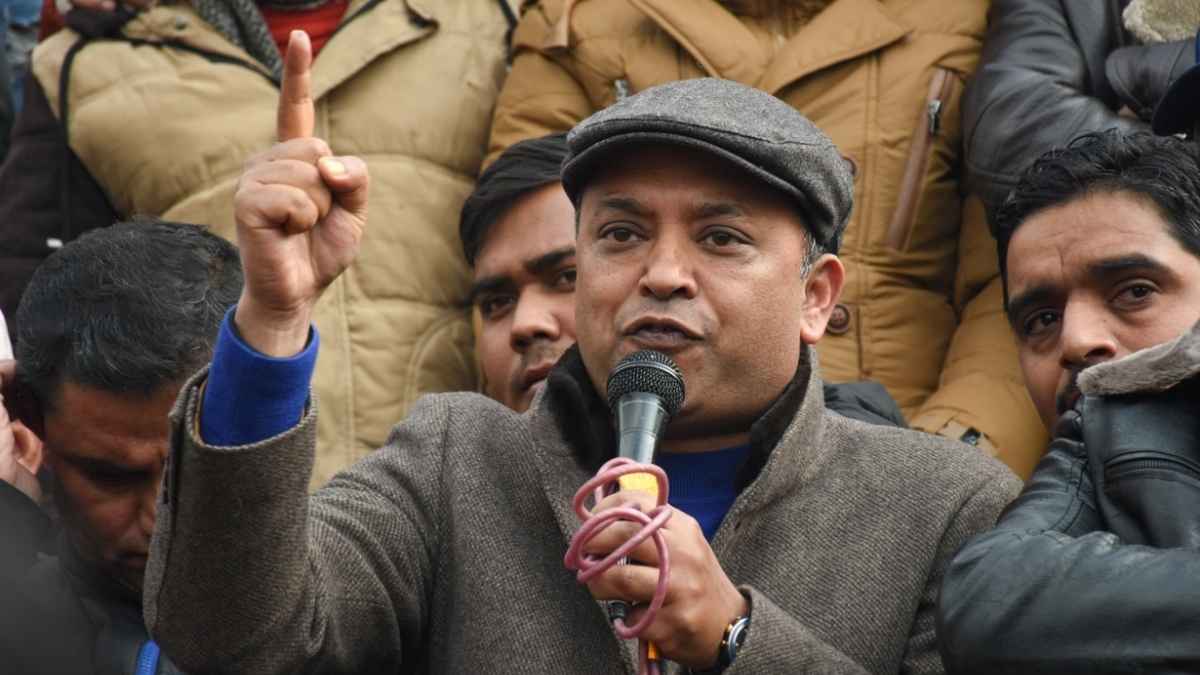
GAGAN THAPA is running for his political life in a place he does not call home. The president of the Nepali Congress, the country’s oldest party, has abandoned his secure urban seat in Kathmandu to contest a constituency in the southern plains of Madhesh. Sarlahi-4 has never sent a politician from the hills to parliament with a mandate to become prime minister. Mr Thapa, a 49-year-old reformist, is trying to do both.
His slogan sets up the attempt: “We changed the Congress, we will change the country.” His move is a high-stakes wager that his party can escape the shadow of its ageing barons and answer the furious demands of Nepal’s youth. The outcome will decide if the political order shattered by street violence last year can be rebuilt or must be swept away.
That violence, two days of protests last September, altered everything. A government ban on two dozen social-media platforms lit a fuse. To a generation that lives online, it felt like suffocation. The protests swelled into a leaderless revolt against an entire political class. Young Nepalis took to encrypted channels to co-ordinate marches and mock the entitled offspring of politicians with the hashtag #NepoBaby. The demonstrations turned lethal. Security forces fired on crowds outside parliament, killing 19 people in a day. By the time the prime minister, K.P. Sharma Oli, resigned, 76 were dead. Mobs set fire to the parliament building and the prime minister’s office. The interim government that picked up the pieces faces a single task: overseeing a general election on March 5th that might channel that explosive energy into votes.
The contest has narrowed to three visions. Mr Oli, a four-time prime minister now aged 73, champions resilient nationalism. He casts the uprising as foreign-inspired chaos and promises order, sovereignty and infrastructure. Balen Shah, a 35-year-old former mayor of Kathmandu, offers technocratic populism. He is the prime ministerial face of the Rastriya Swatantra Party, which pledges direct elections for executives and a crackdown on corruption. Then there is Mr Thapa’s pitch: institutional reform from within.
His journey to the Nepali Congress presidency in January was itself an insurrection. For years the party was dominated by Sher Bahadur Deuba, an octogenarian who served five terms as prime minister. The September protests made his generation a liability. Mr Thapa, a student leader during the 2006 democracy movement, pushed the old guard aside. His election as party chief marked the first real generational shift in any of Nepal’s major political forces. To prove it was not a fluke, he needed a symbolic break. Hence the move to Sarlahi-4.
The constituency is a concentration of Nepal’s enduring fractures. The Madhesh region, bordering India, has long felt marginalised by Kathmandu. Its plains have different languages, cultures and grievances. Mr Thapa’s opponent is Amresh Kumar Singh, a local figure who now runs for Mr Shah’s party. To win, Mr Thapa must convince voters that a hill-born leader can address local floods and faulty schools—and that his party’s internal change is a credible promise of national change. He talks of using technology to bridge educational divides and creating jobs to stop the exodus of young Nepalis abroad. It is a response to the placards of September.
The political climate favours upheaval. Nepal’s economy is oddly robust. Foreign-exchange reserves have climbed to over $21bn, about half of GDP. Remittances from workers abroad grew by almost a third last year. The country is graduating from “least developed” status. This provides fiscal space for whoever wins. But the political maths is messy. No party is likely to secure a majority. A coalition will be needed. The question is whether it will be built around the old triumvirate of Mr Oli, the Maoist leader Pushpa Kamal Dahal and the Congress itself—or around new forces.
Mr Thapa’s bet is that he can make the Nepali Congress the nucleus of a new establishment. His party still has machinery and nostalgia on its side. But he is racing against a tide of disgust. Mr Shah’s party has reserved 27% of its candidate list for people under 40. It channels the same digital-native energy that filled the streets. In a telling showdown, Mr Shah is challenging Mr Oli in his home constituency of Jhapa-5, a UML bastion. Early reports suggest young voters there are drawn to the newcomer’s pledge to sweep away the old way.
External powers watch with unease. China saw a reliable partner in Mr Oli, who championed Belt and Road Initiative projects. His fall forced a recalibration. India prefers stability but knows anti-Indian sentiment can be a quick route to popularity in Nepal. America steers clear of overt endorsements but continues to fund infrastructure through its Millennium Challenge Corporation compact. Each would accept Mr Thapa; each wonders if he can survive.
That survival hinges on more than one seat. Even if he wins in Sarlahi, he must deal with a fragmented parliament and his own party’s residual old guard. Yet his attempt is the most tangible effort to bridge the chasm between Nepal’s political past and its future. The September uprising was a scream of impatience. The election is a test of if that scream can be translated into governance, or whether it will remain a cry of despair. Mr Thapa has staked his career on the former. In doing so, he has turned a local race in the flat fields of Madhesh into a verdict on whether Nepal’s politics can renew itself or will be outright replaced. ■




