IMAGE VIA FACEBOOK
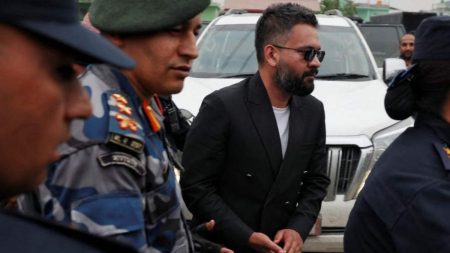
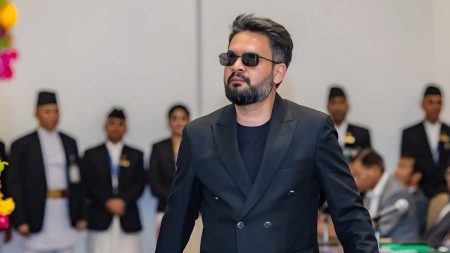
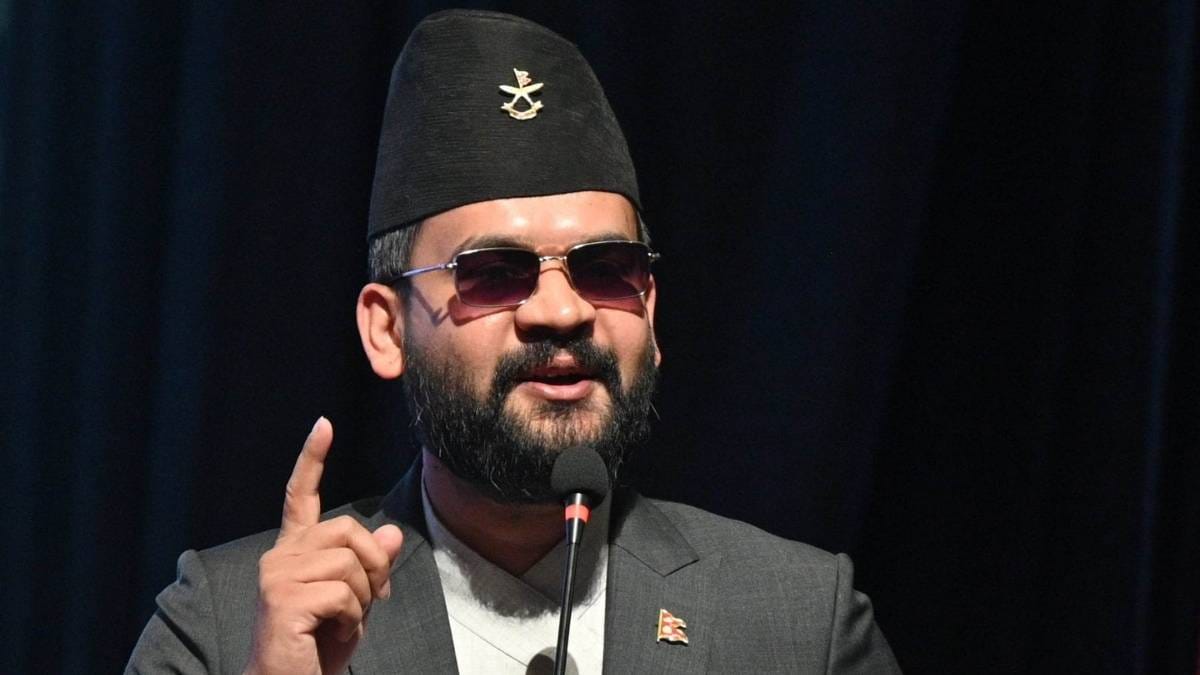
THE BULLDOZER is a powerful political signal. Balendra “Balen” Shah, the structural engineer who became Kathmandu’s celebrity mayor, used them to tear down illegal buildings clogging the ancient city’s streets. To his fervent supporters it was a thrilling spectacle of resolve in a political setting defined by dithering and deal-making. Now Mr Shah has resigned as mayor, joined the populist Rastriya Swatantra Party and been anointed its candidate for prime minister in Nepal’s general election on March 5th. He promises to bring his bulldozer to national politics, to clear away the corrupt old guard and build a modern, technocratic Nepal. It is a compelling account for a country seething with frustration. That is the easy account. The truth is harder and uglier.
Mr Shah’s ascent from local disruptor to national contender is the proximate result of a political cataclysm. Last September Nepal’s government, led by the perennial schemer K.P. Sharma Oli, attempted to ban two dozen social-media platforms. The move backfired spectacularly. It lit a fuse on years of pent-up rage among Nepal’s youth, who face a future of dismal job prospects and endemic graft while the children of the political elite—the #NepoBabies—flaunt their privilege. Protests exploded. Police fired into crowds, killing dozens. Government buildings were set ablaze. Mr Oli’s government fell. The Gen Z uprising was leaderless but it created a vacuum. Into that vacuum has stepped Mr Shah, the closest thing the protests had to a folk hero.
Our line is that Mr Shah’s probable strong showing is a damning verdict on Nepal’s political class, rather than an endorsement of his own untested blueprint. He is a symptom rather than a cure. The election is a three-way struggle between Mr Shah’s technocratic populism, the resilient nationalism of Mr Oli and the institutional reformism of Gagan Kumar Thapa, the new, younger president of the Nepali Congress. Each supplies a different answer to the same question: how can a state that failed its youth so catastrophically regain legitimacy?
Mr Shah’s appeal is obvious. His party talks of directly elected executives, stronger federal states, digital governance and meritocracy. He is corruption-free, a rarity. His social-media savvy resonates with the young. He has even chosen to contest the seat of Jhapa-5, daring to challenge Mr Oli in his own backyard. It is a bold piece of political showmanship. But mayors are prime ministers. The skills needed to manage waste collection in a capital city—even with high-handed zeal—are those needed to steer a fractious federation of 30m people. His tenure in Kathmandu was also marked by a worrying disregard for due process and the poor, whose informal stalls and homes were frequently in the bulldozer’s path. Autocratic efficiency can be attractive. It can also be cruel.
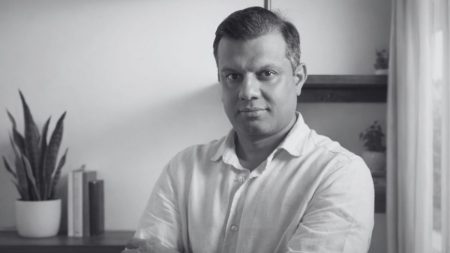
The alternatives are flawed but well worn. Mr Oli, a four-time prime minister, embodies the old politics of patronage, nationalist bluster and revolving-door coalitions. Yet he is a wily survivor with a deep base. Mr Thapa sets out a more hopeful path. He advances the Nepali Congress’s belated attempt at generational change, having wrested control from the party’s octogenarian establishment. He is campaigning from a seat outside the safety zone, in the southern plains of Sarlahi, a sign he wants to bridge the country’s ethnic and geographic divides. His platform of judicial reform, educational investment and job creation speaks straight to the uprising’s grievances. But he is shackled by his party’s worn-out machinery and its history of complicity in the very system he promises to reform.
Whoever wins will inherit a curious paradox. Nepal’s politics is a mess, but its macroeconomy is surprisingly stable, buoyed by billions in remittances from citizens working abroad. Foreign reserves are hefty. The country is graduating from “least developed” status this year. The state is broke. It is broken. The next government’s task is to convert economic stability into tangible hope: to create jobs at home; to deliver basic services without bribes; to ensure the police protect rather than shoot citizens. This is gruelling, unglamorous work. It calls for building coalitions, compromising with rivals and reforming a bloated, inert bureaucracy. It is a job for a bulldozer.
The danger is that Nepal swaps one form of dysfunction for another. A strong showing by Mr Shah, likely leading a hung parliament, could produce a weak coalition government paralysed by infighting. This would fuel further disillusionment. Mr Shah himself, if he gained power, might find his impulsive style and impatience with democratic niceties lead to constitutional crises. The great Himalayan knot of Indian, Chinese and American influence would then tighten, as each power seeks to sway a rudderless state.
Nepal’s tragedy is that its youthful uprising called for accountability, transparency and a fair shot at prosperity. The political response may deliver a charismatic strongman or more of the same old games. The allure of the strongman is understandable. After years of filth, anyone with a bulldozer looks like a saviour. But cleaning up a city is one thing. Repairing a nation’s shattered contract with its people calls for tools far more delicate, and leadership far more nuanced, than Mr Shah has yet shown he possesses. The wrecking ball is easy. Reconstruction is the test. ■