IMAGE: AP
FORTY PERCENT of Bangladesh’s electorate, about 50m people, have never cast a ballot. On February 12th they will do so in the country’s first national election since student protesters toppled Sheikh Hasina in 2024, ending 15 years of her increasingly autocratic rule. The Awami League has been banned. The army has deployed 100,000 troops. And Muhammad Yunus, the Nobel laureate who ran the caretaker government, says he will step aside after the vote. The question, after decades of rigged polls and opposition boycotts, is whether this is democracy’s rebirth or merely its remission.
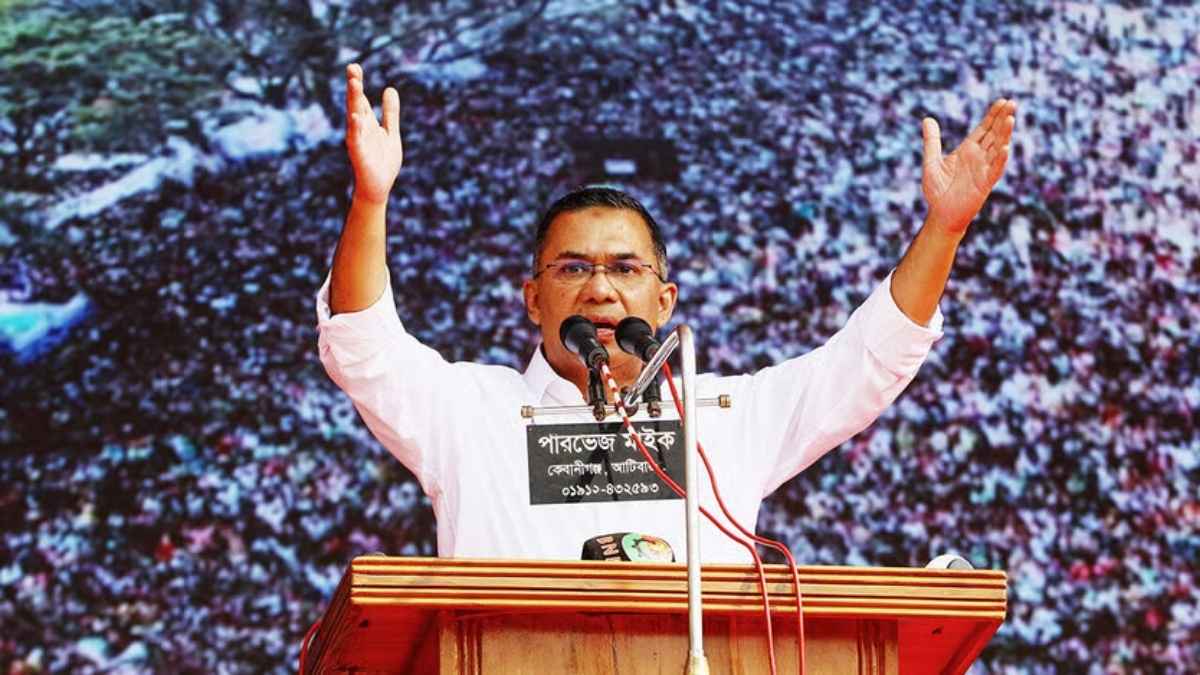
The main beneficiary of the Awami League’s absence is the Bangladesh Nationalist Party (BNP). Led from London exile until his recent return, Tarique Rahman (pictured) is the front-runner. His party promises jobs, anti-corruption drives and foreign investment. Yet the BNP’s previous stints in power were marked by plunder and cronyism. Mr Rahman himself carried convictions for money-laundering until the revolution swept them aside. Many voters view him, rather than as a reformer, as the devil they know.
That opens space for others. Jamaat-e-Islami, an Islamist party banned under Ms Hasina, has regrouped, promising moderate Islamic governance. Its critics fear an assault on women’s rights and secularism. The student-led National Citizen Party, formed by protest leaders, champions the revolution’s reform agenda but has fumbled alliances and failed to dominate. The choice, for a young electorate that filled the streets demanding change, is between a historically corrupt establishment, an untested religious party and an idealistic but inexperienced youth movement.
That paradox—revolution producing a ballot with no obvious vehicle for revolutionary hope—defines the mood. Turnout is expected to be high but enthusiasm is laced with suspicion. The referendum bundled with the vote offers clearer targets: constitutional term limits, an upper house and stronger judicial independence. These measures, if enacted, would erect guardrails against the sort of one-woman rule that Ms Hasina perfected. Yet the politicians now seeking power will be the ones entrusted to implement them. As one Dhaka University political scientist puts it, “They are being asked to sign a contract that limits their own authority. History suggests they will sign it, then look for a way to tear it up.”
Whoever wins inherits an economy at an awkward crossroads. Bangladesh graduates this year from “least developed country” status, a point of pride that also strips away preferential trade terms and soft loans. The new government will need to modernise an economy still reliant on garments, attract foreign capital and—above all—raise revenue. Tax collection stands at roughly 7% of GDP, among the world’s lowest. Red tape and graft choke enterprise. The Yunus government stabilised the currency and restarted IMF disbursements, but it could not rewire a state built for extraction not delivery.
Then there is India. Ms Hasina’s flight to New Delhi, and her continued residence there, has poisoned public sentiment towards Bangladesh’s giant neighbour. The incoming administration must reset ties without being seen as subservient. That is a delicate balance. As a former Bangladeshi diplomat observes, “India is like the monsoon: it arrives whether you want it or not. The trick is not to pretend it will stay away, but to build a house that can withstand the rain.”
What, then, will February 12th decide? Not, perhaps, whether Bangladesh becomes a stable democracy overnight. Rather it will show whether the 2024 revolution was a real rupture or merely a changing of the guard. The BNP speaks of reform; so does Jamaat. The constitution’s fine print will matter less than whether a new government permits opposition rallies, frees the judiciary from executive whim and treats the treasury as a public trust instead of as a party slush fund. On these fronts, the evidence is not yet written. But it is being watched—by 120m voters as well as investors and every authoritarian in the region who fears that students with smartphones might one day come for them, too. ■