IMAGE: REUTERS
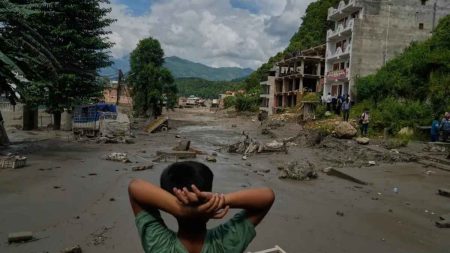
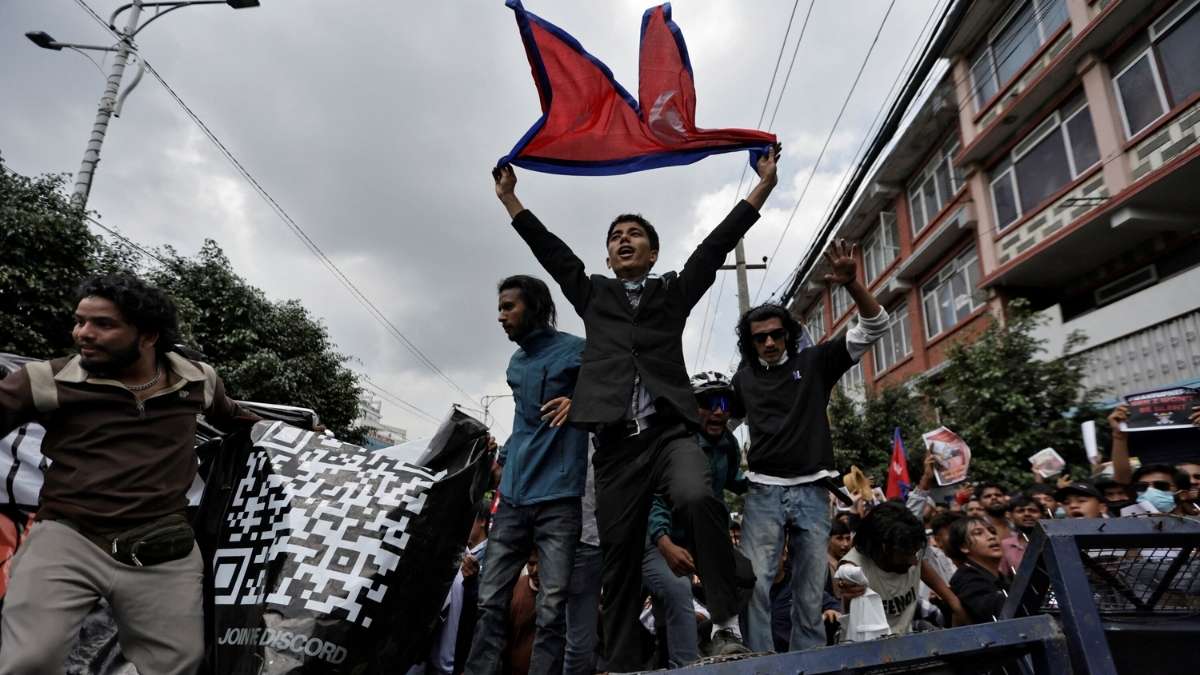
ON SEPTEMBER 8TH 2025, security forces outside Nepal’s parliament opened fire on peaceful protesters. By the end of that day, 19 people were dead. The following day, crowds burned the parliament building, the Supreme Court and the prime minister’s official residence. By September 9th the prime minister, K.P. Sharma Oli, had resigned. By September 12th an interim prime minister had been sworn in, chosen through an online vote involving over 7,000 participants. Seventy-six people died in total. Damage to property surpassed Rs85bn.
On March 5th Nepal votes in the most consequential election since its 2015 constitution. The question on the ballot is not just which party wins the most seats. It is whether Nepal’s established political class can demonstrate credible renewal—or whether a new force can channel the energy of the uprising into governable reform.
Three parties dominate. The Rastriya Swatantra Party (RSP), a liberal-reform movement founded in 2022, has merged with Balendra Shah, Kathmandu’s popular young mayor, and now brands itself as the vehicle of generational change. The CPN-UML, the largest communist party, is led by Oli, the man who presided over the crackdown. And the Nepali Congress, South Asia’s oldest democratic party, has just ejected its old guard and elected a 49-year-old, Gagan Thapa, as its new leader.
The uprising’s causes are not hard to trace. Youth unemployment stands at 21%. A “Nepo Kids” scandal exposed politicians’ children flaunting lavish lifestyles. Nepal ranks 109th on Transparency International’s corruption index. The proximate trigger was a ban on social-media platforms—Facebook, WhatsApp, YouTube, Instagram—imposed by Oli’s government. The protests were organised by Generation Z students on Discord. They were not demanding a detailed political programme. They were demanding accountability.
The three parties’ manifestos reflect that pressure. All have released unusually quantitative targets: grow the economy to $80bn–$100bn in five years; raise per capita income to $2,500–$3,000; achieve 7–9% annual growth. Economists doubt that Nepal’s $42bn economy could strike $80bn on its current trajectory without major reform.
The RSP offers the most radical constitutional agenda: a directly elected executive and big electoral reform, alongside non-partisan local government. It proposes abolishing party-affiliated student and trade unions, creating a single digital portal for all government services, and investigating every public official since 1990 for corruption. Its prime ministerial candidate, Balendra Shah, is 35, a structural engineer and former rapper who, as Kathmandu’s mayor, repaved roads and formalised land use. His campaign style is deliberate and non-verbal. He rarely makes speeches.
The party’s liabilities are as substantial as its energy. Its chairman, Rabi Lamichhane, a former television host, was arrested in October 2024 on cooperative fraud charges; the cases remain pending. Under a seven-point agreement with Shah, Lamichhane manages the party while staying out of cabinet. Analysts consistently identify internal tension between the two men as the party’s most likely source of early destabilisation. In the Tarai lowlands, both Lamichhane and Shah are perceived as anti-federalist, a big liability in the region’s 30-plus constituencies.
The CPN-UML under Oli offers the most extensive cadre-based organisational network outside Kathmandu. Its affiliated student, trade and farmers’ unions constitute a durable electoral machine, particularly in rural hill constituencies. That organisational depth is its primary competitive advantage. It is also the feature most resented by reform critics: party-affiliated bodies are widely seen as instruments of patronage and institutional capture.
Oli himself is the party’s defining figure. A veteran of 14 years in political imprisonment under the old Panchayat system, he led the UML to its largest-ever election victory in 2017. He twice dissolved parliament unconstitutionally—in December 2020 and May 2021—and was reversed by the Supreme Court on both occasions. He imposed the social-media ban. He presided over the security crackdown. His manifesto, “Prosperous Nepal, Happy Nepali”, recycles language from 2017 and 2022. It promises 1m jobs for young people, free 10GB monthly internet for 18- to 28-year-olds, and interest-free education loans up to $14,000. Financing pathways are not detailed.
The Nepali Congress under Thapa presents a different profile. The party led the movements that ended autocracy in 1951 and 1990 and the civil war in 2006. It has produced seven prime ministers and governed fourteen times. Its formal membership of 870,000 is the largest of any party. Its economic instincts—private sector as principal growth engine, government as regulator and social protector—have been consistent since the liberalisation reforms of the early 1990s.
Thapa has been in electoral politics since 2008 and has won his Kathmandu constituency three times. As health minister in 2016–17, he launched Nepal’s national health insurance scheme, which now covers over 6m citizens—the most cited example of a recent concrete policy delivery by any of the three leaderships. His decision to contest this election from Sarlahi in the Tarai, rather than his Kathmandu stronghold, signals a strategic bet on federalism. His manifesto commits to completing the constitutional framework—enacting long-delayed federal civil-service and police acts—and allocating 60% of the national budget to provincial and local governments.
The country’s macroeconomic position is stable but fragile. Foreign-exchange reserves have reached $22.5bn, enough for 18 months of import cover. Remittances have surged 32% in the past year. Inflation is low. Yet private investment has stalled, capital-budget execution remains below 65%, and the economy is not generating enough domestic jobs to absorb the 800,000 first-time voters—most of them under 25—registered for this election.
That stability is anchored by an IMF programme. The fund has noted “tangible improvement” and urged that “this hard-won economic stability should be safeguarded”. The risk is that any incoming government implements expansive populist commitments before fiscal discipline is established. The UML’s free-internet pledge alone would cost more than $140m annually. The RSP’s proposal to review the Nepali rupee’s peg to the Indian rupee, while technically defensible, carries heavy short-term risk of capital flight and would require India’s acquiescence.
Geopolitically, all three parties affirm non-alignment. Their operational postures differ. India, which accounts for more than 60% of Nepal’s trade, has historically found the Congress most reliably aligned with its interests. The UML under Oli has been more willing to leverage Chinese engagement as a counterweight to Indian pressure. The RSP’s rhetoric of repositioning Nepal from “buffer to bridge” is welcomed in principle in New Delhi, but its inexperience creates uncertainty. Balendra Shah’s public support for “Greater Nepal” territorial claims—which include parts of present-day India—is a big diplomatic red flag.
The most probable electoral outcome is a hung parliament. Nepal’s mixed system (165 first-past-the-post seats, 110 proportional) makes single-party majorities structurally unlikely. Coalition arithmetic will determine the next government. The RSP’s capacity to translate urban enthusiasm into rural seats is the decisive variable. Its candidates are contesting every constituency, but Nepal’s FPTP component heavily rewards organisational depth; newness is a structural disadvantage outside the cities.
For voters and stakeholders seeking accountability and the rule of law, Thapa’s Nepali Congress offers the strongest combination of reform credibility and institutional experience. His explicit pledge to investigate corruption including within his own party and his commitment to monthly progress reporting signal a real break from the impunity culture that produced September 2025. For macroeconomic stability, the Congress presents the lowest fiscal risk. For inclusion and federalism, its record is the strongest. For climate resilience, none of the parties offers a satisfactory agenda; all treat hydropower mega-projects as the primary growth strategy without adequate risk integration.
The RSP offers the highest upside potential—on constitutional reform, digital governance, anti-corruption momentum—combined with the highest downside risk from inexperience, leadership tension and Madhesh vulnerability. The UML under Oli offers the most familiar political product—organisational depth, governing experience, rural reach—at the cost of the most severe accountability deficit and the weakest reform credibility.
On March 5th Nepalis will vote. The answer to who they should choose will be visible not on election night but in the first 100 days of the government that emerges. The question the ballot poses is if the September mandate for accountability and renewal can be translated into a new political settlement—or if it will dissipate into another cycle of coalition arithmetic and recycled promises. ■