Photograph: Satellite image ©2026 Vantor via AP
IN THE EARLY hours of Wednesday morning, Israel announced it had launched “extensive strikes” against Iranian launch sites, defence systems and infrastructure. The announcement came after four days of open warfare between the United States and Iran, triggered by an Israeli-American operation that caught even some senior American officials by surprise. Marco Rubio, the secretary of state, spent Tuesday on Capitol Hill explaining to senators why pre-emptive strikes had become necessary. Iran, he said, was run by “religious fanatic lunatics” with nuclear ambitions. Better to take their missiles and drones now.
The scale of the opening barrage is now coming into view. Admiral Brad Cooper, the commander of American forces in the region, says the US has struck almost 2,000 Iranian targets using more than 2,000 munitions. In retaliation, Iran has fired more than 500 ballistic missiles and over 2,000 drones. Seventeen Iranian naval ships sit at the bottom of the Gulf, including the regime’s most effective submarine. No Iranian warships now operate in the Gulf, the Strait of Hormuz (through which a third of global seaborne crude and a fifth of LNG transit daily) or the Gulf of Oman. American losses stand at six dead, four of them killed by a drone in Kuwait.
Yet victory, if that is what this proves to be, carries its own hazards. The first is energy. Brent crude touched $85 a barrel on Wednesday, up from $70 a month ago. Asian LNG prices have more than doubled in two days, with one tanker laden with Nigerian gas making a U-turn in the Atlantic to head for Asia rather than Europe. Qatar has shut its main LNG plant, and Asia’s industrial economies rely more heavily on seaborne gas than Europe does. The BW Brussels, a vessel operated by TotalEnergies, will now round the Cape of Good Hope. Its diversion signals a global competition for supply that will only intensify if the Strait of Hormuz closes.
Donald Trump has promised to prevent that outcome. He has announced that the US Navy would begin escorting oil and gas tankers through the Gulf “if necessary” and “as soon as possible”. His administration will also underwrite insurance costs for companies willing to run the gauntlet. Naval experts caution that such escorts could take a week or more to organise and would require additional strikes to suppress Iranian anti-ship capabilities. Jason Bordoff of Columbia University notes that tankers remain vulnerable to swarming small boats and drones even with destroyers nearby.
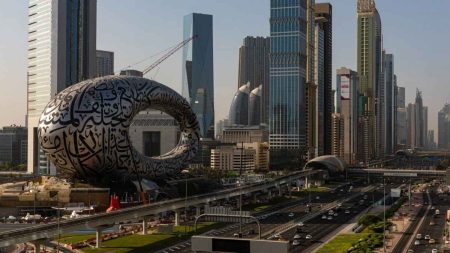
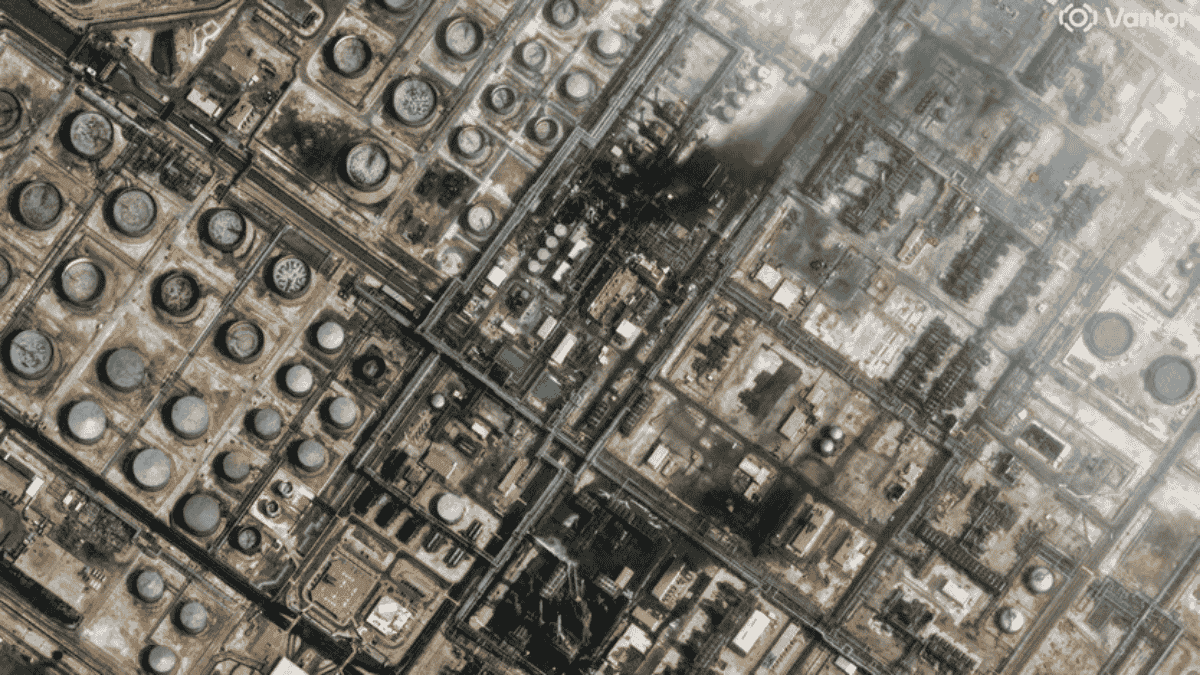
The second hazard is regional proliferation. Saudi Arabia intercepted ten drones and two cruise missiles on Wednesday morning, one over the oil-rich Eastern Province and two near Prince Sultan Air Base at al-Kharj. The kingdom has spent years trying to insulate itself from this kind of spillover. That effort has now failed. The United Arab Emirates also took a hit: a ship seven miles off the coast of Fujairah was struck by an unknown projectile, damaging its steel plating. A drone targeted the American consulate in Dubai, setting a parking lot alight.
Qatar, which hosts the region’s largest American air base, has arrested ten suspects it accuses of working for Iran’s Revolutionary Guard Corps. Seven allegedly gathered intelligence on military infrastructure; three were trained in drone operations and assigned to conduct sabotage. Bahrain rounded up several individuals who posted videos celebrating Iranian missile and drone attacks on the island kingdom.
The third hazard is economic contagion. South Korea, Asia’s best-performing market this year, halted trading on Wednesday after the Kospi benchmark fell more than 8%. The two-day crash is the worst since 2008. Japan’s Topix dropped more than 4%, Taiwan’s Taiex more than 3%. All three economies are net energy importers with export-heavy industrial bases that consume vast amounts of fossil fuels. Goldman Sachs’s chief executive, David Solomon, said he was “surprised” by how “benign” markets had seemed in the early days of the conflict. He may be less surprised now.
David Solomon was speaking in Sydney on Tuesday, before the worst of the sell-off. His surprise is understandable: for three days, investors seemed to treat the widening war as a contained event. They were wrong. The conflict has already drawn in every Gulf state, scrambled global energy routes and spooked Asian markets in ways that recall the 1970s. Whether it escalates further depends on Iran’s next move. The regime has lost much of its navy and air defence, but retains the capacity to lash out through proxies and asymmetric attacks. That capacity may now be all it has left.
The coming weeks will test whether American firepower can secure the free flow of energy that Mr Trump has promised. It will also test whether Gulf states, long accustomed to outsourcing their security to the United States, can withstand the blowback. On Wednesday morning, residents of Tehran woke to smoke rising over the city. They are not alone in wondering what comes next. ■