IMAGE: REUTERS
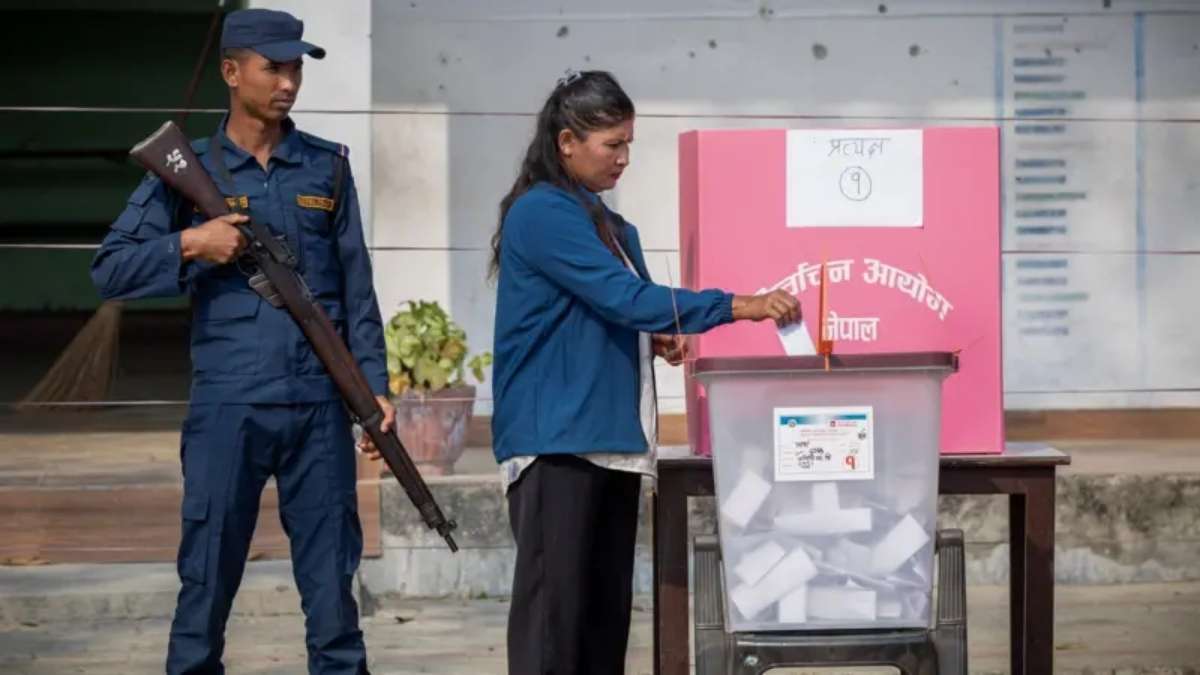
THE FIRST person to vote at a polling station in Budhanilkantha, on the northern edge of Kathmandu, was 105 years old. Chandra Bahadur Khadka had lived through the Rana autocracy, the panchayat system, the Maoist insurgency, the abolition of the monarchy and the birth of the federal republic. After casting his ballot he told reporters he hoped the country would get a representative who was “qualified, honest and works in favour of the people”. The queue behind him included 800,000 first-time voters. They had waited five months for this day, since their protests brought down the government and forced the election to happen at all.
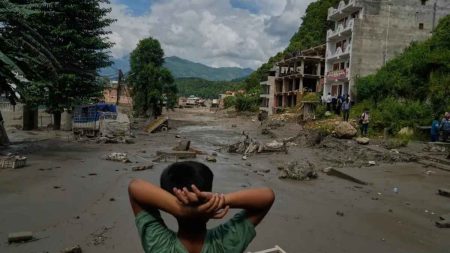
The vote on March 5th for 275 parliamentary seats was the first since last September, when a Gen Z-led uprising set fire to Nepal’s political certainties. The trigger was a government ban on social-media platforms, but the fury ran deeper. Corruption, unemployment, a sense that the republic had replaced a royal elite with a political one—all fuelled the crowds. In 48 hours the protests turned deadly; 77 people died. Official buildings burned. The prime minister, K.P. Sharma Oli, resigned. An interim administration led by Sushila Karki, a former chief justice, was installed with a single mandate: hold an election within six months. On March 5th Nepal did.
The result, when it comes in days or weeks, will be parsed in Kathmandu and beyond. India, China and America all watch Himalayan politics with a mixture of hope and wariness. But the most consequential audience is at home. Nearly 19m people registered to vote. Turnout may surpass 65%. And for the first time in a generation, the question is not just which coalition of familiar faces will govern, but whether those faces will be familiar at all.
The contest that encapsulates the moment is in Jhapa 5, an eastern constituency of green hills and slow rivers. It is a stronghold of Mr Oli, who has spent decades in politics and served as prime minister multiple times. He is running again, and told the BBC he expects to win. His opponent is Balendra Shah, known universally as Balen, a 35-year-old former rapper who until January was mayor of Kathmandu. Mr Shah campaigns in black sunglasses, refuses to speak to journalists and holds up a bell—his party’s symbol—as a promise to ring in something new. The contrast could hardly be starker: the veteran who was toppled by a youth movement versus the man who embodies it.
That movement, however, is not a monolith. Rakshya Bam, one of its leaders, watched the campaign with disappointment. None of the parties, she says, incorporated into their manifestos the pact signed with the government after the protests. “They want to sell the name of Gen Z and come into power,” she argues. “There were so many tasks to be done prior to the elections. Since nobody wanted to address them, I don’t have much expectations.” The protesters forced an election, but the election may not deliver what they sought.
The old parties are not blind to the threat. The Nepali Congress, the country’s oldest party, dumped its long-time leader Sher Bahadur Deuba in January after five terms as prime minister marked by allegations of corruption and poor governance. His successor, Gagan Thapa, promises to “clean up politics” and listen to young voters. The Communist Party of Nepal (UML), Mr Oli’s party, says the protests were not a referendum on his leadership. But the maths is unforgiving. In a crowded field, with nearly a million first-time voters and many more young people casting ballots, the old guard cannot rely on loyalty.
The logistical challenge of counting votes in a country where mountainous terrain covers more than 80% of the land means the wait for results will be long. Ballots are transported by foot, by helicopter, by whatever moves. In villages near Everest Base Camp, workers carry boxes for nine or ten hours before they can be airlifted. The delay feeds anxiety but also hope. For those who trekked five hours to cast their vote, as some did in the far west, the act itself was a statement.
The world beyond Nepal’s borders has its own stake. For China, which has deepened its engagement with left-leaning governments in Kathmandu, a weak performance by the traditional left would test its ability to adapt. India wants continuity on connectivity and economic ties; it also hopes newer parties will drop the reflexive anti-Indian rhetoric that older ones deploy. The United States, which has accused China of spreading disinformation about its policies in Nepal, would prefer a government less aligned with Beijing on issues like Taiwan and Tibet. Each will watch the coalitions take shape.
Yet the real drama is domestic, and it is human. A 40-year-old voter in Jhapa named Sushil Karki regretted the destruction of the protests—“valuable monuments, our government offices were burnt”—but still hoped for change. A woman in Kathmandu, Samikshya KC, said corruption was her main concern. “Nepal is becoming very corrupt,” she said. “I’m hoping for a big change.” A 105-year-old man wanted an honest representative. Six months after the streets burned, the people have spoken. Now they wait to see if anyone was listening. ■