IMAGE: SETOPATI
FOR A country that has spent three decades convulsed by civil war, the assassination of a royal family and the overthrow of a 240-year-old monarchy, Nepal’s general election on March 5th was a subdued affair. The preliminary turnout of 58% was the lowest since democratic polls began in 1991. Officials blamed voter fatigue, émigrés abroad and a million internal migrants who chose not to travel home. Yet for all the yawns, the ballot box has delivered a political earthquake.
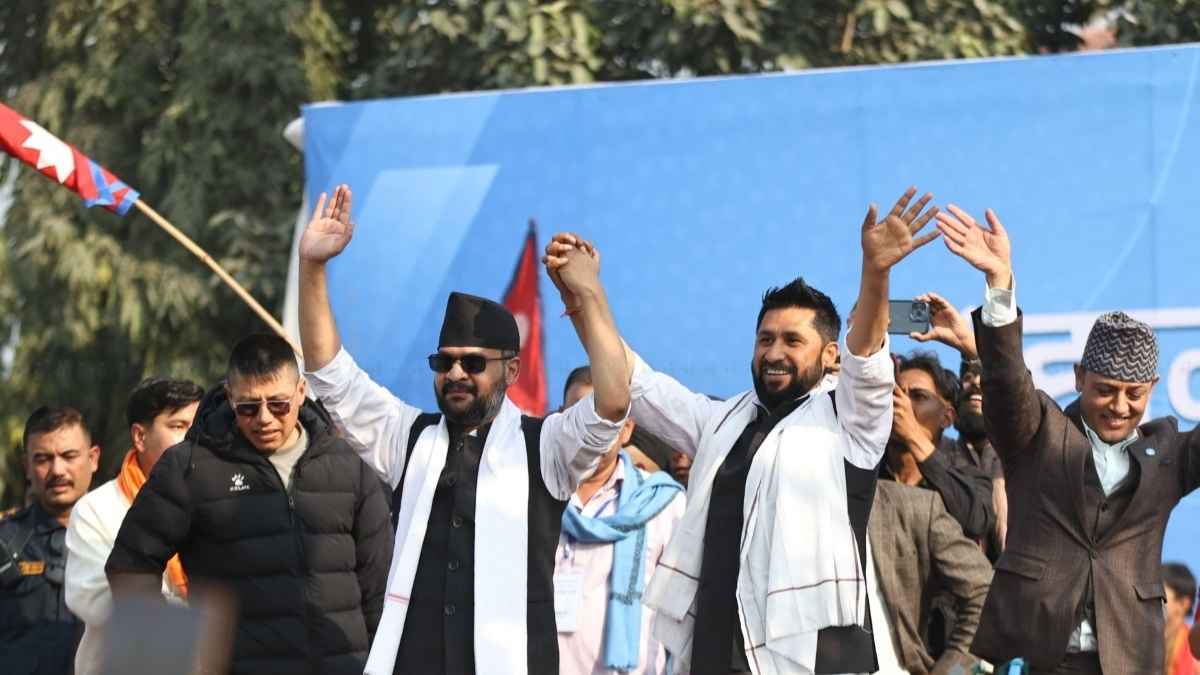
Early counts from 43 constituencies show the Rastriya Swatantra Party (RSP) leading in 35 of them. In the Kathmandu Valley, the heart of the nation’s political life, it is ahead in 14 of 15 seats. The party did not exist years ago. Its leader, Rabi Lamichhane, a former television anchor, is on course to win his seat in Chitwan. So is Balendra Shah, the party’s prime ministerial candidate, in Jhapa 5, a stronghold of K.P. Sharma Oli. RSP lieutenants—a mix of civil-society activists, businessmen and fellow broadcasters—are running up big majorities in constituencies from Morang in the eastern lowlands to Kanchanpur in the far west. The Nepali Congress, which has led almost every government since 1990, is reduced to an early lead in four seats. The CPN-UML, its main rival, trails in three.
What explains the surge? The RSP has profited from a collapse in faith in the established parties, which have overseen a decade of political paralysis since the end of the civil war. Nine governments have come and gone in that period. Economic growth has stagnated; corruption has flourished. Mr Lamichhane, by contrast, built a campaign around anti-corruption, good governance and a technocratic appeal to the young. His party’s candidates are, on average, a decade younger than their rivals.
The low turnout tells a second story. It is not that Nepal’s democracy is maturing, as former election commissioners argue. The voters who stayed home were disproportionately the loyalists of the old parties, disillusioned by factional squabbling and a lack of delivery. Their absence from the polling stations has magnified the RSP’s gains. The party’s own supporters—young, urban, connected—turned out in force, many of them voting for the first time.
The result, if confirmed, will redraw Nepal’s political map. The RSP will not win an outright majority—the 165 seats decided by the first-past-the-post system are only one half of parliament, with the rest filled by proportional representation. But it will emerge as the largest party in the lower house, and its leader will have a strong claim to form the next government. That will mean stitching together a coalition with the very parties his campaign has just humiliated. The old guard will demand cabinet posts in return for support. Mr Lamichhane, the anchorman who promised to clean the house, will find that governing is messier than television. ■