THE 107-YEAR-OLD woman carried in a wooden chair to cast her ballot understood what was at stake. So did the thousands who queued in Kathmandu’s squares and the millions who stayed home, too disengaged or too distant—working in Malaysia, in Qatar, in the Gulf—to have their say. The March 5th election was always going to be a referendum on the men who had run Nepal since the monarchy fell.
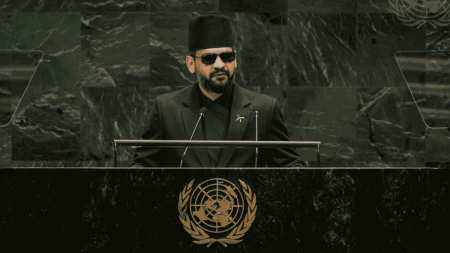
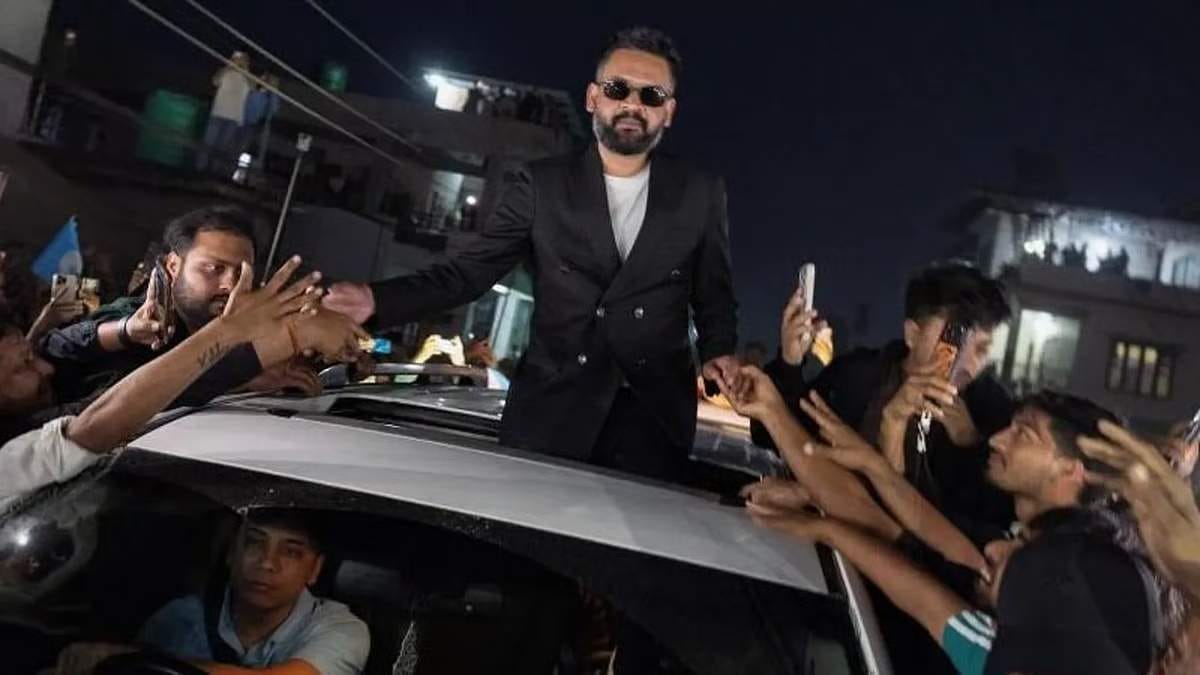
What no one expected was the scale of the reckoning. Balendra Shah, a 35-year-old rapper and structural engineer who performs as Balen, is set to become prime minister at the head of a party founded less than four years ago. His Rastriya Swatantra Party (RSP) has won perhaps 120 of 165 directly elected seats, and counting. The Nepali Congress and the Communist Party of Nepal (UML), which between them dominated every government for three decades, hold 27. Two of their leaders lost their own constituencies.
The obvious narrative writes itself. Gen Z, fed up with corruption and paralysis, has risen to claim its political inheritance. Last September, 77 protesters were killed by security forces; the country burned; a government fell. Now the young have voted, and democracy has spoken. The old guard, born before most of their constituents’ parents, have been shown the door. Fresh faces, digital fluency and technocratic competence will replace geriatric cronyism. Nepal, at last, will start to work. That is a delusion.
The truth is messier and more dangerous. Nepal’s young voted against something, not for something. The RSP’s manifesto is thin gruel: hydropower exports, judicial reform, a directly elected prime minister. Its campaign ran on rage. Rabi Lamichhane, the party’s founder and a former talk-show host, built his movement on anti-corruption while facing fraud charges himself.
Balen, as Kathmandu’s mayor, cleared trash and upgraded schools—and cleared out slums and street vendors, violently when necessary. His speeches mix technocratic promises with threats: contractors who delay roads should be tied to trees, he told one rally. His social media is bellicose. He has cursed India, China and America. The soundtrack of his campaign was a song whose lyrics describe a country without options, preyed upon by leaders it cannot escape. That is not a governing philosophy. It is a cry of pain.
A supermajority born of pain is a supermajority without brakes. The RSP will control parliament with the opposition shattered. Congress and the UML together will hold perhaps 70 seats in the 275-member house once proportional allocations are complete—a rump not a check. The upper house, elected by provincial assemblies, offers some resistance but cannot block legislation indefinitely. The anti-corruption commission, the auditor-general and the judicial council are formally independent. Their appointments flow through political channels that the RSP will now control. Investors who cheered the end of coalition paralysis may discover that predictability cuts both ways. Companies without access to the new ruling circle could face licensing delays that have nothing to do with their technical qualifications. In Nepal that is not a new phenomenon. It may just become more concentrated.
The foreign-policy challenge is starker still. Nepal sits between India and China like a walnut in a nutcracker. India controls 65% of its trade, most of its fuel and the transit routes for its goods. When relations sour—as in 2015, when Delhi imposed an unofficial blockade—petrol queues stretch for kilometres and hospitals ration supplies.
China has spent a decade building relationships through Nepal’s communist parties, signing Belt and Road agreements and pressing for tighter controls on Tibetan refugees. The RSP inherits both relationships with no diplomatic experience and a leader who has publicly endorsed “Greater Nepal”—a claim to Indian territory that Delhi’s mandarins will not ignore. The party’s slogan of repositioning Nepal from “buffer” to “bridge” sounds appealing until one notices that bridges require two willing endpoints. India and China do not seek mediation. They seek leverage.
The RSP’s best hope lies in hydropower. Installed capacity has reached 4,086 megawatts and could double by 2030. Electricity exports to India, properly managed, could generate $500m-800m a year—real money in an economy dependent on remittances from young men working abroad.
Energy diplomacy offers a practical path to turn campaign rhetoric into revenue, tying Nepal commercially to its giant neighbour while reducing the leverage created by trade dependence. But that requires the slow, technical work of negotiation and the discipline to resist nationalist gestures that play well on social media and poorly in New Delhi.
For the old parties, this election is not a setback but an extinction event. Parties that win 15% of the proportional vote do not function as national oppositions. Their remaining MPs face a choice between loyalty to collapsing institutions and alignment with the new majority. Defection cascades, once begun, are hard to stop. The upper house offers temporary shelter. It cannot offer revival.
None of this means the RSP will fail. Fresh faces can bring fresh thinking. A government unburdened by coalition bargaining can actually build things. The Upper Arun dam, delayed for years, could move forward. The Sunkoshi-3 project might finally break ground. But Nepal’s young voters, who carried their elders to polling stations and burned buildings when they felt betrayed, will not wait another 30 years for results. They have shown they can topple governments. They will show it again if the rapper they elected governs like the politicians they evicted.
The 107-year-old woman in the wooden chair did not travel an hour through the mountains to install a new elite. She travelled to demand that someone, finally, make her country work. Whether Balen can do that depends less on his lyrics than on his willingness to learn that governing is not rapping. The beat changes when you are the one in charge. ■