Image: Satellite image ©2026 Vantor via AP
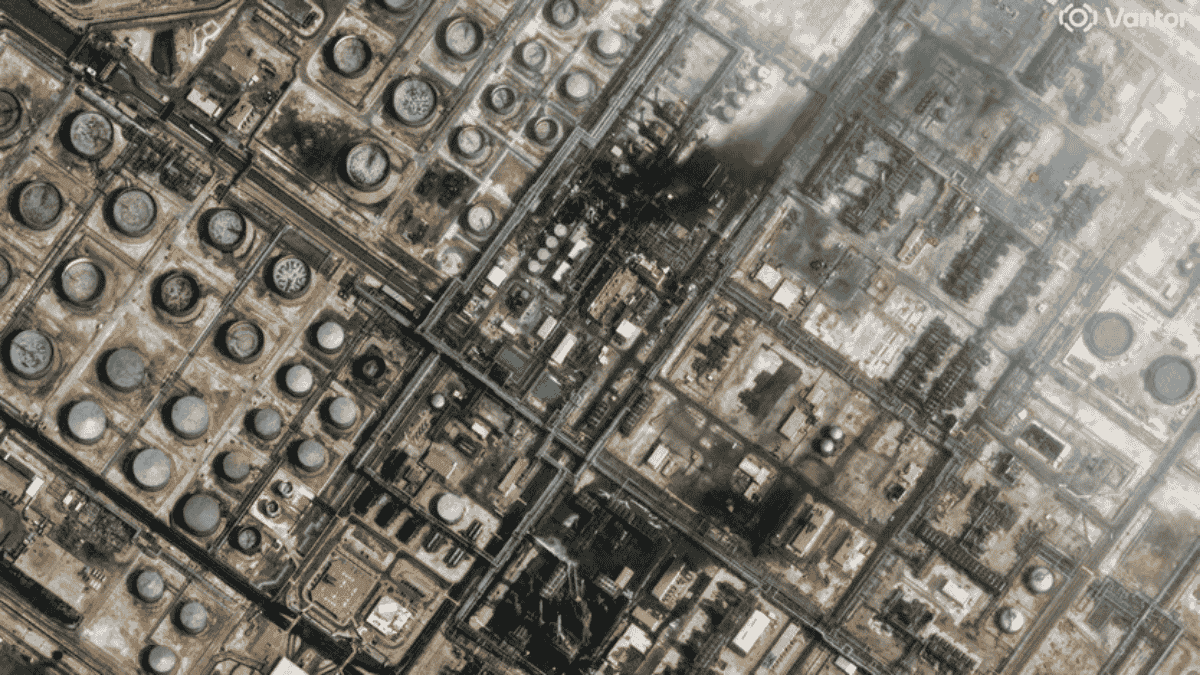
THE FIRST SHOCK was political: the killing of Iran’s supreme leader, the spreading confrontation across the Gulf, the installation of his son. The second is economic, and it arrived with the price of Brent crude pushing past $114 a barrel on March 9th. For Asia, which absorbs nearly nine-tenths of the oil and liquefied natural gas that passes through the Strait of Hormuz, this is an existential moment. The strait is all but closed. Tankers sit idle. And the region that powered global growth for decades suddenly faces the prospect of running on empty.
Asia’s vulnerability is not uniform but it is universal. Morgan Stanley calculates that every sustained $10 increase in oil prices shaves 0.2-0.3 percentage points from regional GDP growth. Japan and the Philippines rely on the Gulf for almost 90% of their oil. South Korea, which imports 70% of its crude from the Middle East and has no domestic production, is perhaps the most exposed. Its Kospi index fell more than 6% on Monday alone. India, caught between American pressure to cut Russian imports and its enduring dependence on Gulf supplies, faces soaring import bills and forced output reductions at refineries such as Mangalore, which has shuttered one of its three units.
China, the world’s biggest oil importer, has buffers that others lack. Its strategic reserves hold perhaps 1.4bn barrels, enough to cover a year of lost Gulf imports. But even China has ordered domestic refiners to suspend exports of diesel and petrol, a sign that authorities are husbanding resources. For everyone else, the situation is grim. Thailand, Singapore and South Korea hold 50 days of stocks or less. Bangladesh, India and Pakistan are scrambling for LNG spot cargoes at prices that have already tripled freight rates from the Atlantic basin.
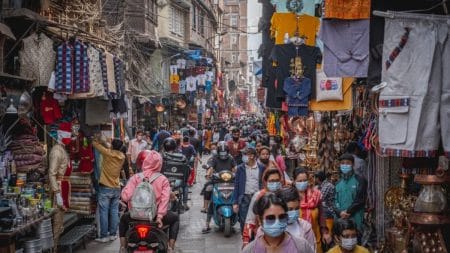
Yet the deepest anxiety is reserved for the region’s most peripheral economy: Nepal. The country’s fuel storage holds barely 13 days of supplies, a vulnerability exposed by the 2015 Indian blockade and never remedied. A decade after officials first pledged a 90-day strategic reserve, the Nepal Oil Corporation has built almost nothing. “The work progress is at a snail’s pace,” one official admits. When news broke of the strikes on Iran, motorists in Kathmandu interpreted the country’s lack of buffer as an invitation to hoard. Petrol pumps that typically shift 10,000-12,000 litres a day found themselves selling 25,000-30,000.
The government says supply is secure. The Indian Oil Corporation has given assurances; a pipeline from Amlekhgunj runs regularly; a price-stabilisation fund holds nearly Rs20bn ($135.5m) to cushion shocks. Yet the reassurances miss the point. Even if the taps keep flowing, the cost will rise. International prices have already fed through to Nepal’s fortnightly reviews, and the only question is how high they go. JPMorgan Chase forecasts Brent crude could hit $120 a barrel if the conflict drags on. For a country that imports all its fuel, that means higher transport, manufacturing and food costs. Inflation will climb.
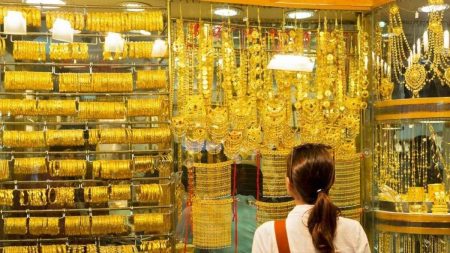
The bigger exposure, though, is in the workforce. Roughly 1.7m Nepalis work in the Gulf, nearly 450,000 of them leaving each year for the region. They send home remittances worth about 25% of GDP—in the first half of this fiscal year, Rs1.06trn ($7.5bn) flowed back to Nepal, more than 40% of it from Gulf countries. Saudi Arabia, Qatar and the UAE alone account for a third of total inflows. That money props up rural households, bank deposits and the current-account balance. It also funds imports, including the very fuel whose price is about to spike.
The war has already claimed one Nepali life in Abu Dhabi. Thousands are stranded at closed airports in Doha and Dubai. The foreign ministry has opened an emergency portal to track citizens; the Philippines is preparing to repatriate 2.4m workers if things worsen. For Nepal such a scenario would be catastrophic. “If Nepalis who went abroad for employment are forced to return, the country does not have the capacity to provide them jobs,” warns Dipendra Bahadur Kshetri, a former central bank governor. Land lies barren but the systems to work it do not.
The paradox is that Nepal has done little wrong. It did not depend on Iranian crude; it did not gamble on spot markets; it followed the prudent path of buying from a reliable neighbour. Yet here it is, caught in a pincer between fuel inflation and remittance risk, because the Gulf’s troubles do not stop at the Strait of Hormuz. They travel overland, through India, up the mountain roads and into the queues at Kathmandu’s petrol stations. For Asia’s smaller economies, the lesson is brutal: when the Gulf sneezes everyone catches a cold. But those with no reserves catch pneumonia. ■