ILLUSTRATION: SHUTTERSTOCK
NEPAL’S ECONOMY has operated like a private club with a very exclusive guest list. A handful of family conglomerates—the Chaudharys, the Golchhas, the Shankers—control banking, cement, noodles and hotels. They lend to one another’s firms and face little competition. The state, rather than acting as a referee, has tended to serve as a facilitator. This is the “tycoon economy”: a system where proximity to power matters more than innovation.
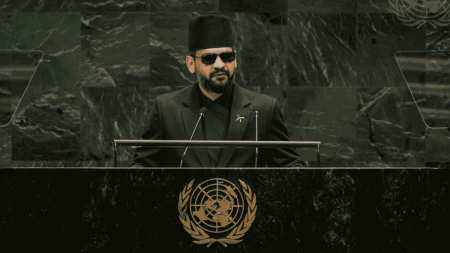
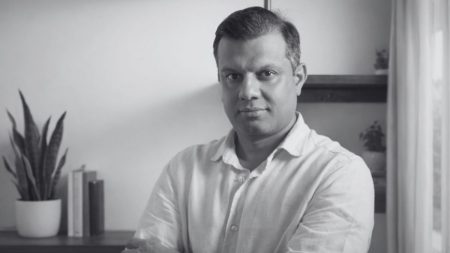
Into that world comes Swarnim Wagle. The probable incoming finance minister is an economist with degrees from Harvard and London School of Economics, a former adviser to the World Bank and the intellectual architect of the new government’s manifesto. He has a mandate, a near-supermajority in parliament and a rare chance to remake Nepal’s future. But his greatest trouble is overcoming a century-old system that has no intention of yielding.
Nepal’s tycoon economy is not a recent invention. Its roots lie in the Rana regime, which treated the treasury as family property, and in the Panchayat era, which handed import licences to a chosen few. When democracy returned in 1990, those families were best placed to benefit. They used their capital to buy banks, which then lent to their own industrial ventures. Today ten to twenty large groups receive as much as 40% of all bank credit. Small firms struggle for scraps. The result is a market where competition is seen as a problem to be managed rather than a virtue to be pursued.
The social costs are staggering. Nepal has one of the highest wealth gaps in South Asia. The richest 10% hold 26 times more wealth than the poorest 40%. Nearly 40% of national wealth is concentrated in a single province. The state spends only 5% of its budget on health. The elite can afford private alternatives; the poor are left with crumbling public institutions. And now a growing number of tycoons are entering parliament directly, blurring the line between public interest and private gain.
Mr Wagle’s diagnosis is sound. He has spoken for years about Nepal’s “remittance trap”, where millions work abroad to send money home, fuelling consumption rather than investment. He wants to create 1.2m domestic jobs, double the economy to $100bn and overhaul a tax system while failing to broaden the base. His approach is to start with visible reforms from corporate taxes to digital payments, in order to build political capital before tackling harder structural changes.
But his success depends on more than technical competence. The system he seeks to reform has survived monarchy and decades of political turmoil. Its power is its ability to adapt. Tariffs are high to protect domestic producers. The competition law passed in 2007 remains largely unenforced. A loophole allows the government to waive it during a “crisis”, a provision that has been used to shield favoured cartels. Breaking this means not just new rules but institutions that can enforce them, too.
Mr Wagle has two assets his predecessors lacked. The first is an electoral mandate. He won his own seat in Tanahun-1 twice, and his party commands a parliamentary majority. He is not a technocrat parachuted in, meaning he has a political base. The second is his network. He knows the World Bank and the UN system from the inside, which means he can negotiate with Nepal’s development partners on equal footing. That matters because reform will need credible commitments, and credible commitments need institutions that outsiders trust.
The danger is that stability becomes a trap. Inflation is low, reserves are high and the economy appears calm. But the underlying vulnerabilities—from remittance dependence and weak investment to a hollowed-out industrial base—have not gone away. Mr Wagle must use this window of calm to make structural changes before the next shock arrives. He must also manage expectations. The ambition of doubling the economy in seven years is heroic. If growth disappoints early the opposition will weaponise the gap between promise and delivery.
Nepal’s republic was supposed to democratise the counting house as well as the ballot box. Two decades on the economy remains a game of musical chairs played by the same few families. Mr Wagle has the credentials and the mandate to change that. Execution will define his legacy. It will also decide if Nepal’s young entrepreneurs and its millions of migrant workers finally get a fair deal. The technocrat is ready. Now comes the hard part: breaking the house’s grip. ■