IMAGE: ASSOCIATED PRESS
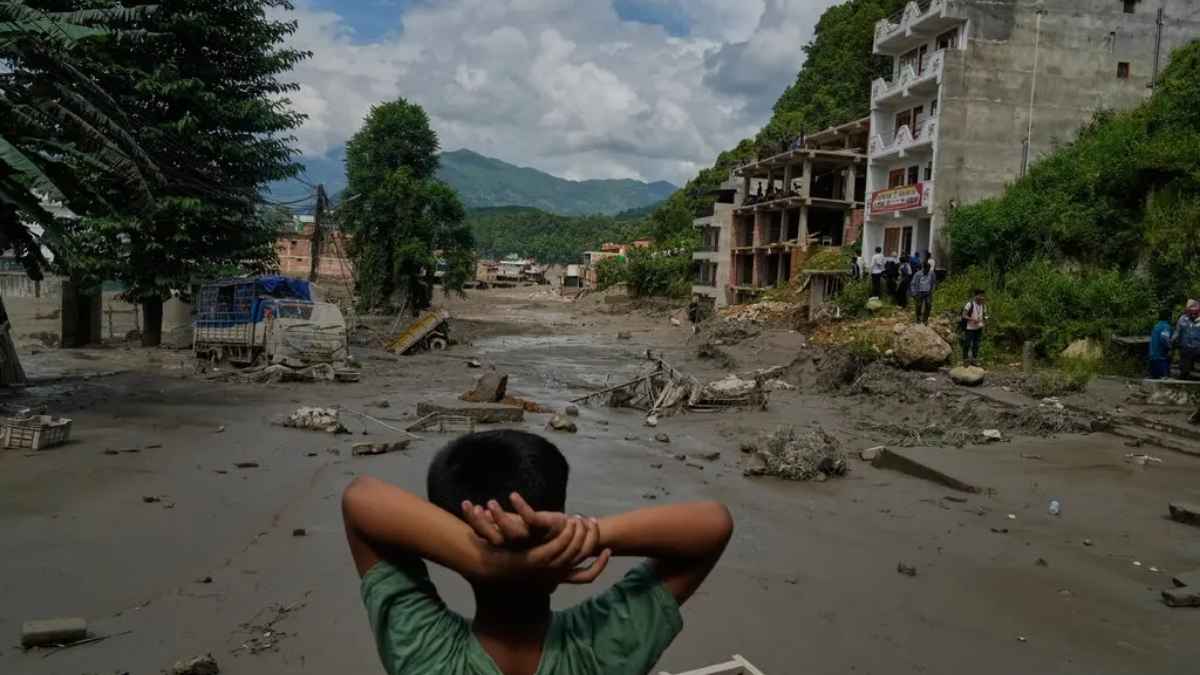
THE BHOTEKOSHI river, which forms part of the border between Nepal and Tibet, is a capricious beast. On August 26th it turned murderous. A wall of water, mud and boulders tore through the Rasuwa district, levelling towns, sweeping away bridges and killing over 500 people. More than 1,400 remain missing. Among them are hundreds of foreign nationals—Indians, Americans, Britons, Australians, South Koreans and others who had come to work on hydropower projects or to trek in the Himalayas.
The disaster is a tragedy of immense proportions. Nepal’s response shows a narrow diplomatic view.
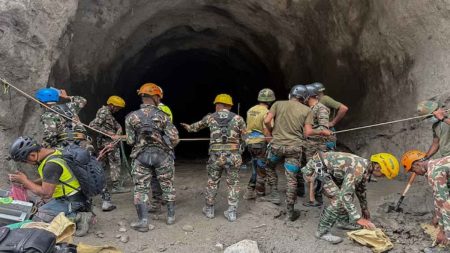
The government in Kathmandu has turned down offers of search-and-rescue teams from India, China, America, Britain, Japan, South Korea and others. Its official line is that Nepal’s own security agencies are capable of handling the operation. This is not entirely false.
Nepal’s army and police have experience in disaster response. But capability is not the same as capacity. The scale of destruction—entire towns obliterated, roads impassable, hydropower plants damaged, a new glacial lake threatening to burst—would stretch any country’s resources. Nepal’s population is 30m. Its disaster-management apparatus is modest. To insist that outside help is unnecessary is either delusional or disingenuous.
The real reasons are more revealing. One is the ghost of 2015. When a devastating earthquake struck that year, scores of foreign rescue teams descended on Nepal. The result, according to officials, was chaos: logistical competition and coordination failures. Kathmandu remembers that mess and has resolved never to repeat it. This time, it wants a single, centralised operation run by its own forces. Financial contributions, by contrast, are welcome—channelled through a one-door mechanism, the Prime Minister’s Relief Fund. Money does not argue about who is in charge.
Then there is the geopolitical ghost. Rasuwa district borders China’s Tibet Autonomous Region, a place Beijing guards with pathological sensitivity. Dinesh Bhattarai, a former Nepali ambassador, has suggested that Kathmandu’s reluctance to admit foreign teams may reflect concerns about the location. The government denies this.
But denial is not proof. Nepal has long walked a tightrope between its two giant neighbours, India and China. Allowing American, British or even Indian rescue teams to operate along the Tibetan frontier would require approvals and generate optics that Kathmandu would rather avoid. Better, in its calculation, to keep everyone out than to risk offending anyone.
This is a mistake. The distinction Nepal is drawing—between accepting financial aid and accepting operational teams—is administratively convenient but morally dubious. When people are trapped under rubble, when the clock is measured in hours, cash is a poor substitute for hands and equipment. India has offered Bailey bridges to restore connectivity. America and Britain have pledged humanitarian assistance. South Korea has sent a response team and offered $1m. These are expressions of mutual interest. Nepal’s foreign workers contribute to its economy. Its trekkers sustain its tourism. When disaster strikes, the countries that sent them have a right—and a duty—to help find them.
The argument that foreign teams create coordination problems is a counsel of despair. Coordination is tough. That is why you plan for it. Nepal could have accepted the offers on its own terms: a unified command structure, clear geographical zones. It could have turned the 2015 chaos into a lesson rather than an excuse. Instead it has chosen a posture of self-sufficiency that looks like pride rather than strength.
The bigger truth here is about the nature of sovereignty in a fragile state. Nepal is proud, poor and perpetually anxious about its place between giants. Its instinct to control the narrative of its own disaster is understandable. But sovereignty is not diminished by accepting help, meaning it is affirmed by managing it well. The countries that have offered assistance are seeking to save lives rather than seeking to colonise Rasuwa—including the lives of their own citizens. To refuse them is to prioritise optics over outcomes.
Kathmandu still has time to change course. The rescue operation is ongoing. The offers remain on the table. South Korea has said it will keep negotiating. India is preparing a tunnel-rescue team. Nepal should say yes—not to everything, but to what it needs, when it needs it, under terms it sets. That would be a sign of maturity rather than weakness.
The Bhotekoshi will flood again. The Himalayas will shake again. Nepal cannot prevent that. But it can decide how to respond. The lesson of 2015 was that unmanaged help is unworkable. Management is a choice. So far Nepal has chosen the wrong one. ■