
IMAGE: PM’S OFFICE
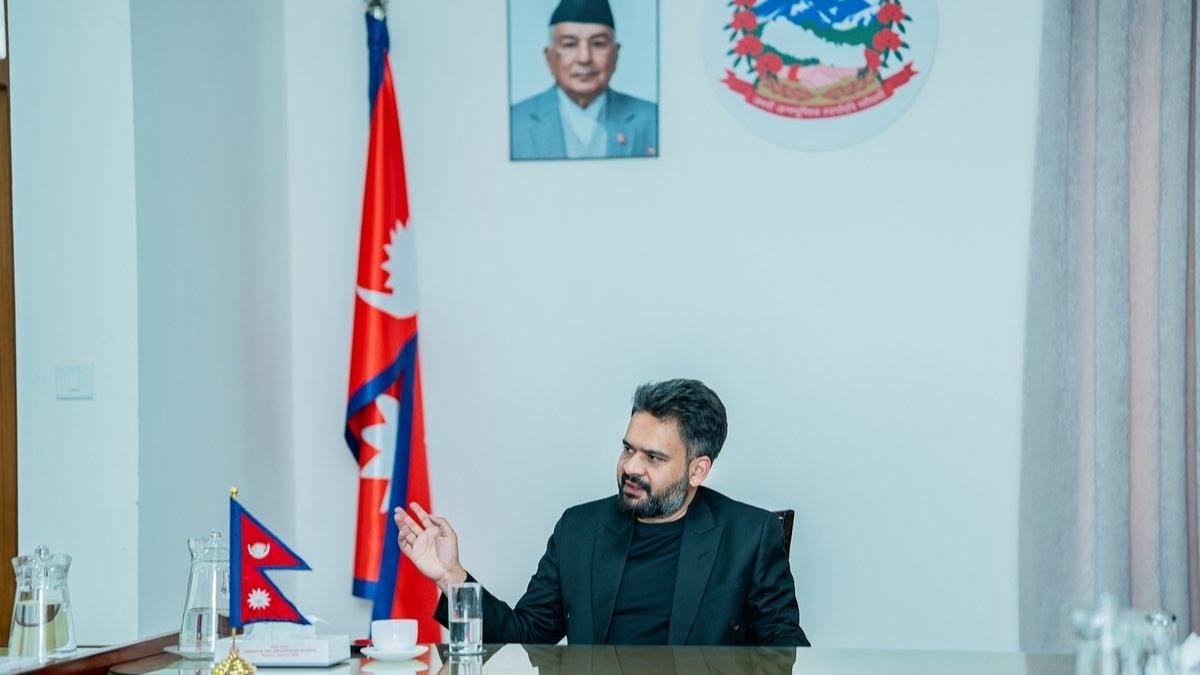
THE YOUNG Nepali who swept into power in March on a tide of Gen Z fury made a 100-day pledge. He would gut the rotten institutions that had failed his generation. On May 2nd President Ram Chandra Paudel signed three ordinances that did exactly that. Within hours 1,594 office bearers across Nepal’s public life had lost their jobs. The vice-chancellors of sixteen universities, the leadership of seven health science academies, the executive director of the electricity authority, the heads of the press council, the telecommunications regulator, the truth commission, the labour board and the securities market. All gone.
The legal assault comes through ordinances covering universities, health-science academies and all other institutions: each asserting supremacy over existing laws. Tenure, contract, accrued benefits: none of it mattered. The scope is so sweeping that it is difficult to find a corner of the Nepali state untouched. Tribhuvan University alone lost 84 officials. The entire leadership of the national airline was vacated. Even the transitional justice commissions (set up to address war-era atrocities that have registered over 60,000 complaints without resolving a single one) were cleaned out, their commissioners dismissed as victims prepared testimony for an upcoming UN special rapporteur visit scheduled for June.
The government of prime minister Balendra Shah says the move will “strengthen administrative structures and revitalise state institutions”. The method is certainly decisive.
But the silence on what comes next is louder than the action itself. The government has promised new appointments but offered no timeline and no indication of whether the replacements will be chosen on merit or just swapped for a new set of political loyalists. Parliament, inconveniently, has been postponed indefinitely after being summoned—a constitutional novelty, as one legal scholar notes, that suggests a desire to bypass the usual legislative scrutiny. A 100-day deadline concentrates a mind but it also crushes nuance.
The global record offers little comfort for those who see mass dismissal as a shortcut to clean government. In 2004 Georgia’s Mikheil Saakashvili abolished the country’s notoriously corrupt traffic police and eventually dismissed roughly 85% of the entire uniformed police force—around 15,000 to 16,000 officers—while also dissolving a KGB-style security ministry. By 2010 Transparency International’s corruption perceptions index had placed Georgia at 68th in the world, up from joint 124th in 2003; by 2015 it had reached 48th. That improvement, spanning a decade, was not produced by dismissals alone. The purge was paired with immediate rehiring, salaries raised by a factor of ten or more, new equipment and institutional restructuring.
Turkey’s post-coup purge of 2016 offers the cautionary opposite. More than 130,000 public employees—judges, academics, teachers, police—were dismissed by emergency decree without individual evidence or right of appeal. The result was a politicised state rather than a cleaner state. Nigeria tried a mass purge in 1975 and analysts have documented lasting damage to its bureaucratic culture. Rwanda slashed central ministry staffing by 90% between 1998 and 2009, tripled salaries for those who remained and decentralised functions to district administrations.
Outcomes were mixed: civil servants reported better staff quality but ministries left too slim to carry out essential functions. Eastern Europe’s lustration laws, which barred former communist officials from public employment, produced ambiguous institutional results—reducing political continuity without necessarily building the merit-based replacements that lasting reform needs.
Purges, it turns out, can substitute for institution-building rather than enable it. Singapore, that most boringly effective of places, built a corruption-proof bureaucracy without firing anyone en masse. It raised salaries, empowered an anti-graft agency and made clean governance non-negotiable. The lesson is consistent. Dismissals alone change nothing. They reset the board instead of the rules.
Where does Nepal sit on this spectrum? Too early to say but the early signs are worrying. The ordinance’s “notwithstanding” clause is a constitutional grenade. Legal challenges are being prepared, and the Supreme Court may well throw the whole thing out, leaving a leadership vacuum across dozens of institutions and zero reform to show for it. The government’s suspension of parliament does not suggest a man in love with checks and balances. And the absence of a detailed plan for new appointments—how they will be made, by whom, on what criteria—suggests a priority on removal over reconstruction.
Yet the mandate is real. The Gen Z movement that swept Mr Shah to power was a rejection of a political class that had turned the Nepali state into a patronage bazaar. The old officials dismissed on May 2nd were not, for the most part, shining paragons of public service. Many owed their jobs to political connections rather than competence. The truth commissions, in particular, had become a running embarrassment, incapable of delivering justice to victims of the civil war. A government that does nothing in the face of such decay is not a government worth having.
The decisive test is the replacement. If the Shah government follows the Georgian model—transparent recruitment, higher pay, institutional safeguards, a timeline for filling vacancies that restores rather than merely reassigns power—this could be remembered as a real rupture with the past. If it follows the Turkish one—new faces, same political calculus, no due process—it will be just another coup in civilian clothing.
The difference between a reform and a purge is what happens the morning after. Nepalis, who have seen many grand promises dissolve into old habits, are watching with the weary hope that defines their politics. They have been disappointed before. This time they would very much like not to be. ■




