IMAGE: PRABIN RANABHAT/BIZMANDU
ON A November night in 2025, Balendra Shah sat in a Lalitpur restaurant scrolling through his phone and decided, on impulse, to pick a fight with the world. In a Facebook post that he deleted within thirty minutes, Kathmandu’s mayor, known as “Balen”, vented fury at Nepal’s major political parties and at India, China and America. “Fuck America, Fuck India, Fuck China, Fuck UML, Fuck Congress, Fuck RSP, Fuck RPP, Fuck Maobaadi. Go to hell, you guys all combined can do nothing,” he wrote. Within twenty-two minutes the post had drawn over 30,000 reactions. Friends called urging him to delete it. He did, but not before thousands of people had taken screenshots.
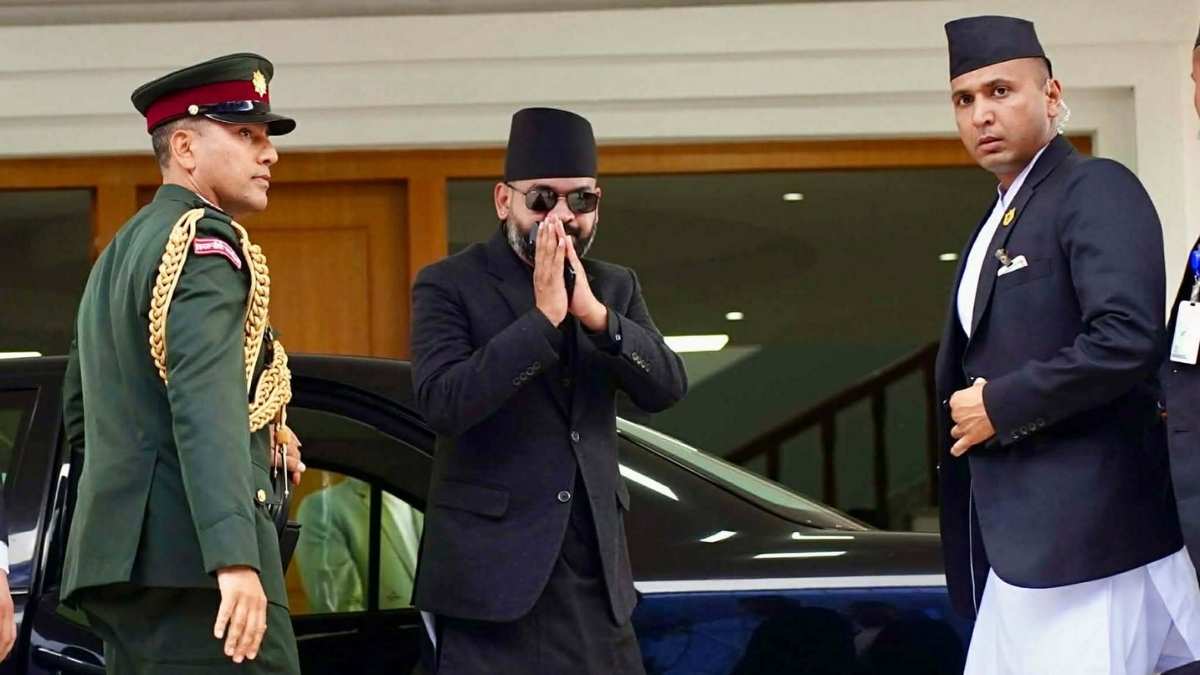
That episode captures something essential about the man who became prime minister on March 27th. At 36 Mr Shah is Nepal’s youngest democratically elected head of government, and his path from underground rapper to Singha Durbar (the government secretariat) is unlike any other in modern democratic history. He is an engineer who rapped about corruption; a technocrat who deploys bulldozers as political theatre; and a populist who promises to fix what politicians broke. His supporters see a generation-defining reformer; his critics detect early signs of a strongman in the making. Both readings contain enough truth to be unsettling.
Mr Shah was born in 1990 in Naradevi, Kathmandu, the youngest son of an Ayurvedic practitioner, and he came of age during Nepal’s decade-long Maoist civil war. He earned a master’s degree in structural engineering from a university in Karnataka, India, and then returned home to build a parallel identity in the capital’s underground hip-hop scene. His lyrics were not merely decorative expressions of rebellion. In “Balidan”, a song that has accumulated 14m views on YouTube, he rapped: “While we sell our identity abroad, government employees get a 30k salary and have properties in 30 different places. Who will pay the debt of people working seven seas away?” To older voters, he appeared as a credentialed problem-solver; to the young, he was Balen, a king of “Nephop” whose music gave voice to a collective sense of humiliation and anger.
That dual identity proved to be exceptionally potent in a country that had become exhausted by institutional decay. Since the abolition of the monarchy in 2006, Nepal had cycled through more than a dozen governments in just 17 years. The same three parties—the Nepali Congress, the CPN-UML and the Maoist Centre (now the Nepali Communist Party)—rotated power through ever-shifting coalitions whose primary purpose seemed to be political survival rather than governance. The unemployment rate hovered above 20%. Economic opportunity became increasingly tied to migration abroad, with remittances sustaining the economy while hollowing out its productive base. A pervasive sense took hold that the political class existed mainly to serve itself.
The Gen Z protests of September 2025 crystallised this accumulated frustration. The proximate trigger was the Oli government’s ban on 26 social media platforms, a transparent attempt to silence the “nepokids” trend that had mocked politicians’ wealthy offspring. The protests quickly metastasised into a wholesale indictment of the entire political system. At least 76 people died, many of them shot by the police. Government buildings were torched, parliament was ransacked and prisons were overrun, releasing 13,500 inmates. Prime Minister K.P. Sharma Oli was forced to resign.
Mr Shah positioned himself carefully during the uprising. He expressed solidarity with the protesters but urged restraint when violence escalated. His songs became anthems of the movement. When an interim government was formed under former Chief Justice Sushila Karki to oversee fresh elections, Mr Shah declined an offer to become interim prime minister, calculating correctly that a democratic mandate would be worth far more than an appointed office.
He then decided to join the Rastriya Swatantra Party (RSP), founded by Rabi Lamichhane, a television journalist. The RSP needed a recognisable face, and Mr Shah needed a political vehicle. In the general election held on March 5th, the RSP secured 182 out of 275 seats, falling just two short of a two-thirds majority. Mr Shah personally defeated Mr Oli in the veteran leader’s home constituency by a margin of nearly 50,000 votes. Every senior leader of the old parties lost except Pushpa Kamal Dahal “Prachanda”.
The mandate was extraordinary, but so were the expectations that came with it. As Shishir Khanal, an RSP leader who later became foreign minister, told Al Jazeera: “We were expecting just over a 50% majority, but a two-thirds mandate was beyond our expectations. The challenge is that such a mandate creates very high expectations among people, who want fast results. Given Nepal’s institutional capacity and almost stagnant economic growth, delivering those results will be extremely difficult.”
The first six weeks of Mr Shah’s premiership have produced signs that are promising as well as worrying. On the positive side, his government has published a serious reform agenda. The “National Commitment” document, released in April, promises annual economic growth of 7%, a rise in per capita income to $3,000, digital transformation and stable tax rates for a decade. The finance minister, Swarnim Wagle, is a former World Bank official who brings much-needed technocratic expertise to a cabinet that had long been accustomed to patronage appointments. A wealth-probe commission chaired by a former Supreme Court justice provides a credible mechanism for investigating elite corruption.
On the other hand, the government’s methods have raised alarms. Within weeks it introduced a package of several ordinances covering constitutional council procedures, civil service dismissals, cooperative regulation and 20 separate legal amendments. All of these were enacted through executive action rather than parliamentary deliberation. The most controversial ordinance would allow the six-member Constitutional Council (which recommends appointments for the chief justice, Supreme Court judges, ambassadors and the heads of 13 constitutional commissions) to make decisions with the agreement of just three members. That would give the government effective control over those appointments without requiring the consent of the opposition.
President Ramchandra Paudel returned the ordinance for reconsideration, but the cabinet resent it unchanged. The timing has been significant. On May 7th the Constitutional Council recommended Justice Manoj Kumar Sharma as Nepal’s next chief justice, ending more than a month of uncertainty following the retirement of former chief justice Prakash Man Singh Raut in March. The recommendation is historically notable because Justice Sharma is fourth in the Supreme Court’s order of seniority; this is the first time a justice so far down the hierarchy has been proposed for the judiciary’s top post. If he is approved through parliamentary hearings, he will serve a full six-year term. Nevertheless, the government’s push to influence constitutional appointments has fuelled political unease. Bishwa Prakash Sharma of the Nepali Congress went so far as to compare the government’s approach to North Korea, arguing that “three members cannot constitute a majority in a six-member Constitutional Council” and warning against “undermining democratic norms”. The rhetoric is exaggerated but the concern about executive influence on supposedly independent institutions is real.
Beyond the judiciary, several other developments warrant scrutiny. The government has ended its advertising spending on private media outlets, thereby creating economic pressure on independent news organisations. When a YouTuber named Roshan Pokharel was arrested for using “abusive language” against the prime minister, the irony was inescapable: a leader who built his career on provocative speech was now using the legal apparatus to silence criticism. Mr Pokharel was released after pressure from Gen Z activists. Parliament has not been convened regularly, and opposition lawmakers complain of being sidelined. The government has relied heavily on ordinances as a tool of governance, shifting power away from the legislature and towards the executive.
These patterns echo developments in other democracies where reformist leaders have used anti-corruption mandates to concentrate power. One can think of the Hungarian model under Viktor Orbán, the Polish trajectory under the Law and Justice party, and the Indian experience under Narendra Modi. In each case institutional capture proceeded gradually, justified by the failures of the old order. Mr Shah has been in power for barely seven weeks, so comparisons should not be overdrawn. Yet the logic is recognisable, and the institutional guardrails in Nepal are weak. Independent courts, professional bureaucracies and autonomous media have survived 15 governments in 17 years not because they were strong but because they were weak enough to be irrelevant. No one needed to dismantle institutions that had already hollowed themselves out.
The Kathmandu mayoralty, which Mr Shah held from 2022 until his elevation to prime minister, offers a useful laboratory for understanding his governance philosophy. He inherited a city that was choking on its own dysfunction: illegal structures blocked ancient rivers; commercial buildings flouted building codes; pavements had been colonised by vendors and parked vehicles; and tax compliance was minimal. His response was quick, public and somewhat theatrical. He deployed bulldozers against unauthorised structures in commercial zones. His most high-profile campaign targeted underground parking spaces that had been illegally converted into shops and restaurants, a practice that had persisted for years because it implicated powerful interests. He also launched efforts to uncover the long-buried Tukucha river, demolishing structures that had encroached on the ancient waterways.
The results were uneven. Supporters saw a leader who was finally enforcing laws that previous administrations had systematically ignored. Critics saw heavy-handed enforcement that prioritised aesthetics over livelihoods, bulldozers over due process. Human rights groups documented cases of displaced families who received no compensation or rehabilitation. Yet even his critics acknowledged that Mr Shah had changed the terms of debate. As Nabin Manandhar, the spokesperson for the Kathmandu Metropolitan Office, put it: “There were gross violations all across the city—businesses being run in basement parking spaces and buildings being built without any design approvals.” The systematic non-enforcement of laws had created a parallel economy of illegality that functioned with political protection, and Mr Shah’s bulldozers broke that compact.
The mayoral tenure revealed a pattern that would go on to define his national leadership: a preference for high-profile, confrontational action over institutional process; a reliance on personal authority rather than bureaucratic machinery; a communication strategy that bypasses traditional media; and a willingness to court controversy in pursuit of what he defines as the public good. As prime minister, these instincts have not softened. His very first cabinet meeting endorsed a 100-point governance reform agenda that promised to downsize federal ministries; merge financially burdensome boards; depoliticise civil servants and deliver public services directly to citizens. The ambition is striking, but so is the method.
The bigger question is the extent to which Mr Shah’s approach can scale beyond a single municipality. Populist movements that fail to deliver measurable improvements in people’s lives tend not to fade quietly; instead they radicalise. Nepal’s economic starting point is daunting. Remittances account for more than a quarter of GDP. Agriculture employs the majority of the workforce but suffers from low productivity and vulnerability to climate change. Private investment is constrained by regulatory complexity, infrastructure deficits and political uncertainty. Youth unemployment drives migration that, in turn, depletes the human capital needed for development. The government’s growth targets are not impossible, but they need sustained policy consistency, heavy investment and institutional capacity that Nepal has historically lacked.
Early controversies have also revealed vulnerabilities. The resignations of Home Minister Sudan Gurung, who faced allegations of links to a businessman under investigation for money laundering, and the sacking of Labour Minister Deepak Sah, who appointed his wife to a public board, undermined the government’s anti-corruption credentials within weeks of taking office. The decision to impose mandatory customs duties on goods worth more than Rs100 brought from India triggered protests in border communities. The government’s reluctance to address allegations against party chairman Rabi Lamichhane in cooperative fraud cases has raised questions about selective accountability.
Meanwhile Mr Shah’s foreign policy has been unclear with occasional provocative actions. His first major decision as prime minister was to cancel all foreign visits for the coming year, including a planned trip to India, in order to focus on domestic governance. For India, the signals have been discomfiting. Mr Shah’s past nationalist provocations—the installation of a “Greater Nepal” map in his mayoral office in response to India’s “Akhand Bharat” mural; a ban on Bollywood films in Kathmandu cinemas; and the expletive-laden Facebook post targeting foreign powers—created a baseline of suspicion that his current ambiguity does little to dispel.
For China, the trouble is different. The rout of the communist parties in the election was, as analysts have noted, a major setback for Beijing. Yet China has adapted quickly, congratulating Mr Shah and signalling a willingness to continue cooperation through the Belt and Road Initiative. The United States, meanwhile, has been actively courting the new government; President Trump’s special envoy for South and Central Asia recently visited Kathmandu.
The central question is not Mr Shah’s intent to build an authoritarian system; intentions matter little for institutional outcomes. The question is how far the structures he is creating—from personalised decision-making and ordinance-based governance to control over appointments to oversight bodies and a media strategy that bypasses scrutiny—will, over time, concentrate power in ways that future leaders, perhaps less benign, might exploit. The experience of other democracies offers useful lessons but no clear blueprint. Some outsider figures, such as Ukraine’s Volodymyr Zelenskyy, have been tested by existential crisis and have responded by deepening democratic practices while centralising executive authority within constitutional bounds. Others, such as El Salvador’s Nayib Bukele, have used reformist mandates to systematically dismantle democratic constraints.
Mr Shah could evolve in several different directions. He could become a genuinely reformist statesman who uses his mandate to rebuild institutions rather than to bypass them. He could become a permanent outsider, more cozier with confrontation than with the compromises that governance requires. He could mature into a charismatic technocrat who combines expert administration with popular connection in a new model of democratic leadership. Or, under the pressure of unmet expectations, he could become the authoritarian populist that his critics already see, centralising power, constraining the opposition and justifying democratic erosion as the price of effectiveness.
What makes this moment so consequential is that it forces a confrontation with an ugly truth about democratic politics. Citizens often want things that are in tension with one another. They want leaders who are strong but not authoritarian; decisive but not arbitrary; and disruptive but not destructive. They also want institutions that protect rights and that also deliver tangible results. These contradictions are manageable when trust in the political system is high, but when that trust has collapsed, they can become explosive. Balendra Shah did not create these contradictions; he is their product. Whether he becomes their resolution or their intensification is the tension that will define his premiership and, with it, the future of democratic governance in Nepal. ■