IMAGE: BALKRISHNA CHETTRI
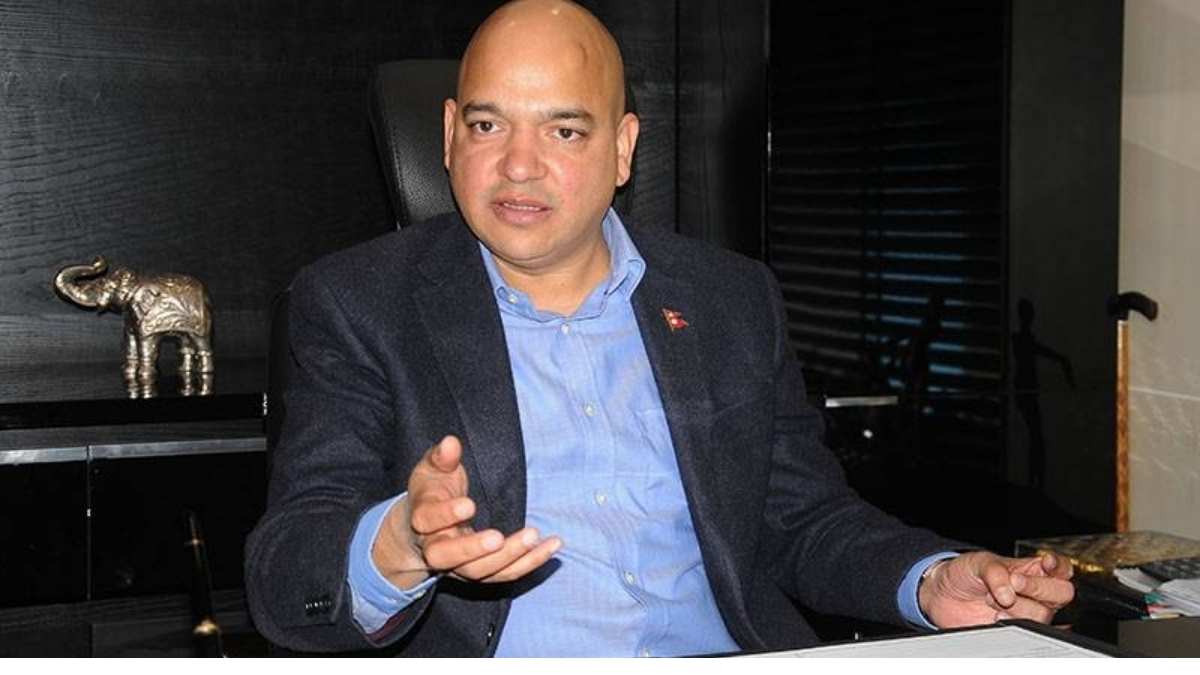
LAST MONTH Nepal’s Department of Money Laundering Investigation filed four criminal cases simultaneously in three different courts. The defendants include Deepak Bhatta, chairman of Infinity Holdings; Shanker Lal Agrawal, chairman of the 91-year-old Shanker Group, and his sons Sulav and Sahil; and Shekhar Golchha, former president of the Federation of Nepalese Chambers of Commerce and Industry and a senior member of one of Nepal’s oldest trading dynasties.
The total alleged illicit transaction volume tops Rs115bn. The individual recovery claim against Bhatta alone is Rs26.63bn. The Special Court has ordered both Bhatta and Sulav Agrawal held in judicial custody until the final verdict is delivered. Between them, the accused businesses employ more than 20,000 people and contribute billions of rupees a year to state revenues. Nepal has never seen anything like this.
The financial trail at the centre of the prosecution is specific enough to deserve attention in its own right, beyond the scale of it. In September and October 2022, Rs545m was transferred from Jagdamba Steels, a subsidiary of the Shanker Group, to Bhatta’s personal account at Siddhartha Bank.
Bhatta told investigators this represented an advance payment for the purchase of a 54-anna land parcel in Sanepa. Investigators found the money did not stay in Bhatta’s account long enough for that explanation to hold. It moved to Infinity Holdings, a company solely owned by Bhatta, and was then invested in Himalayan Reinsurance as share capital.
Working capital loans are supposed to fund operations. These funds appear to have funded an ownership structure. The NRB’s Financial Information Unit flagged the transaction as suspicious and formally asked the DoMLI to investigate. That referral became the anchor of what is now Nepal’s largest-ever financial crime prosecution.
Separately, the charge sheet filed at the Kathmandu District Court alleges that between July 2025 and March 2026, Bhatta purchased shares worth Rs3.80bn through a broker without depositing the mandatory 25% advance margin.
Under securities law, brokers are prohibited from executing purchase orders without that margin in hand. The prosecution says the credit-based transactions created artificial demand and drove up the share price of Nepal Reinsurance Company. When investigators asked Bhatta about the scale of his business turnover, his recorded answer was: “I cannot state the exact figure.” When asked about the source of Rs 752.6m he had transferred to Jagdamba Steels, he said: “I cannot disclose the source at this moment. I will have to review my transaction records before providing an explanation.” These are not ideal answers for a man whose case is about the movement of billions of rupees.
And yet the circumstances that produced this prosecution carry complications that the charge sheets do not fully capture. The NRB’s Financial Intelligence Unit issues suspicious transaction alerts routinely, generating flags on unusual financial activity across the banking system every week. The transaction that anchored the Bhatta probe dated to 2021. It had gone through a prior review before being reopened after Bhatta’s political rivals gained prominence in the caretaker government that preceded the Shah administration. Nepal News ran a detailed account, citing sources with direct knowledge of the investigation, describing how an earlier request to the police to arrest Bhatta was repeatedly declined for insufficient evidence before the matter was escalated through parallel agency investigations co-ordinated at a higher political level.
If the allegations are proven, they are no less serious. But the decision to prosecute was not based solely on technical grounds.
The involvement of Shekhar Golchha adds a further layer of signal to what is already a seismic event for the private sector. The Golchha family effectively invented organised commerce in modern Nepal through the Biratnagar Jute Mill in 1937. Having the current generation of the family named alongside Bhatta and the Agrawals in a money laundering charge sheet is, for Nepal’s business community, the equivalent of finding the Tata family in the dock in India.
The private sector’s response has been a studied public silence, combined with what multiple business contacts describe as a very agitated private conversation about what happens if the state’s cleanup machinery, once running at this speed, does not distinguish cleanly between systemic wrongdoing and ordinary business relationships with politically inconvenient people.
That is the tension inside the largest prosecution Nepal has ever mounted. The financial evidence of wrongdoing in the Bhatta case looks substantial. The political circumstances that activated the investigation against him were not neutral. Both things can be true simultaneously. Nepal’s courts will have to produce a verdict that demonstrates it is possible to hold both truths at the same time, convicting what deserves to be convicted on the evidence without becoming a mechanism for reaching whichever business figure the current government finds inconvenient. The private sector is watching. So, at some level, is every investor who might otherwise have put money into Nepal. ■