IMAGE VIA STANFORD
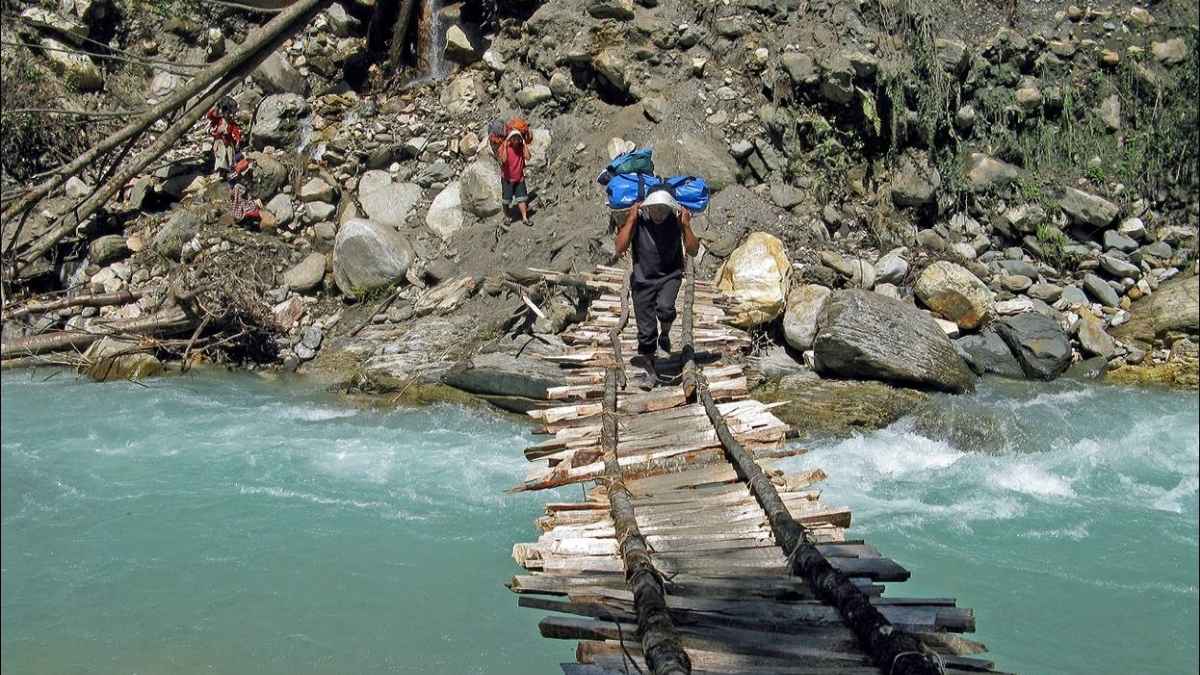
IN JUNE 2025 a bridge over the Tamakoshi river that was still under construction collapsed. Then it was repaired. Then it collapsed again. The contract, worth Rs225m or so, had been awarded in fiscal year 2021-22. The completion deadline was set for mid-September 2025. By the time it fell for the second time, the contractor had already been paid some 60% of the full contract value. The bridge was not yet standing. The bill was already being settled. That is not an unusual story in Nepal, meaning it is a template.
The most revealing thing anyone in Nepal’s construction industry has said publicly in recent years came in a television interview and was never seriously followed up on. The contractor claimed that from every government payment, money had to be distributed upwards—from ministers down through layers of intermediaries—leaving only about 25% of the allocated funds for actual construction.
Whether or not that figure is accurate, the structure it describes is consistent with what the Commission for the Investigation of Abuse of Authority has found when it has actually looked. When the CIAA investigated the Jabdighat Bridge over the Babai river (a project run by Pappu Construction, owned by Sumit Rauniyar, whose father Hari Narayan Rauniyar was a sitting member of parliament) it filed corruption charges against 12 people. Ten of them were government engineers. Not overseers who missed things. Engineers accused of actively colluding with the contractor, approving payments without checking materials and looking the other way while substandard concrete was poured into a structure that was supposed to carry vehicles and people. The bridge collapsed.
If 25% of the budget reaches the actual building, then what Nepal is really doing with its infrastructure spending is not building bridges and roads. It is running a payment system in which construction is the pretext. The physical structure that comes out the other end reflects its inputs: materials bought for a quarter of the price they should cost, hired on the thinnest possible specifications, supervised by people with a financial interest in not looking too closely. The bridge is not the product, meaning it is the receipt.
The World Bank’s Nepal Capital Expenditure Bottlenecks Analysis, published in October 2025, documents the scale of what this produces. Total capital spending across all three tiers of Nepal’s federal government — federal, provincial and local—fell from 11.4% of GDP in fiscal year 2021 to 7.8% in 2024, well below the 10-15% the World Bank estimates Nepal needs just to close its existing infrastructure gap.
Of the capital budgets that are actually allocated, only some 62% get spent. Of what gets spent, a big share produces infrastructure that fails before it should or was never functional to begin with. The Daraundi river bridge in Gorkha district was built at a cost of some Rs54m and had no approach roads on either side when it was finished. The Kamala Bridge was closed after 14 years of incompletion because government inspectors found substandard materials; authorities are still deciding whether to repair it or knock it down.
Part of the problem is timing. The World Bank found that land acquisition for major projects takes an average of 35 months, about 150% longer than planned. Quarterly cash rationing means contractors often cannot get paid for months after completing work.
Donor-funded projects have their own separate disbursement delays on top of government processes. When cash arrives late and in irregular bursts, contractors do what anyone would do in that situation: they cut corners on the current phase to stay solvent while waiting for the next payment. The system’s own payment dysfunction drives the quality failure.
But the big problem is not timing. It is that the people responsible for catching quality failures have been put in a position where catching them costs them personally and ignoring them pays. The ten Pappu Construction engineers were not bad engineers who happened to miss substandard concrete. They were part of a chain in which everyone from the minister’s office downwards had taken their share and signed their names. An engineer who raises an objection at that point is not a whistleblower, meaning he is a liability. The CIAA charged them all, which is what should happen. The construction contract had already been awarded to 15 other politically connected companies with similar track records. Nothing about the system that produced the Jabdighat bridge changed because the Jabdighat bridge collapsed.
Finance Minister Wagle’s budget for the coming year allocates Rs431bn in capital expenditure and targets 7% growth. The World Bank’s amendment of Nepal’s forest clearance regulations in January, which streamlined the tree-cutting approval process, was described at the time as an encouraging step. It is. Getting a chainsaw permit faster does not change what happens to the money once it starts moving. Until that changes, the bridges will keep collapsing and the receipts will keep arriving. Aand Nepal will keep spending money on infrastructure it never actually builds. ■