
IMAGE: THE KATHMANDU POST
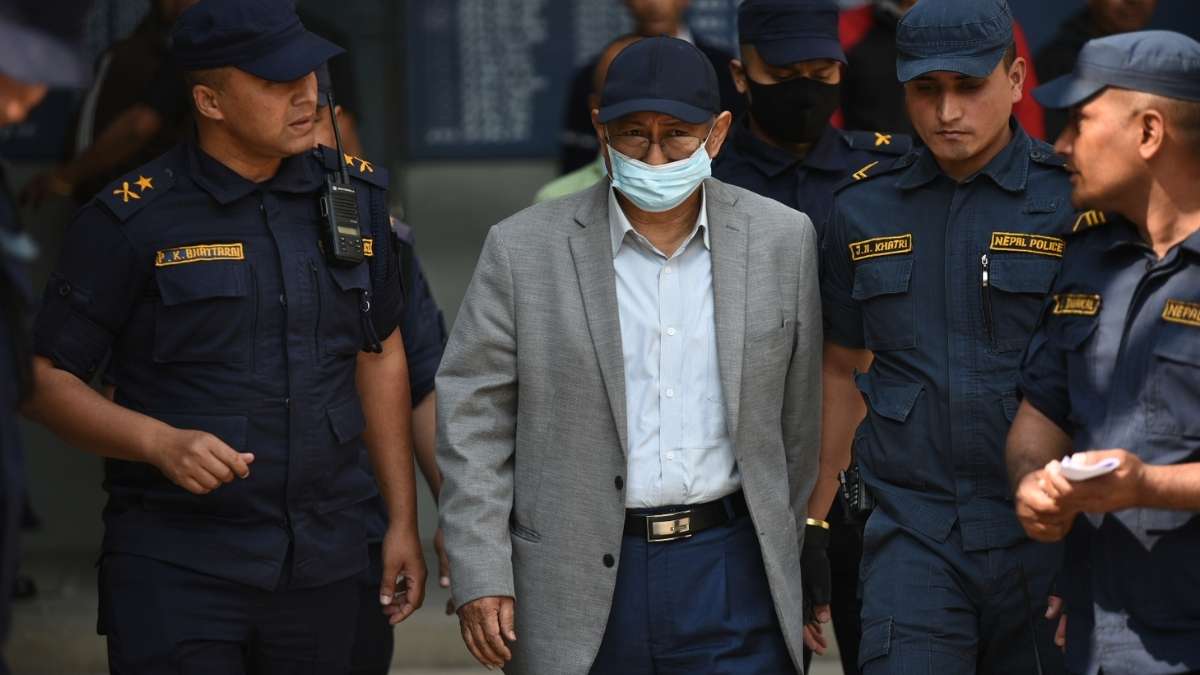
THE KATHMANDU District Court delivered its verdict this week, convicting 23 individuals in the high-profile fake Bhutanese refugee scam, including former Deputy Prime Minister Top Bahadur Rayamajhi and former Home Minister Bal Krishna Khand. Seven defendants were acquitted. The court found the defendants guilty of forgery, fraud, organised crime and offences against the state. Sentencing is scheduled for July 13th. The verdict took three years to arrive. It was worth the wait.
To understand the scam, you need to understand what the Bhutanese refugee crisis actually was. In the late 1980s and early 1990s Bhutan’s government expelled more than 100,000 Nepali-speaking citizens (the Lhotshampa minority), stripping them of citizenship under a “One Nation, One People” policy introduced in 1985.
These people fled to Nepal, where they lived in camps in the Morang and Jhapa districts. After years of failed bilateral negotiations to return them to Bhutan, the international community stepped in. Between 2007 and 2016 the UNHCR helped resettle more than 113,500 Bhutanese refugees in eight countries, primarily the United States, in one of the largest resettlement programmes globally.
That programme then closed. Around 6,300 people who chose not to go, or who missed the window, stayed in Nepal. And it was in that time—between the closure of a legitimate programme and the desperation of Nepali citizens who wanted to emigrate—that the criminal network found its market.
The racket began only after the resettlement programme closed, taking large sums from Nepali citizens and promising to portray them as refugees so they could still qualify to go abroad. The court identified Keshav Prasad Dulal, Sanu Bhandari, Sagar Rai and Ang Tawa Sherpa as the primary architects, who collected massive sums by falsely promising resettlement to the United States under the guise of Bhutanese refugee status.
Dulal and Bhandari were additionally convicted of forgery for creating a fraudulent version of the “Bal Krishna Panthi Task Force” report and fabricating counterfeit refugee identity cards. Home Ministry officials helped make these documents look real.
The victims were not naive. They paid sums ranging from Rs1m to Rs5meach, based on promises from fraudulent credential-wielding individuals. A total of 106 victims registered complaints, noting the fraudsters fleeced over Rs232.5m from them. The total take, including unregistered victims, prosecutors put at some Rs288.1m (about $2.1 million). These were people who had sold assets, borrowed from relatives or spent their entire savings on the belief that a former deputy prime minister’s political network was vouching for the deal. The network was vouching for it. That was the whole point.
Former Home Minister Bal Krishna Khand was convicted as an accomplice. The court found no evidence that he personally received money, but held that he had acted under the network’s undue influence and helped facilitate the fraud. Former Home Secretary Tek Narayan Pandey and former home ministry security adviser Indrajit Rai were also convicted. Tek Nath Rizal, a prominent Bhutanese refugee leader, was found guilty of forgery of official refugee identification documents and of acting as an accomplice. His conviction is a sort of betrayal: the most credible-seeming endorsement the fraudsters had was a genuine refugee figure whose name gave the fake documents a veneer of legitimacy.
Legal analysts view the verdict as a historic precedent in Nepal’s judicial history, marking the first time a court has dismantled a highly coordinated criminal enterprise bridging top-tier political leadership as well as bureaucracy and underworld middlemen. The court itself described the scam as having undermined the dignity of Nepali citizens and damaged Nepal’s international reputation.
That last point deserves a moment. Nepal’s reputation in the eyes of the countries that ran the resettlement programme—the US, Canada, Australia, the UK—depends in part on the integrity of its refugee documentation. A scheme in which senior government officials forged UNHCR-adjacent paperwork for paying customers is the kind of thing that makes future humanitarian programmes difficult to run and easier to abuse. Nepal was not just defrauding its own citizens. It was also defrauding the international infrastructure that had protected some of the most vulnerable people who ever passed through its territory.
The verdict comes a year after the September 2025 uprising that removed the old government and ten months after the RSP government that replaced it started pursuing accountability cases across the political-business nexus. The Bhutanese refugee conviction is the oldest of the current accountability wave—the investigation started in 2022, the charges in 2023—but it carries the clearest moral weight. The money laundering cases involve businesspeople who enriched themselves. This one involves politicians who sold a dream to people desperate enough to believe that a former home minister could get them to America. They could not. The court has now said so, three years later, with convictions that will be sentenced on July 13th. ■




