IMAGE VIA RATOPATI
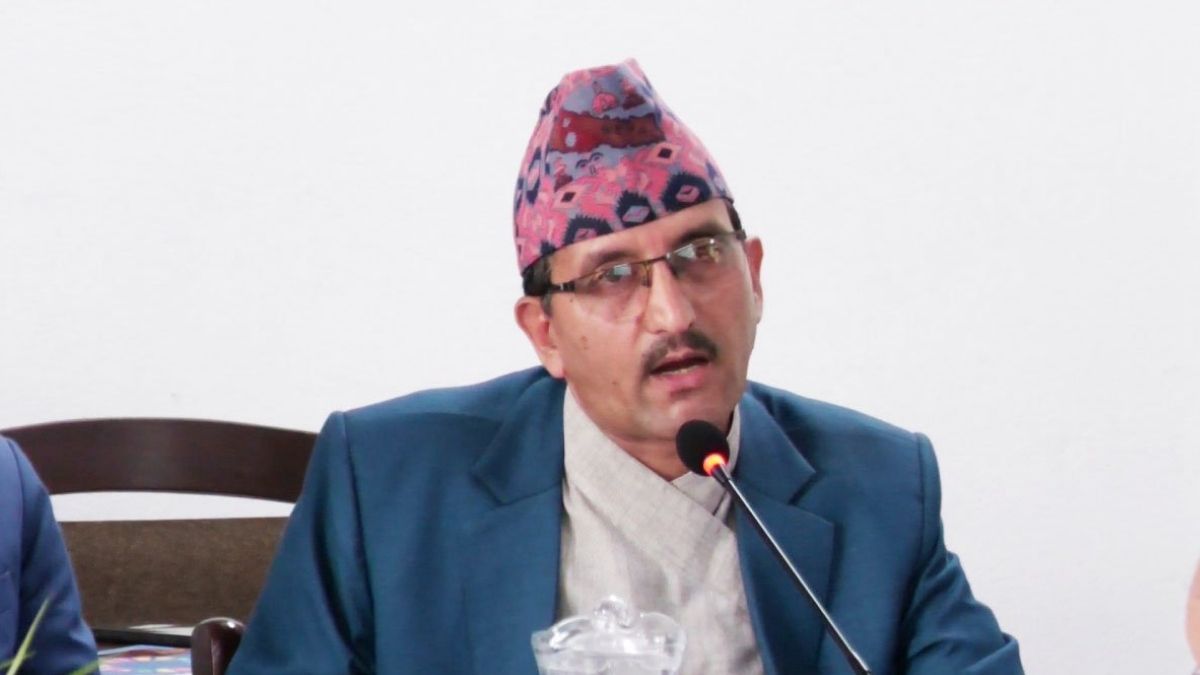
ON JULY 13TH Rabilal Pantha (pictured), the member secretary of Nepal’s National Planning Commission, sat before the House Finance Committee and said something that took fifteen years to arrive at.
The commission was recommending, he told lawmakers, that Nepal cut its National Pride Projects from 27 down to 10. “National pride projects were declared without sufficient groundwork,” Pantha said. “As a result, it took years just to begin implementation, and too many projects were included under the category.” A planning body established to prevent that had spent fifteen years presiding over it, and was now formally asking parliament to let it undo what it had done.
The number to start with is four. Of the 27 projects that have, at various points since 2011, been designated as National Pride Projects—the government’s flagship list of strategically important infrastructure—four have been completed: Upper Tamakoshi Hydropower, Gautam Buddha International Airport at Bhairahawa, Pokhara International Airport and the first phase of the Melamchi Drinking Water Project.
Two of those airports have no scheduled international flights. The other 23 projects are at various stages of cost escalation and administrative paralysis. The World Bank, in its October 2025 Capital Expenditure Bottlenecks Analysis, put the situation like this: at current funding levels, completing the 17 ongoing National Pride Projects started years or decades ago would take 41 more years.
To understand how this happened, pick any project on the list. Take the Sikta Irrigation Project in Banke. It began in fiscal year 2004-05. Twenty-one years later, it is 47.5% complete. Its original cost estimate was Rs12.8bn. The current estimate is Rs52.89bn, more than four times the original.
Take the Babai Irrigation Project in Bardiya. It started in fiscal year 1988-89, making it 37 years old. It is 78.74% done. The Mahakali Irrigation Project started 19 years ago and has reached 26.6% physical progress.
The Kathmandu-Tarai Expressway, also called the Fast Track, began construction in April 2019 with an initial completion deadline of August 2022. That deadline has been extended four times. The most recent target is August 2026. As of this month, 74% of the work is done and the original cost estimate of Rs47bn has more than doubled to Rs101.93bn.
These are not exceptional stories, meaning they are the rule. The NPC’s own latest progress report confirms it. For fiscal year 2025-26, the government set aside Rs67.08bn for 23 active National Pride Projects. By mid-January 2026 six months into the fiscal year, some Rs10.39bn had been spent, or 15.49% of the allocation. In an earlier year when total NPP allocation was Rs97bn, midterm spending was 23%. The numbers vary slightly year to year. The trend does not.
The process that produces this outcome is something like this: projects get added to the list for political reasons and removed from it almost never. The National Planning Commission recommended 17 projects when the category launched in 2011-12. Subsequent governments added four more in 2013-14, then others in 2018-19, 2019-20 and 2020-21, reaching 27 by the time the current government took office.
Each new project announced as a national priority required a share of the budget without displacing anything already on the list. The Rs67bn allocated in 2025-26 divided across 23 projects gives each one roughly Rs2.9bn on average. Most of these projects require tens of billions to complete. At annual funding of Rs2.9bn, the Babai Irrigation Project’s remaining 21.26% of work would take years at that pace, not months.
The planning commission has been aware of this for the full fifteen years it has been happening. Nepal’s prime minister chairs the NPC by constitutional design: the direct involvement of the head of government is supposed to guarantee serious monitoring and timely delivery. The previous NPC vice chair noted years ago that “there is resource crunch if all projects are taken together”. That observation did not produce a cut in the list. It produced a budget speech that allocated money to all of them.
Swarnim Wagle’s budget for the coming year topped the NPC’s own fiscal ceiling—the body that sets spending limits had its ceiling overridden by the government it advises. The NPC asked parliament on July 13th to cut the list from 27 to 10. This is the correct recommendation. It is also an admission that the commission spent fifteen years producing a list it now considers unsustainable. The Babai Irrigation Project turns 38 next fiscal year. It will not be on the final list of ten. It will still not be finished. ■