IMAGE: DEEPAK RAJBANSHI
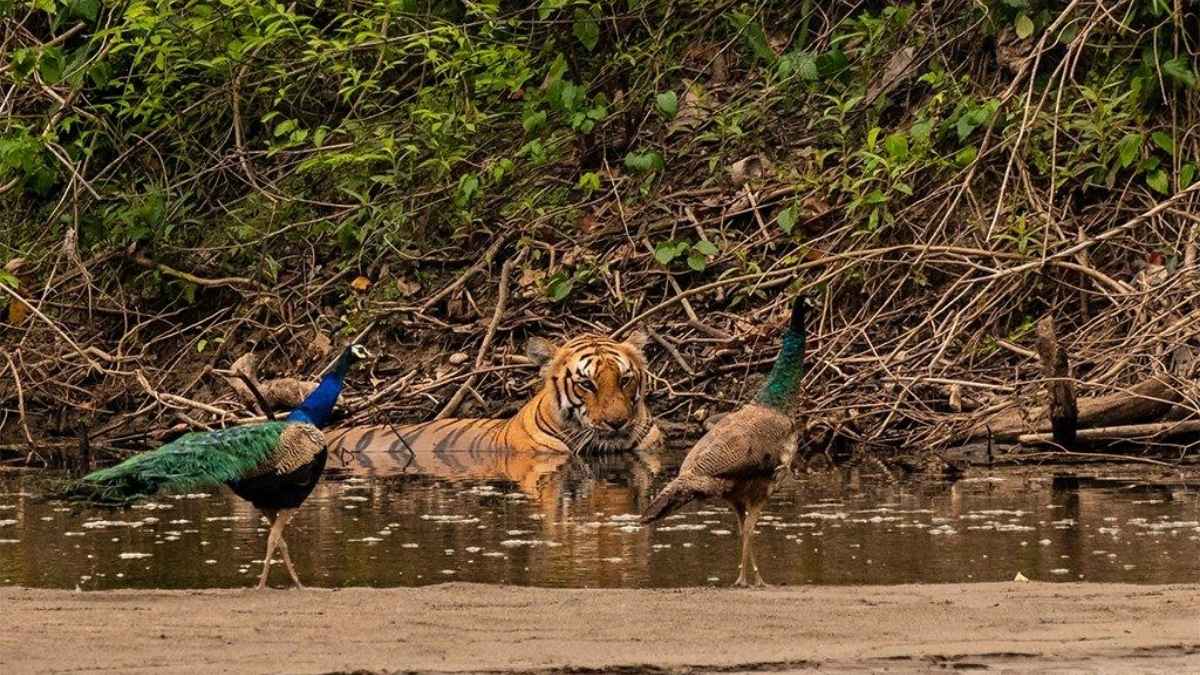
ON JULY 29TH, World Tiger Day, Nepal’s Department of National Parks and Wildlife Conservation put out a number: 429. That is the country’s wild tiger population, counted between December and April using 1,100 camera traps rotated across 1,900 survey points and a technical team of up to 300 people. The figure is up from 355 in 2022. In 2009 it was 121. In a world where wildlife statistics usually chart a course towards zero, Nepal has produced one that goes the other way, and by some margin.
The census found increases in almost every major protected area. Parsa rose to 71 from 41. Banke climbed to 51 from 25. Shuklaphanta recorded 50, up from 36. The exception was Bardiya National Park, long regarded as the country’s prime destination for tiger sightings, which saw its numbers drop from 125 to 112.
Nobody has yet offered a fully convincing explanation. Habitat pressure at the forest edges and rising human-wildlife conflict in the district are the leading candidates. That the anomaly is being discussed openly is itself a sign of how mature Nepal’s conservation monitoring has become: the country is now tracking failures within its success.
The surge in tigers tracks with a steady expansion of Nepal’s forest cover. According to the World Bank, that cover increased from 29% in 1994 to more than 46% in 2022. This is one of the largest proportional increases recorded for any country in Asia over the same period. The connection to the tiger is not incidental. Tigers need prey. Prey needs forest. In Nepal the forest was restored through a governance model introduced in the 1990s: community forestry, which handed management of degraded land to local user groups. Communities had an incentive to restore the forest because it fed their livestock, supplied their firewood and generated income. The tigers that followed were a dividend of devolution.
This matters because it upends the conventional argument about conservation in poor countries. The standard line holds that poverty and wildlife are structurally at odds: poor communities cut trees for fuel, poach animals for income and encroach on protected land because their immediate survival demands it. Nepal’s experience suggests something more complicated. Conservation has displaced over 4,800 families from land adjacent to protected areas. Human-wildlife conflict (livestock killed, people occasionally attacked) is a painful cost paid by some of the country’s poorest communities so that a global conservation target can be met. That cost is insufficiently compensated by the ecotourism revenues that flow, in the main, to lodge owners rather than to the farmers whose cattle the tigers eat.
Right now 16 tigers are living in captivity in enclosures across Chitwan, Bardiya, Banke and the Central Zoo in Jawalakhel — animals that entered human settlements, were found injured or proved impossible to return to the wild. That number will grow as the population expands and the edges of protected areas push against the places where people live. The carrying capacity question — how many tigers Nepal’s protected areas can sustainably support — is now being asked seriously by the same ecologists who spent the previous decade celebrating the numbers going up. Chitwan’s 145 tigers pose a density that some conservationists describe as approaching the park’s practical limit. A population growing at 5% a year will eventually produce tigers that cannot find territory within the reserves and begin moving into the buffer zones and beyond.
Nepal achieved the St. Petersburg Declaration target of doubling its 2010 tiger population years ahead of the 2022 deadline, making it the first country to formally meet that goal. The global wild tiger population is estimated at between 4,500 and 5,000 animals. Nepal, a country of 30m people and a per capita income of some $1,500, hosts about 9% of that global population in an area smaller than Arkansas.
The census alone cost the government some Rs30m, about $196,078. That does not include the ongoing cost of anti-poaching patrols, habitat management or caring for the animals that do not fit neatly into “wild and free.”
For a country that is running a government with an all-time-low business confidence index, a 19-month FATF grey list, a communal violence crisis in the south and a finance minister whose budget leaked before it was presented, the tiger census is a piece of good news produced by sustained state effort over more than a decade.
It also demonstrates something that Nepal’s political economy rarely demonstrates: that a government programme, consistently funded and consistently implemented across multiple administrations, can produce measurable results. The Department of National Parks and Wildlife Conservation has had its share of corruption and mismanagement. It has also conducted five national tiger censuses since 2009, each one more sophisticated than the last, and produced a number that international scientists regard as credible.
That is more than can be said for most of what Singha Durbar announces on a Tuesday. ■