IMAGE: PAWAN POUDEL
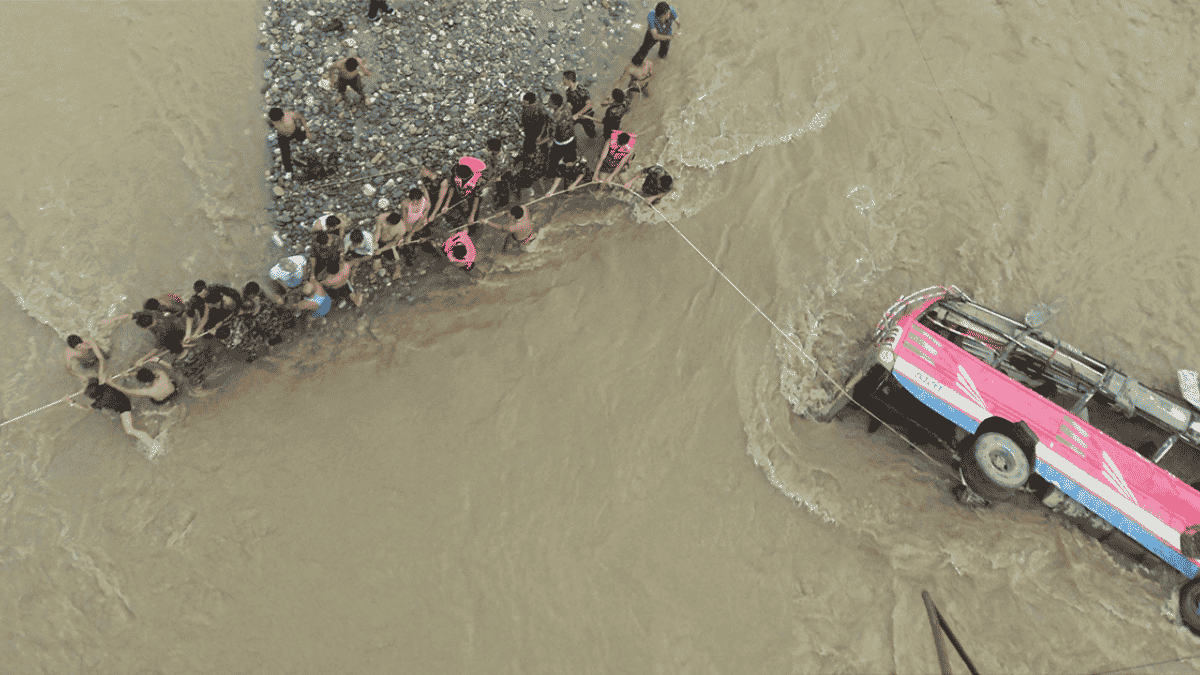
A JOURNEY from Kathmandu to Pokhara takes roughly six to eight hours by road. It can also end in a hospital, or worse. On Nepal’s highways, passengers routinely travel through narrow mountain passes, damaged stretches of tarmac and roads shared by buses, lorries, motorcycles and construction vehicles. Overtaking often means entering the path of oncoming traffic. A mistake can kill dozens.
The figures are grim. Nepal recorded 29,988 road accidents in the 2025/26 financial year, according to Nepal Police. They killed 2,707 people and injured thousands more. That works out at roughly 82 accidents and seven deaths every day. The scale of the problem is difficult to reconcile with a country where road travel is essential for reaching schools, hospitals, markets and workplaces.
Speed is a large part of the explanation. Nepal Police recorded 13,651 accidents attributed to overspeeding in the 2024/25 financial year, making it the leading reported cause. Driver negligence accounted for another 6,460 cases, while drink-driving was linked to 2,050. Wrong overtaking caused 931 accidents. The figures suggest that many crashes arise from behaviour that traffic enforcement should be able to deter.
Motorcycles account for a particularly large share of the casualties. Police recorded 26,424 motorcycle-involved accidents in 2025/26, alongside 6,171 involving cars and jeeps. Motorcycles are cheap and increasingly common in a country where public transport is often unreliable. They are also exposed. A collision that might leave a car occupant injured can kill a motorcyclist.
Long-distance buses present a different danger. For many Nepalis, they are the only affordable way to travel between districts. Passengers have little control over the condition of the vehicle, the driver’s working hours or the speed at which it takes a mountain bend. Overcrowding and poorly maintained vehicles add to the risk. The American State Department’s travel advice for Nepal specifically warns about poor road conditions, inadequate safety features, overloaded public transport and drivers who lack proper training or licences.
Geography makes these weaknesses more costly. Nepal’s hills and mountains leave little room for wide roads or, say, protective barriers. Yet geography alone cannot explain the death toll. The Karnali Highway offers a particularly disturbing example. According to Karnali Province Police, 917 people have died in accidents on the highway since the 2014/15 financial year. In the past three years alone, 111 people have lost their lives. Police cite narrow roads, deteriorating surfaces, ageing vehicles, overcrowding and speeding. Millions of rupees have been spent on repairs, but dangerous sections persist.
The problem is not confined to remote mountain roads. Nepal’s highways frequently pass through settlements, markets and busy junctions. Pedestrians cross roads alongside fast-moving traffic while roadside businesses and parked vehicles reduce visibility. A road designed to carry traffic between cities becomes a local street without the safety measures required for either purpose.
The consequences are also shaped by what happens after a crash. Reaching an accident site in mountainous terrain can take hours. Ambulances, trained emergency personnel and nearby trauma facilities are scarce in many districts. Victims who survive the initial collision may die because treatment arrives too late. The distance between the crash site and a functioning hospital can be as important as the condition of the road itself.
Enforcement has struggled to change behaviour. Traffic police issue fines and conduct checks, but periodic campaigns have limited value when speeding andd dangerous overtaking remain common. A February 2026 investigation by Nepal News examined how outdated penalties and weak accountability allow reckless driving to go lightly punished. Investigations often focus on the driver involved in a crash while the condition of the road and vehicle maintenance receive less scrutiny.
There is an economic cost beyond the loss of life. Families lose earners, children lose parents and survivors face medical bills and long periods away from work. Businesses pay more to move goods when roads are unreliable. Tourism, too, depends on visitors feeling confident about travelling between Kathmandu, Pokhara, Chitwan and the mountain regions. Nepal can build new highways and promote road trips, but neither is much use if passengers fear the journey.
For millions of Nepalis, travelling by road is unavoidable. The disturbing part is how often an ordinary journey demands an extraordinary amount of luck. ■