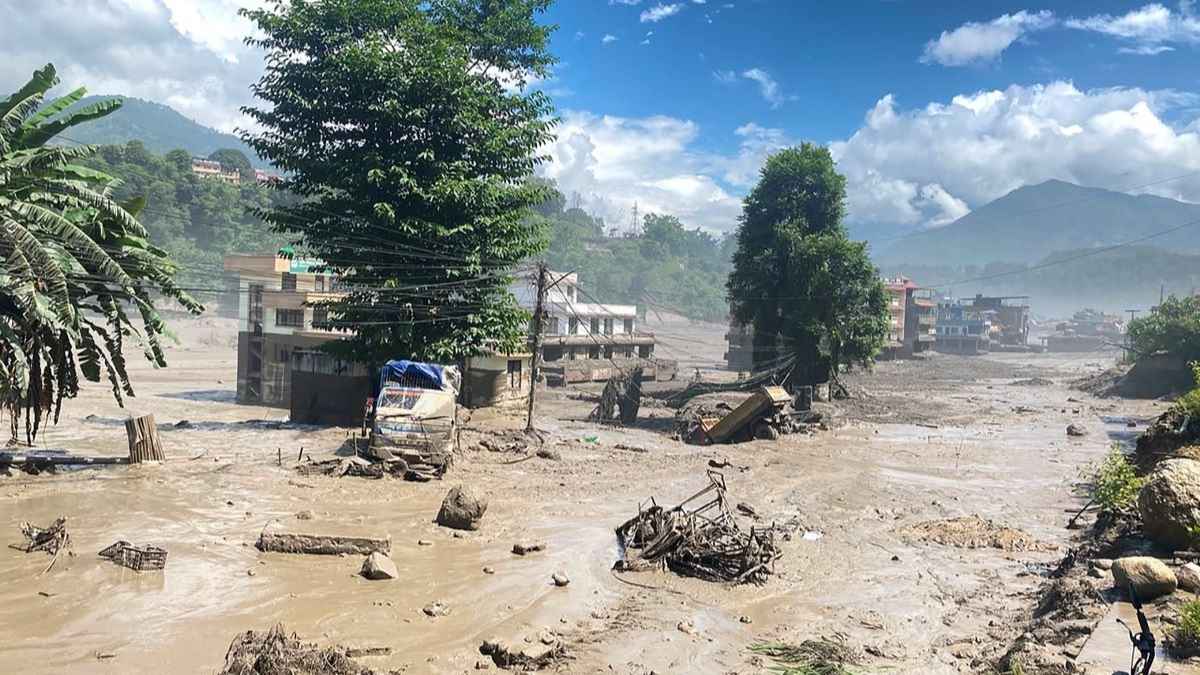
IMAGE VIA SETOPATI
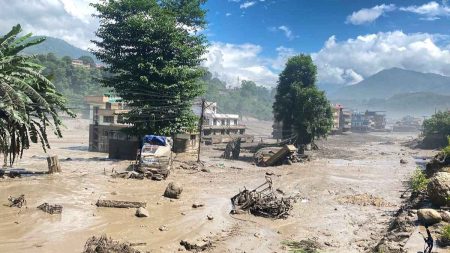
JUST AFTER nine on the morning of August 26th, the Bhotekoshi river, which descends from the Tibetan plateau into Nepal’s Rasuwa district, turned from a mountain stream into a wall of water. Within hours it had washed away the 42-kilometre road from Betrawati in Nuwakot to the Rasuwagadhi border crossing. It destroyed concrete bridges, damaged a dozen hydropower projects with a combined capacity of more than 700 megawatts and knocked 430 megawatts off the national grid.
At least seven bodies had been recovered by midday. Forty-one security personnel were missing; 32 from the Nepal Police and nine from the Armed Police Force. The full toll, officials conceded, was not yet known.
The flood entered Nepal from Tibet, though the proximate cause is uncertain as of this writing. Narendra Pariyar, Rasuwa’s chief district officer, noted that there had been no rain around the district headquarters; the sun was out.
Officials at Nepal’s Flood Forecasting Division said they had received informal information that a landslide may have blocked a river in Tibet before the swollen river burst through. Others suspected a glacial lake outburst.Whatever the trigger, the surge was immense.
ReliefWeb, citing initial reports, estimated flood waves at eight to ten metres in some locations. A helicopter pilot who flew over Timure said the village was barely seen from the air. “It looked as though a river that had been frozen suddenly burst its banks,” he said to the Kathmandu Post.
The destruction was not confined to Rasuwa. The floodwater raced downstream along the Trishuli river, cutting a swathe through Nuwakot, Dhading and beyond.
In Bidur Municipality-7, scores of houses were washed away between Sole Bazar and Akkare Bazar, according to ward chairman Rabindra Nepal. He had been stranded at the municipal building since early Wednesday. “There is no road or bridge left for me to get home,” he said.
In Dandathok, Yugnath Adhikari watched helplessly as floodwaters swept away his two sisters, a nephew and his nephew’s wife. Gokarna Adhikari, another resident, said the village was almost unrecognisable. Even the houses that looked intact from a distance were covered in mud and debris.
The economic damage was severe. The 42-kilometre road from Betrawati to the border—Nepal’s main trading route with China—was destroyed at multiple points. The department of roads said it had lost contact with supervisors stationed along the route. The road had been repeatedly damaged by flooding; last year’s flood had washed away sections and destroyed the Miteri Bridge linking Nepal and China.
After that disaster, work began to upgrade a 16-kilometre section from Syaphrubesi towards the border to a two-lane road with a grant from the Chinese government. The latest floods swept that section away too.
The power sector took a heavy blow. The Nepal Electricity Authority reported that 11 hydropower plants and a 25-megawatt solar facility had been damaged. Nine operational projects and five under construction sustained damage across Rasuwa and Nuwakot. The Chilime Hydropower Project was among those hit. The disruption to 430 megawatts of generation—more than 12% of the country’s total hydropower capacity—threatened to strain an already fragile grid.
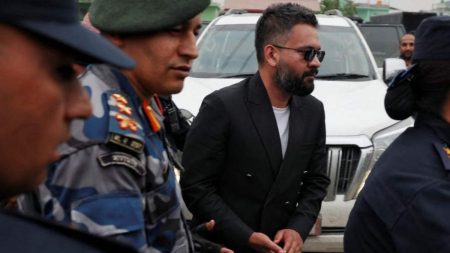
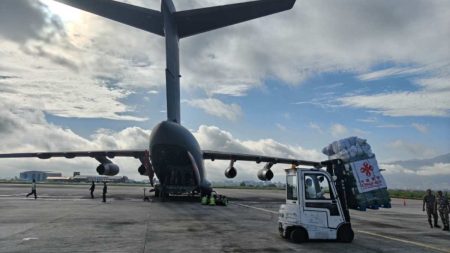
The government scrambled a response. Prime Minister Balendra Shah said the Nepali Army, Armed Police Force and Nepal Police had been deployed with additional personnel sent from other districts. Fourteen helicopters were mobilised for search and rescue, four operated by the army and the rest by private companies. Two army helicopters carrying medical teams were dispatched to the affected areas. Authorities used SMS messages and phone calls to warn residents downstream in Nuwakot, Dhading, Gorkha and Chitwan to move to safer ground. The National Disaster Risk Reduction and Management Authority was activated, coordinating with medical teams, the Nepal Scouts and the Red Cross.A high-level meeting was convened at the prime minister’s office.
The flooding came just over a year after a devastating flash flood struck the same area. On July 8th 2025, a flood originating in Tibet’s Lhende river surged into the Bhotekoshi, killing at least nine people and leaving 19 missing. It swept away the Miteri Bridge, damaged the Rasuwagadhi dry port and hydropower infrastructure, and severely damaged the road between Syabrubesi and Rasuwagadhi. Officials told the BBC they believed Wednesday’s disaster exceeded last year’s floods.
The river, fed from the high Himalayas, has become an unpredictable adversary. Its sudden surges, whether from glacial lake outbursts or landslide dam breaches, are a reminder of the region’s fragility. The road to the border will be rebuilt, as it was before. The hydropower plants will be repaired. But the trouble is now established: each year, the water rises, and each year, the damage mounts.
Until the source of these floods is understood—and until the early-warning systems that might give residents time to flee are in place—the people of Rasuwa and Nuwakot will remain at the river’s mercy. ■