
IMAGE: REUTERS
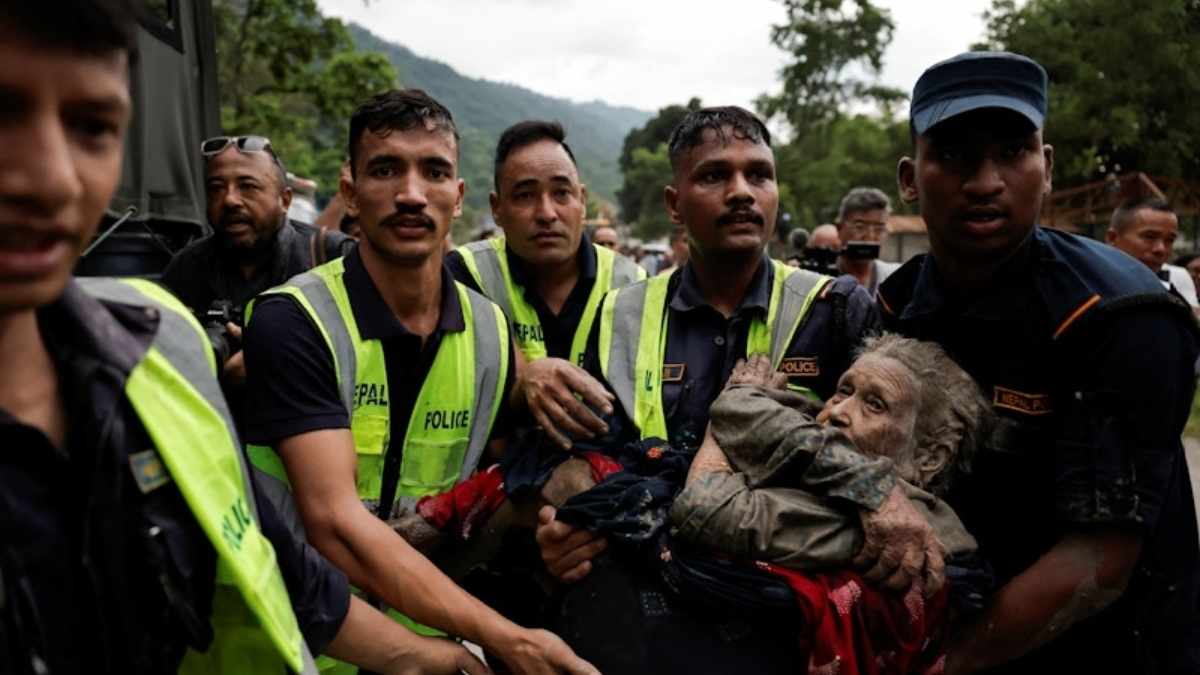
LAST WEEK a glacier collapsed near the Nepal-Tibet border. The resulting wall of water surged down the Trishuli River valley, raising the river by as much as nine metres in half an hour. At least 900 people are confirmed dead. More than 4,000 are missing. The flood destroyed most of the roads into Rasuwa, Nuwakot and Dhading, cutting off the three districts from the rest of the country. It also swept away the Nepal-China Friendship Bridge at Rasuwagadhi, Nepal’s only overland route to its northern neighbour. The border is closed.
The same bridge was destroyed in a similar glacial burst a year ago. Four hydropower projects and 200 megawatts of capacity were damaged in that event. More than 100 cargo containers were buried. Reconstruction began. It was still under way when last week’s flood hit.
This is not a run of bad fortune. Indeed it is so consistent that it has its own vocabulary. The September 2024 floods killed 224 people and caused Rs 46.7 billion in damage. In October of the same year, more floods arrived. The BP Highway along the Roshi River has been destroyed and rebuilt, partially, seven times. One contractor told a journalist that his workers have had to flee multiple times when the river rose faster than they could escape. They keep returning because the contract says the road must be rebuilt where it stood.
During the 2024 monsoon the Department of Roads recorded 814 highway closures across 41 national highways. Each closure was a moment when some community lost access to the nearest hospital or market. The roads serving Nepal’s hills and mountains run along river valleys, because that is where the flat ground is. The river valleys flood every monsoon, because that is what river valleys do. Roughly 80 percent of Nepal’s land area is hills and mountains.
Kathmandu is not safer. In September 2024 the Bagmati River overflowed its banks, inundating entire neighbourhoods. The drainage system under most of the city was built for a population a fraction of its current size. The wetlands and ponds that once absorbed excess water have been filled and built over. The hills surrounding the valley, deforested by decades of construction and farming, send soil into the rivers rather than absorbing rainfall. When the city receives the kind of rainfall it did last September, water has nowhere to go except into homes, streets and vehicles. The Bagmati carries sewage at the best of times. After a flood it carries everything.
The hydropower sector dots the same river valleys that flood annually. It is supposed to be Nepal’s path out of poverty and the source of its future export revenue. Last week’s flood damaged dozens of major hydropower and transmission facilities. The October 2025 floods affected 32 hydropower projects. The July 2025 glacial burst damaged 200 megawatts of capacity at Rasuwagadhi. Nepal keeps building power plants in the gorges where the power is, and the gorges keep flooding those power plants. The government keeps announcing reconstruction. Investors keep running the numbers and concluding that the currency risk and the climate risk make Nepali hydropower a hard case for long-term financing.
The people who suffer most are not the policymakers who announce reconstruction. They are the family in Sindhupalchok whose road washed out in July and had not been replaced by September, leaving the hospital, school and market a day’s walk away through a landslide-damaged trail. They are the farmer in Rasuwa who planted in spring and watched the harvest buried under four metres of mud last Tuesday. They are the woman in a riverside neighbourhood of Kathmandu who has now had her ground floor flooded for the third time in four years, and who cannot afford higher ground.
Nepal is not uninhabitable. People live here. They survive the floods. They clear the mud, wait for the road contractors, rebuild what they can and prepare for next year.
But a country’s exposure to annual destruction eventually ceases to be a natural disaster problem and becomes a governance problem. Nepal passed that point some time ago. The government does not move communities off floodplains. It rebuilds the road back to them. It does not change the drainage infrastructure in Kathmandu. It announces studies and committees. It does not fund the reservoir projects that would reduce the seasonal extremes of Nepal’s rivers. It builds run-of-river plants in the gorges and is surprised when the gorges flood.
Every year the disaster gets its week of coverage. Then the reconstruction contracts go out. Then the contractors rebuild what was there before. Then the mountain moves again. ■




