IMAGE: FLICKR
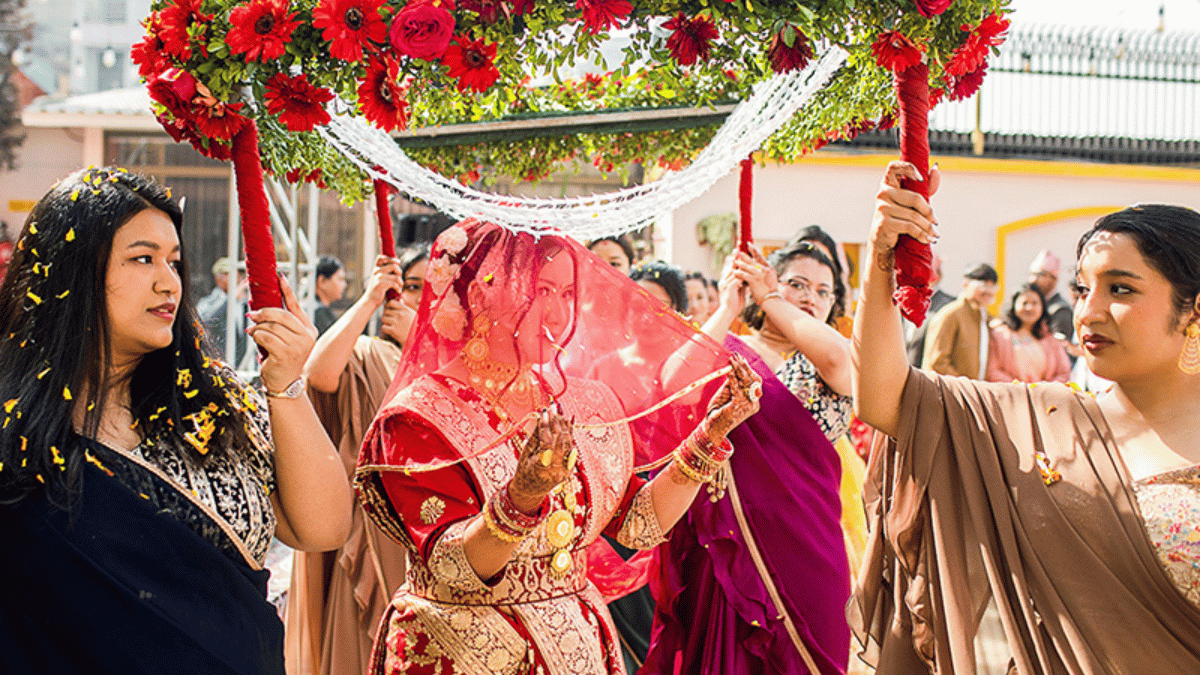
IN NEPAL a wedding can take months to arrange and years to pay off. The flowers wilt and the photographs get buried in a drawer. The loan survives.
For families with money, a wedding is a chance to flaunt it. For families with less, it becomes a test of how much they will borrow to avoid looking poor. The consequences are easy to miss today and miserable to live with for years afterwards.
The spending supports a real economy. Caterers hire cooks and waiters; venues employ cleaners and security guards; tailors stitch outfits; photographers and videographers sell their time; decorators rent lights and furniture. Jewellers supply ornaments that retain value long after the feast is forgotten. Wedding season brings business to people who might otherwise struggle to find steady work.
Yet the economic benefit has a filthy catch. A wedding is a burst of consumption crammed into a few days, financed by savings hoarded over years, transfers from relatives abroad or loans that claim a chunk of future income. The businesses get paid immediately. The family carries the cost into its next decade.
The scale of the burden is difficult to pin down nationally. Nepal’s household surveys have collected information on ceremony spending, but published national figures do not isolate wedding expenditure or show how much borrowing is specifically used to pay for weddings. That absence stinks. The country debates extravagant ceremonies with anecdotes while lacking a clear measure of their cost to household finances.
Individual cases show the stakes. In July Nepal News reported on a mass wedding in Biratnagar involving 11 couples from low-income families. One father, Anup Soren, said he was still repaying debt from the weddings of his first two daughters. He estimated that marrying off a daughter through a conventional village ceremony could cost Rs800,000 to Rs1m. Another groom estimated that a grand wedding could have cost his family Rs1.5m to Rs2m. These are personal estimates, not national averages, but they show what a ceremony can mean to a household living on manual wages.
Gold makes the arithmetic gruesome. In August 2025, when local prices passed Rs200,000 a tola, media reported that jewellery including making charges cost around Rs220,000 to Rs230,000 a tola. A family planning to buy five or six tolas faced a bill topping Rs1m before paying for the venue, food, clothes or photography. Some buyers cut the quantity; others turned to gold-plated ornaments or swapped old jewellery for new pieces.
Gold occupies an unusual place in the wedding budget. It is a symbol of family standing, a customary gift in some communities and an asset that can be sold or pledged later. That makes it easier to justify than blowing cash on food or decoration. But an asset is only a source of financial security if the recipient controls it and can use it when needed. Jewellery purchased under family pressure becomes an expensive transfer of wealth with little say for the person receiving it.
The pressure also reaches beyond the couple. Parents may feel obliged to host relatives who expect a feast, buy clothes for several functions and provide gifts that match the other family’s means. A modest ceremony can be read as evidence of stinginess or low status. Once the comparison begins, each family has an incentive to spend more than it otherwise would. The reward is social approval; the cost is private.
Economists have a name for part of this behaviour: positional spending. The value of an expenditure depends in part on how it compares with what others spend. A larger venue or more elaborate reception brings limited additional pleasure in itself but may help a family avoid losing face among its peers. If neighbours upgrade their weddings, yesterday’s acceptable celebration starts to look inadequate.
The upshot is a contest in which the price of keeping up rises even when household incomes do not. Social expectations make the bill gruesome to cut because each family fears being the first to do so. A couple may prefer a small ceremony yet parents worry about relatives’ reactions. Parents may favour restraint, yet relatives expect invitations and gifts. The wedding becomes a collective decision in which everyone can influence the budget and few people bear all its consequences.
Nepal has tried to restrain this competition through law. The Social Practices (Reform) Act dates from 1976 and sets limits on wedding processions, guests and displays of gifts. Section 174 of the National Penal Code also prohibits demanding dowry or property as a condition of marriage. The persistence of costly ceremonies suggests legal limits have struggled to change the social incentives behind the spending.
There is a danger in treating all expensive weddings as waste. Ceremonies help families maintain relationships across generations and communities. They bring relatives home, provide work for local suppliers and allow parents to mark a major change in their children’s lives. A small wedding is not automatically virtuous, and a large one is not automatically reckless. The crucial distinction is between spending a family can afford and spending it feels compelled to make.
Remittances complicate that distinction. Money sent home by Nepalis working abroad can help families pay for ceremonies, alongside food, education, healthcare and other needs. Research using Nepal’s 2010/11 household survey found a positive association between remittance income and ceremony spending, though the estimated effect was small. It offers zero basis for claiming that migrant earnings are chiefly responsible for extravagant weddings.
The main problem is the timing of the money. Years of work abroad can be converted into a wedding that lasts two days. The spending may bring real happiness and strengthen family ties, but it can also absorb savings that might otherwise finance a home or further education. Borrowing adds interest to the price of social approval. If the new household begins married life with repayments already due, the ceremony has claimed part of its future before it has properly begun.
The Biratnagar mass wedding offers one alternative. Organised by the Maaheshwari Mahila Manch, the June event brought 11 couples together without the usual individual extravagance. Organisers reported spending about Rs2.5m on the ceremonies and household items for the couples, funded by donations. Each bride also received a fixed deposit of Rs21,000. The event was small in scale compared with Nepal’s wedding market, but it shoed that families could preserve the ritual while changing its financial terms.
Such schemes can never replace every family’s preferred traditions. They can, however, help make restraint socially acceptable. Relatives could agree on spending ceilings before arrangements begin; couples could decide which expenses matter to them; families could treat jewellery and gifts as voluntary transfers rather than obligations. Suppliers, meanwhile, have a commercial reason to offer packages at different price points rather than sell the idea that every wedding must be larger than the last.
A wedding is meant to mark the start of a household. Its economic test is what that household can afford after the guests have gone. Nepal’s wedding businesses deserve to prosper. Families deserve to begin married life with more than a photograph of a beautiful day and a bill they are still trying to forget. ■