IMAGE: SHUTTERSTOCK
AN AIRCRAFT flying from Dubai to Bhairahawa should glide into western Nepal on a relatively direct approach. Under existing arrangements it must enter Nepali airspace through Simara in the east, then turn back towards its destination. The detour adds roughly 300km. For an airline that means extra fuel and time. For Nepal it means another obstacle blocking its expensive new airports from earning a rupee.
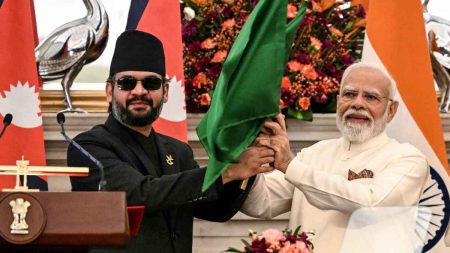
The problem is getting gruesome to ignore. On November 23rd, during Prime Minister Balendra Shah’s state visit to India, the two governments agreed to make the Kathmandu-Bhairahawa-Lucknow air route bidirectional. That is the first significant progress on a dispute dragging on for 17 years. The agreement could shorten flights to Bhairahawa and Pokhara, ease pressure on Kathmandu’s main airport and improve the economics of regional aviation.
It is a limited breakthrough. Nepal had been pushing brutally hard for two-way access through Mahendranagar, a western corridor letting international aircraft enter from India rather than crawl in through Simara. That request remains dead in the water. The latest agreement covers the existing B345 route through Bhairahawa and Lucknow, while technical consultations still need to happen before it can be used for incoming flights.
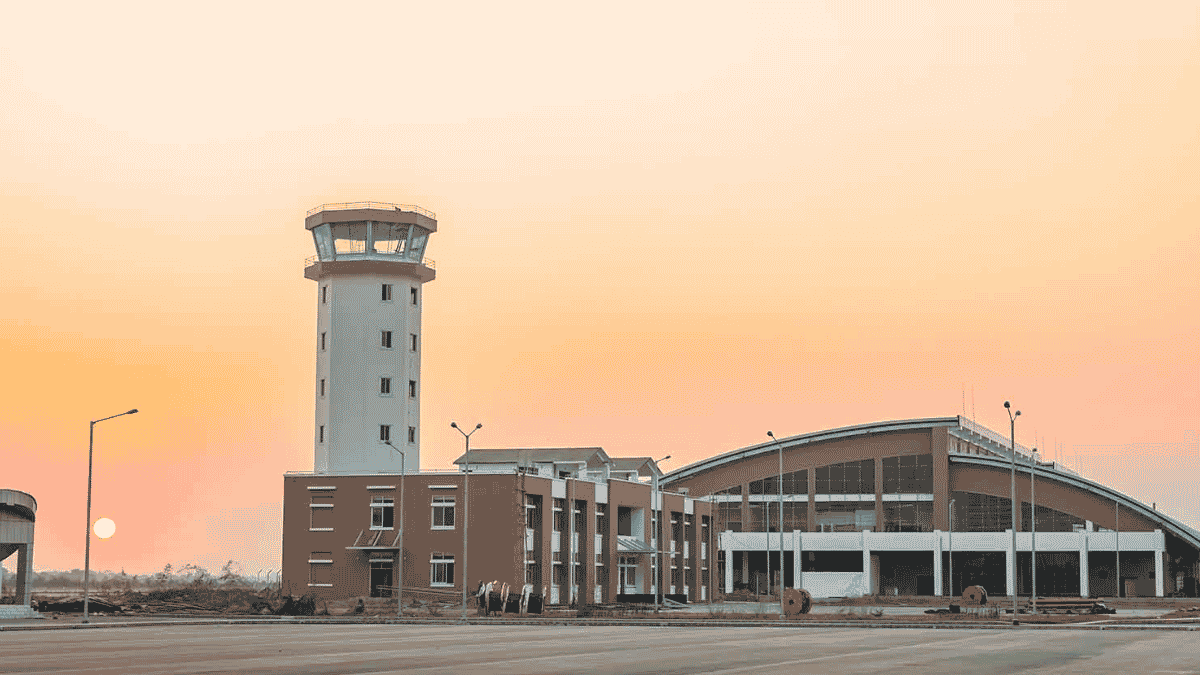
The stakes stretch well past aviation. Nepal has blown billions of rupees building Gautam Buddha International Airport in Bhairahawa and Pokhara International Airport. Both were meant to spread tourism beyond Kathmandu, pull in international airlines and pump economic activity into regions outside the capital. An airport is useful only if airlines can reach it efficiently.
The current arrangement funnels international traffic through Simara. Data from the Civil Aviation Authority of Nepal show around 88% of international flights enter through that corridor. Aircraft approaching Bhairahawa from western destinations face an additional 300km of flying. Flights to Pokhara from the west cover around 185km more than they would with a suitable alternative route. The extra distance can add more than 20 minutes to some journeys.
Those costs bite in an industry where airlines scrutinise fuel consumption, aircraft utilisation and turnaround times. A few minutes saved across repeated flights can improve operating economics. Shorter routes could also make direct services to regional airports more attractive, particularly for airlines weighing destinations with smaller passenger markets.
The new agreement could save around 17 minutes for flights heading to Bhairahawa and 14 minutes for those heading to Pokhara, according to a Civil Aviation Authority official cited by Onlinekhabar. It may also help Bhairahawa operate its instrument landing system, which could let flights continue through dense fog. That would improve the airport’s prospects during winter, when poor visibility has wrecked operations.
The agreement is still just paper. India and Nepal must settle the altitude at which aircraft get handed over between their air-traffic controllers. If aircraft are forced to enter Nepal at an altitude that makes a direct approach impractical, they may have to circle before landing, wiping out some of the time savings. The two countries must also complete the necessary operating procedures and publish the revised route information. Officials have suggested implementation could take up to six months if the process gets accelerated.
Mahendranagar is the bigger prize. The L626 corridor is about 20 miles shorter than the existing B345 route and would let aircraft use a longer stretch of Nepali airspace. That could cut flying distances for international services approaching from the west and boost the airspace revenue Nepal collects from foreign aircraft. Civil aviation officials estimate Nepal can earn between $250 and $500 per aircraft using its airspace, depending on the aircraft. More traffic and longer permitted routes could therefore bring additional receipts.
India has security concerns of its own. The proposed corridors pass near sensitive military installations, including the Gorakhpur air base. New Delhi has also raised questions about Nepal’s air-traffic-control capacity, technical staffing and safety oversight. These concerns deserve serious treatment. Opening a route demands clear procedures, trained controllers and reliable coordination between the two countries. A commercial case alone can settle an aviation-safety decision.
There is also a danger of blaming airspace access alone for the weak performance of Bhairahawa and Pokhara. Neither airport can attract airlines through shorter routes alone. Nepal must market the destinations, improve ground transport, develop hotel capacity and prove enough passengers will use regular services. Airlines need dependable demand, simply a more convenient flight path.
Shah’s visit has handed Nepal a concrete agreement after years of diplomatic delay. The next test is technical implementation, followed by the difficult work of attracting airlines and passengers. For a landlocked country, the skies above its neighbour have become part of its economic infrastructure. Nepal has secured a door previously closed in one direction. It still needs to make the journey commercially worthwhile. ■