You only give me your lousy paper Image: Mahmut Yılmaz
A thriving economy with half its output unregistered is either an accounting fiction or a political choice. In Nepal it is a bit of both. According to data compiled by EY, the country’s shadow economy in 2023 accounted for 51% of GDP, one of the biggest proportions in the world. The figure has fallen marginally from 59.9% in 2000, but the pace of retreat has slowed to a crawl. From 2019 to 2023 the reduction amounted to a negligible 0.6 percentage points.
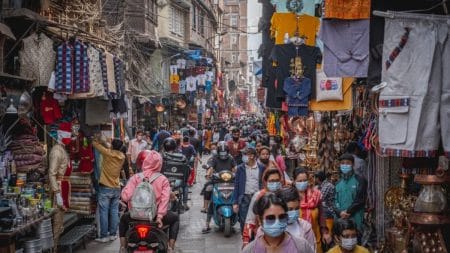
That is not a statistical rounding error. It signals enduring structural stagnation in an economy where informal transactions, businesses and employment dominate nearly every sector of working life from Kathmandu’s corner shops to the paddy fields of the Terai. The shadow economy is not a vestige of the past. It is the operating system.
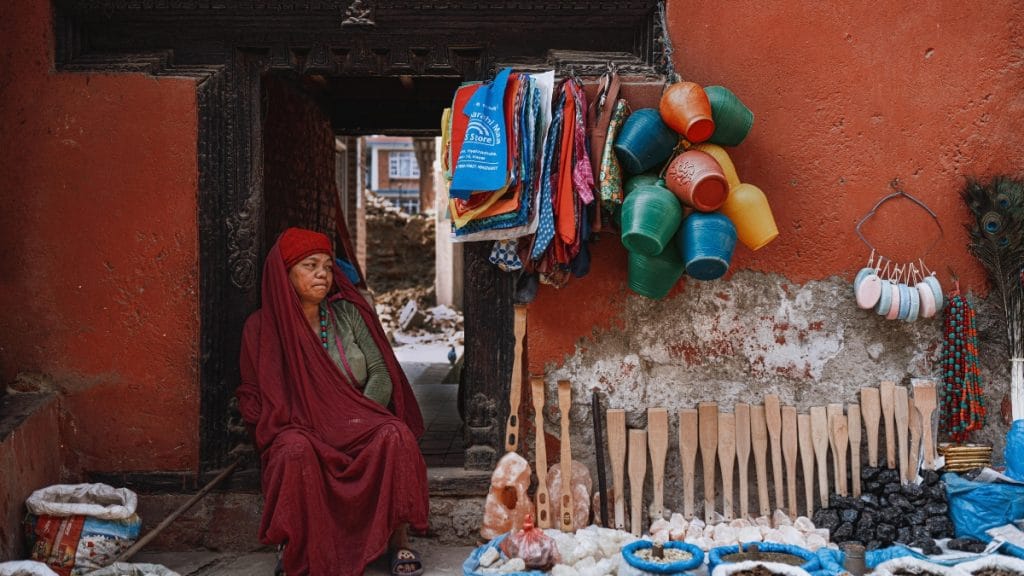
The informal sector has always been a refuge for the excluded. It thrives where paperwork fails, banks hesitate and bureaucracy intimidates. It is elastic, adaptive and most importantly cheap. In this country informality is sustained not only by inertia but also by incentives. Avoiding taxes, circumventing labour laws and eluding regulators, among others, makes short-term business sense. The costs, however, are cumulative: foregone public revenue, fragmented supply chains, unprotected workers and stunted productivity.
The global figures are telling. The International Labour Organisation estimates more than half the world’s labour force works informally. The IMF puts the number at 60%, encompassing around two billion workers and four out of five businesses the world over. In low- and middle-income countries, informality swallows 35% of GDP on average; in advanced economies it is closer to 15%. Nepal’s 51% stands out for its scale and stickiness.
This presents a policy puzzle. Informal work is not merely a failure to comply. It is often a rational response to the formal system’s inability to deliver. Red tape, tax burdens, distrust in institutions and lack of enforcement create a circular logic: businesses stay informal because the state provides little value in return for visibility.
Breaking that cycle means more than a registration form. Formalisation efforts must be designed as bargains rather than as threats. A state that asks small businesses to come into the light must offer something in exchange. Around the world some governments have done so with enviable success.
We’re not gonna take it
Simplifying business registration has proved effective. In Peru the Formaliza Perú programme created a one-stop registration shop, removing procedural bottlenecks. India’s adoption of a nationwide goods and services tax (GST) nudged thousands of small traders to register in order to claim input credits. Nigeria’s post-pandemic “Register-to-Open” campaign incentivised informal businesses to go official in exchange for the right to operate during lockdowns.
Formalisation, though, is only the first step. Access to finance is the next. Informal enterprises frequently lack credit histories, collateral or even bank accounts. Microfinance has helped bridge the gap. In Bangladesh Grameen Bank’s collateral-free loans enabled millions of women to escape subsistence traps. Kenya’s M-PESA mobile platform turned basic phones into financial lifelines, facilitating savings, transfers and micro-credit. Colombia’s Bancamía combined lending with financial education to nurture resilience among informal entrepreneurs.
Education, too, carries compounding returns. Vocational training in Brazil (via SENAI), mentorship programmes in the Philippines and sectoral skills development in Uganda have helped informal workers upgrade from daily survival to stable earnings. The more people learn to run their enterprises like businesses, not hustles, the easier it becomes to pull them into the formal fold.
Then there is the matter of where they work. Informal vendors and workers tend to cluster in urban slums or peri-urban areas with erratic utilities and patchy roads, as well as poor digital access. Infrastructure, from broadband to bus routes, has disproportionate effects on small enterprises. Rwanda’s rural infrastructure push and Indonesia’s basic service upgrades have produced measurable improvements in informal business viability.
Even when the physical environment improves, the social safety net remains thin. Few informal workers enjoy health insurance or pensions, making formalisation appear risky. Conditional cash transfers like Brazil’s Bolsa Família or India’s Ayushman Bharat health scheme provide a path toward de-risking transition. South Africa’s Unemployment Insurance Fund provides stopgap support even for the self-employed.
But policy alone does not convert behaviour. It must be accompanied by regulatory humility. Imposing the same standards on a street cobbler and a cement conglomerate courts failure. In Thailand the Easy Formality programme adjusted licensing and compliance requirements for micro-firms. Medellín, in Colombia, created a “single window” for permits, taxes and registration. Ghana’s NBSSI actively champions the interests of informal entrepreneurs in legislative processes. A little listening goes a long way.
The informal economy is not simply inefficient, it is invisible. Lacking registration, most businesses escape measurement, undermining policy design. This is partly a data problem. In Nigeria the National Bureau of Statistics now tracks informal employment trends systematically. In Egypt university-linked research centres investigate sector dynamics and impact. Argentina and others have begun routine surveys of informal labour to fine-tune policy. Without data governance becomes guesswork.
Integrating informal firms into value chains also helps. Trade fairs, product expos and B2B linkages expose micro-enterprises to formal markets. Ethiopia’s “one-stop” shops connect informal producers to institutional buyers. Mexico’s tourism expos showcase village artisans to global audiences. Such efforts elevate the informal economy not as a problem to be solved but a platform to be leveraged.
Technology remains a wildcard. Though e-commerce and digital payments can bridge gaps, their promise is frequently undermined by digital illiteracy. India’s Digital India campaign and Kenya’s youth literacy programmes offer blueprints for lowering those barriers. Colombia’s e-Emprende initiative combines branding, training and online tools to give small traders a digital footprint. As commerce moves online those without pixels fall further behind.
Coordination matters, too. Programmes flounder when ministries, donors and NGOs pull in different directions. In Kenya the MSEA orchestrates partnerships between government and civil society to scale interventions. Pakistan’s SMEDA and Zambia’s ZDA coordinate cross-sectoral support. Fragmented ambition, by contrast, guarantees diluted impact.
Don’t let me be misunderstood
Nepal has dabbled in formalisation since 2015, including digital payment mandates and tax reforms. But the tempo has slowed. With the marginal slide in informality since 2019 barely breaching statistical significance, it is clear piecemeal tweaks are no substitute for strategic coherence. Informality is not receding, it is regrouping.
To lift half the economy out of the shadows, the state must do what it seldom excels at: earn trust. Formalisation must feel like empowerment rather than surveillance. Until that happens the informal sector will remain what it has long been: the country’s biggest employer, biggest tax avoider and most permanent feature. ■