THE MINISTRY OF MIGRANTS IMAGE: AP
REMITTANCES ARE Nepal’s most reliable export. Last fiscal year the country received $10bn from its citizens abroad, up from $9bn a year earlier and more than all foreign aid, foreign direct investment and export earnings combined. These flows bankroll domestic consumption and plug the trade deficit as well as swell foreign-exchange reserves. They also sustain a political class that appears to find reform more bothersome than dependence.
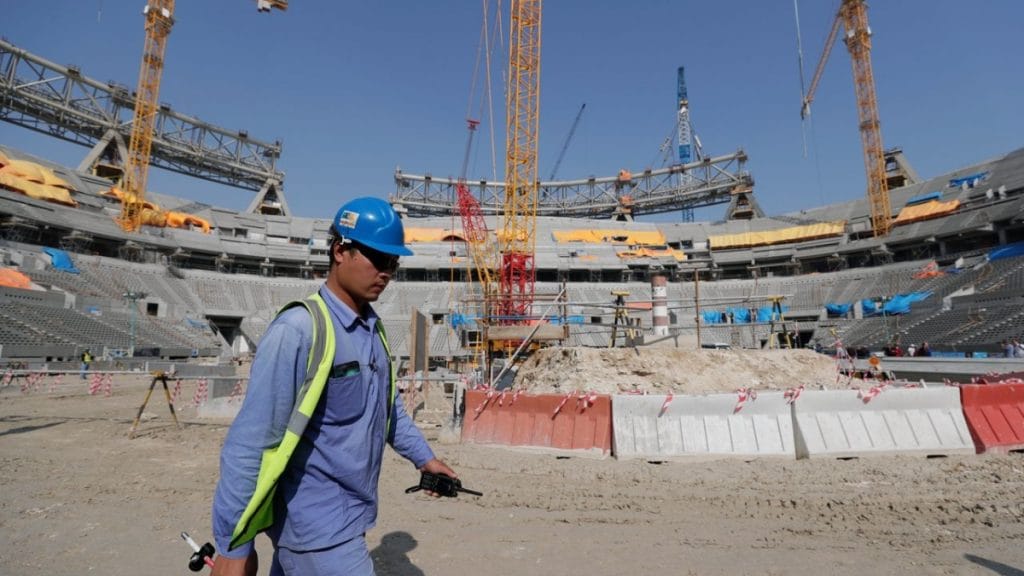
Roughly 56% of households receive some form of remittance income, according to a widely cited national survey. The scale of dependence is such that remittances account for nearly a quarter of GDP. By contrast, tax revenue hovers near 20%. A Nepali migrant—working a night shift in a Gulf hospital or slinging bricks on a Malaysian construction site—contributes more to the country’s balance of payments than any domestic taxpayer. That worker is also doing something else: shielding Kathmandu’s political elites from accountability.
The money feeds more than stomachs. It buys school fees and underwrites weddings, as well as starts small enterprises. But it also dampens public frustration. When foreign remittances keep the lights on, there is less reason to ask why domestic job creation has stalled or why basic infrastructure resembles the set of a disaster film. The outflow of workers removes those most likely to challenge the status quo. A government that exports its discontents imports stability.
This arrangement is fragile. During the covid-19 pandemic global shutdowns throttled remittances, provoking the government to ban luxury imports in a bid to conserve dollars. Foreign reserves slid. Growth collapsed. The economy dipped into recession. A more severe external shock could be catastrophic. A regional war or geopolitical disruption—say, a Chinese assault on Taiwan amid a distracted America—would likely cut off a lifeline that sustains tens of millions.
The consequences of such a rupture are not theoretical. Sri Lanka, reliant on tourism and remittances, defaulted in 2022 when the pandemic stopped travel and the war in Ukraine inflated energy and food prices. Its economy collapsed, sparking street protests and ousting the president. Nepal’s underlying vulnerabilities are no different. The composition of its external income may differ but the fragility remains.
Policymakers in Kathmandu have done little to mitigate this risk. Old faces have rotated through office with metronomic regularity since the monarchy was abolished in 2008. Institutional continuity has not produced reformist zeal. Rather it has ensured difficult decisions—on industrial policy, infrastructure or education—remain safely in the realm of future aspiration. Remittance inflows conceal the consequences of inaction. Politicians remain popular by presiding over other people’s income.
The economic costs are mounting. Dutch disease is one. A strong inflow of foreign currency has bolstered the Nepali rupee, making exports pricier abroad. The trade deficit is yawning thanks to the secular slide in exports. Local industries struggle to compete while import dependency deepens. A strong rupee also distorts remittance dynamics: overseas workers must send more home to preserve recipients’ purchasing power.
Labour migration itself carries risks. Interest rates on the loans migrants take out to finance travel are steep. Placement fees are high. Legal safeguards abroad are patchy. A single bad contract or workplace injury can ruin a household. Meanwhile domestic capacity stagnates. Economic growth remains among the slowest in South Asia. The formal sector is too weak to absorb the annual influx of new workers. Public works are sporadic and piecemeal. Ambitious projects such as hydroelectric dams or expressways are habitually delayed.
Nor has the political economy escaped distortion. Migrant-reliant families exhibit reduced labour-market participation, and some studies suggest falling productivity among recipients. Consumption rises but investment remains subdued. Politicians have little incentive to change this: labour exports create jobs abroad; foreign cash props up domestic banks; and public discontent is kept at manageable levels. A dysfunctional equilibrium, but an equilibrium nonetheless.
The government’s preferred solution is to encourage more migration. Financial institutions have been quick to support this goal. Banks are deepening remittance networks, promoting digital transfers and even offering migrant-linked savings schemes. The fallout is a smoother pipeline: faster money flows, broader coverage and stronger margins. Yet no amount of financial engineering can disguise the basic fact: that the country is exporting its labour because it cannot employ it at home.
Some have proposed channelling remittances into productive investments. The government has floated schemes to match migrant savings with state funds for infrastructure or agriculture. Uptake has been dismal. Trust in public management remains low. Attempts to tax remittances have proven politically toxic. Programmes to upskill potential migrants or reintegrate returnees are underfunded and poorly coordinated. As with most Nepali policy frameworks, design tends to outrun implementation.
Yet the flows show no sign of ebbing. Demand for low-cost foreign labour remains strong across the Gulf and South-East Asia. Nepal’s working-age population continues to grow. Migration networks are embedded. And domestic wages provide few incentives to stay. Banks and fintechs are expanding remittance-linked products. The economy remains afloat for now.
That may not hold forever, however. Should geopolitical winds shift or demand dry up, the reckoning will be quick. A sharp reversal in remittances could threaten reserves; crush consumption; and expose the structural rot that the money has so far hidden. The country’s economic resilience, built on the shoulders of its migrant workers, is more illusion than insurance.
A country cannot outsource its development indefinitely. Sooner or later the bill comes due. When it does, remittance-fed stability may prove more brittle than it looks. ■