Victory does not always require war. In the Taiwan Strait, the world’s most scrutinised flashpoint, the risk of large-scale conflict is real. Yet the more likely outcome is not a blitz of missiles or beach landings, but rather something quieter and more corrosive: coercion without combat. China may never invade Taiwan. That does not mean it will fail to subjugate it.
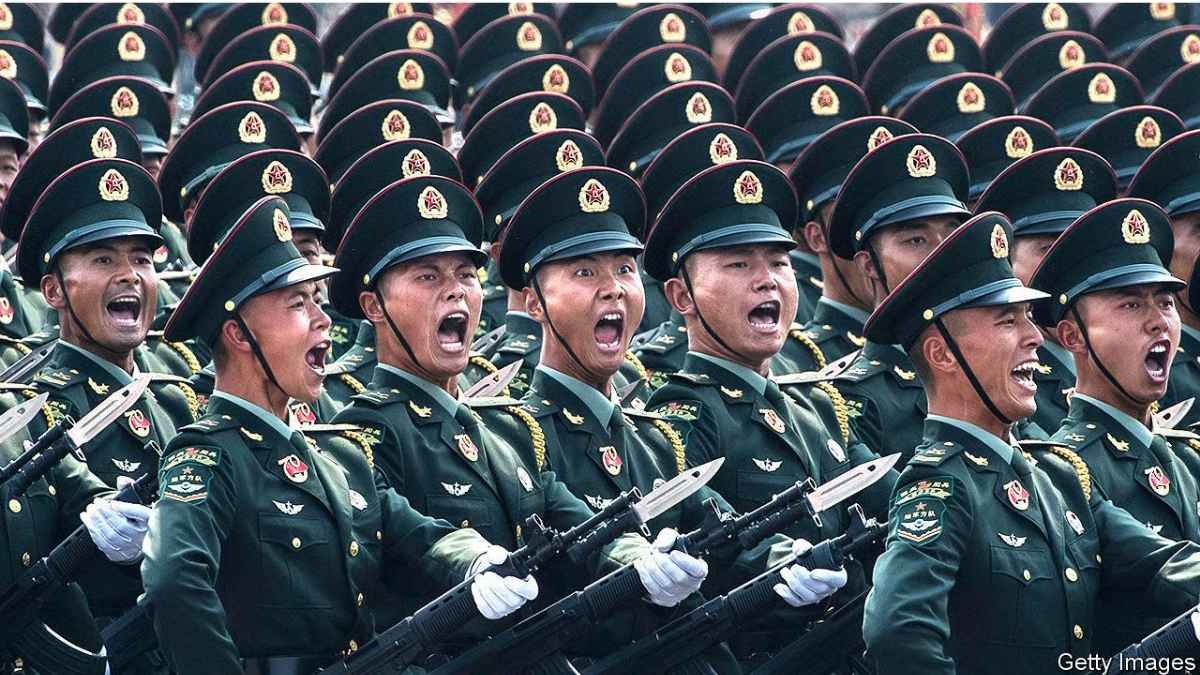
Xi Jinping has made the island’s subordination central to his rule. Official rhetoric describes reunification as “inevitable”. Military planning suggests urgency. Xi has reportedly ordered the People’s Liberation Army (PLA) to reach full operational readiness for a Taiwan attack by 2027. Budgets have risen accordingly. Amphibious drills grow in scope and frequency. Simulations include blockades and carrier ambushes. The Chinese navy already boasts the world’s largest surface fleet by ship count.
Yet the gap between rehearsal and reality is still big. Taiwan’s defences are formidable. Geography favours the defender: treacherous seas, limited landing beaches, mountainous terrain. Amphibious assault is the most complex operation in war. China has not fought one in modern history. Its last conflict, a short border war with Vietnam in 1979, exposed serious shortcomings. The PLA has not fielded troops in combat since. Many generals owe promotion more to loyalty than to competence.
A full-scale invasion would test the resilience of not only China’s military but also its economy. Taiwan produces over 60% of the world’s semiconductors and more than 90% of the most advanced chips. Even limited disruption would paralyse supply chains and choke global manufacturing, as well as trigger capital flight. Naval warfare in the Pacific would jeopardise China’s trade routes and energy flows. Western sanctions would almost certainly follow. The gamble would be immense.
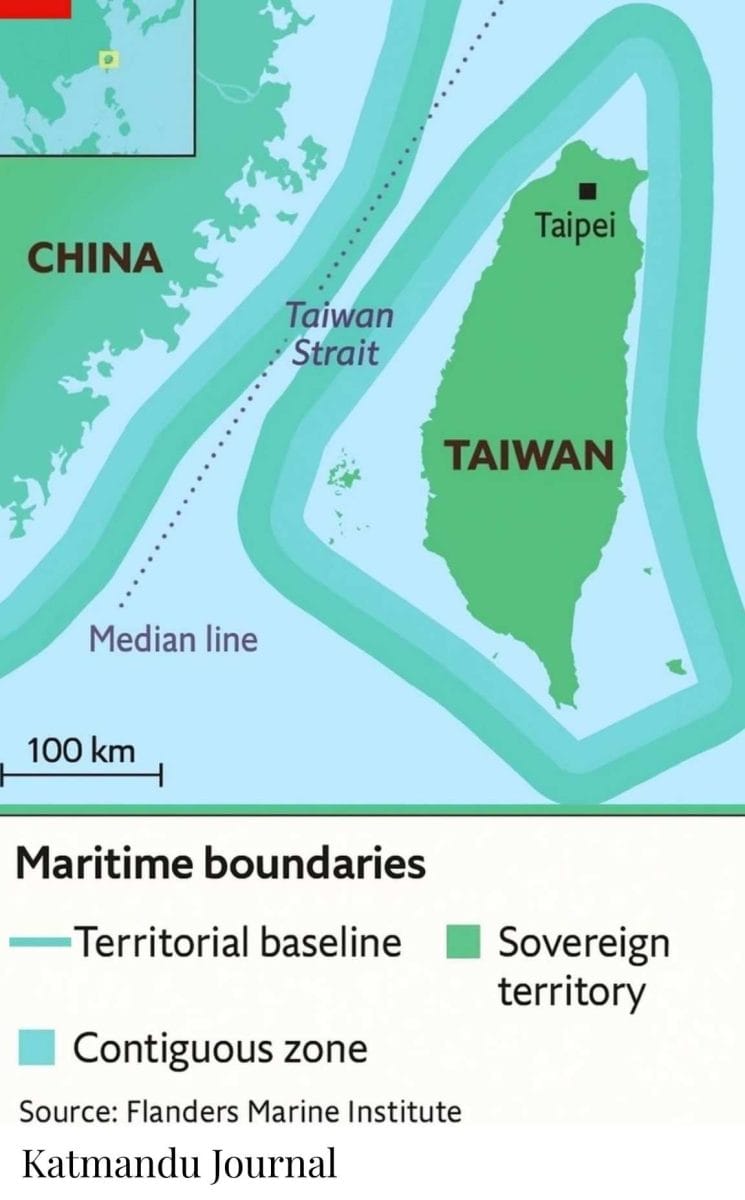
Still, ambition tends to find subtler expressions. Chinese strategy appears increasingly calibrated around non-kinetic pressure. Grey-zone operations—those that fall below the threshold of war—are expanding. Military aircraft encircle Taiwan’s airspace with growing regularity. Naval vessels assert presence in contested waters. Cyberattacks and disinformation target the island’s infrastructure and institutions. Chinese customs authorities have blocked Taiwanese exports on arbitrary grounds. Each move is designed to sap Taiwan’s confidence and probe its allies, plus undermine the status quo.
A maritime blockade, however informal, would raise the stakes dramatically. Taiwan is an export-driven economy reliant on sea lanes. A quarantine framed as “customs enforcement” could devastate its trade without a single missile launch. American policymakers would then face an excruciating decision: respond militarily to a non-war or accept a de facto annexation.
The credibility of America would hang in the balance. Official doctrine is ambiguous. Washington adheres to a “One China” policy but also commits to arming Taiwan and opposing any change to the status quo by force. It has no formal defence treaty with Taipei. In simulated war games run by multiple American think-tanks, intervention often leads to heavy losses. Carrier groups are sunk. Airbases are struck. Munition stockpiles run dry within weeks. Casualty estimates outpace those from Vietnam and Korea combined.
The political dimension is equally uncertain. American voters may recoil at the cost of defending an island that most cannot place on a map. Presidential rhetoric swings with election cycles. Allies in the Indo-Pacific—Japan, South Korea, Australia—would find themselves in the crosshairs. Some may pursue independent nuclear capabilities. Others may hedge, adjusting alliances based on perceived American resolve. A successful Chinese coercion of Taiwan, even absent war, would rewire the strategic architecture of Asia.
Xi’s timeline may also reflect domestic factors. His consolidation of power has neutralised rivals but not risks. Slowing growth, demographic decline and youth unemployment have stirred dissatisfaction. Nationalism, carefully nurtured, may become a trap. Having elevated the Taiwan question to a test of regime legitimacy, Xi may feel compelled to act, particularly if Taipei drifts further from Beijing’s orbit. Taiwan’s newly elected government, led by the Democratic Progressive Party, shows no inclination to accommodate. Support for unification is vanishingly low.
Yet it is precisely the absence of public appetite for integration that incentivises Beijing’s coercive strategy. The less palatable Taiwan finds the prospect of union, the more plausible it becomes that China will pursue methods of compellence that avoid the unpredictability of war. That, in turn, creates a slow-burning crisis that the West is ill-prepared to meet.
The next great-power showdown may not begin with an invasion. It may begin with an inspection ship at the mouth of Kaohsiung Harbour. ■