
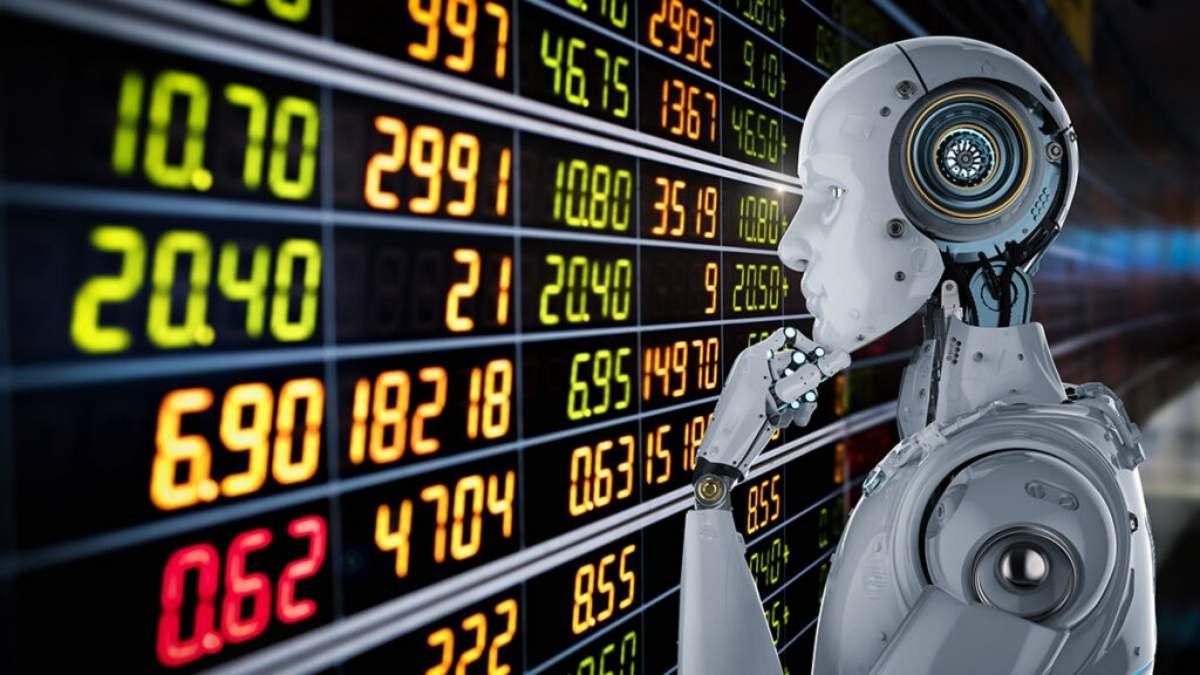
A certain kind of financier has always seen the market as a puzzle meant for clever people like themselves. For decades that belief justified fat fees and fed the legend of the star fund manager. Then index funds showed up. They solved the puzzle by refusing to play it, and in doing so exposed how few stock-pickers actually earned their pay. Now a much tougher rival has arrived. Artificial intelligence does not step aside from the puzzle. It attacks it directly—faster, cheaper and often better. In the oak-panelled offices of active managers, the unease is growing, for this is not another trim to fees. It is a threat to the trade itself.
The industry was already on the back foot. Passive investing has done real damage. In America more than half of all equity money now sits in index funds. Over time the average active manager still fails to beat the market. Fees that once cleared 1% without fuss have been squeezed to crumbs. Margins have faded. A business built on large teams of costly analysts and polished sales pitches looks tired. Into this weakened field steps AI.
Finance has always changed with technology, from ticker tape to the Bloomberg terminal. Earlier tools sped up trades. AI goes further: it replaces judgement. Algorithms read balance sheets, listen to earnings calls for tone as well as scan satellite images to see whether factory car parks are filling up. They trawl through mountains of data and spot patterns no human ever could. Work that once took weeks of meetings can now be done in seconds. Funds already adjust portfolios based on online chatter. Hedge funds tweak strategies minute by minute. Norway’s giant sovereign fund is testing AI to spot risks. Investing is shifting away from instinct and towards data and code.
The link with passive investing is this: both scale easily and slash costs. Index funds made human stock-picking look overpriced. AI goes a step further. It suggests that even complex strategies—factor tilts, clever reallocations—can be copied by machines. Once trained, a model can run thousands of portfolios at almost no extra cost. Why pay millions for a famous manager’s hunches when a machine can work nonstop, without ego or bonuses?
The biggest players stand to gain the most. Firms like BlackRock and Vanguard sit on vast pools of data and can afford heavy investment in AI. For them, the technology cuts costs and tightens client loyalty. Their brands also calm investors uneasy about trusting money to opaque systems. Tech firms are edging closer, too. Microsoft and Google are building AI into financial software. Nvidia supplies the raw computing power. In China, Ant Group and Tencent draw on huge consumer datasets to offer automated advice. The gap between asset manager and tech platform is narrowing fast.
For mid-sized firms, the outlook is grim. Without large datasets or deep pockets, their options are poor. Renting off-the-shelf AI risks turning their products into clones of everyone else’s. Building their own systems means entering a costly race they are unlikely to win. The industry may split in two: small specialists at one end, massive tech-backed giants at the other. The middle will fade away.
This machine-led future carries risks. One is explanation. Regulators and clients expect managers to explain their decisions. Many AI systems cannot do that clearly. How does a board explain to pensioners that an algorithm dumped European bank shares because it spotted some obscure link with seaweed harvests in the Philippines? “The model said so” will not satisfy a regulator.
Wider dangers are even more worrying. If many firms rely on similar models trained on similar data, they may all move at once. Herd behaviour could unfold at machine speed, turning small shocks into big ones. Liquidity could vanish in seconds. The 2010 flash crash, when algorithms briefly wiped a trillion dollars off American markets, may one day look mild. Bias is another risk. Systems trained mainly on Western markets may fail badly elsewhere. Worse still, if machines trade mostly on signals produced by other machines, markets could drift away from real economic activity altogether.
Regulators are paying attention, but they are chasing a moving target. America’s securities watchdog is probing AI-driven advice. The European Union plans rules for risky AI uses. Asian regulators are testing new frameworks. The problem is that technology moves faster than regulation. Tight rules can choke progress; loose ones invite trouble. Experience suggests safeguards usually arrive only after something breaks.
So where does that leave people? Some corners will hold out. Activist investing, debt restructurings and private-equity deals depend on persuasion, judgement and relationships that machines still struggle to copy. There may also be a lasting role for humans as comfort-givers. Many clients want more than returns. They want a story, reassurance and someone to blame when things go wrong. It is easier to fire a manager than to argue with software. The future may resemble an aircraft cockpit: computers fly most of the route, but passengers relax knowing a human is watching and ready when conditions turn rough.
The real change is cultural. Finance has a history of celebrating the brilliant investor such as the Buffett, the Soros and the Lynch. AI strips away that romance. It treats investing as a technical problem, which can be improved with more data and faster machines. Even when humans add value, machines can often match it for less. The effects will reach much further than lower fees. Analyst jobs will shrink. Trust will move from individuals to systems. Power will concentrate with those who control the algorithms and the data behind them.
When index funds first appeared, many scoffed. They seemed dull and simplistic. Today they run trillions and influence how companies behave. AI in asset management is at a similar stage—part experiment, part hype, part promise. But cost and scale are lining up. History shows that when they do, finance does not politely adapt. It changes. The world’s most expensive analysts may soon find that their toughest rival does not wear a suit, draw a salary or ever sleep. ■





