Image: PTI
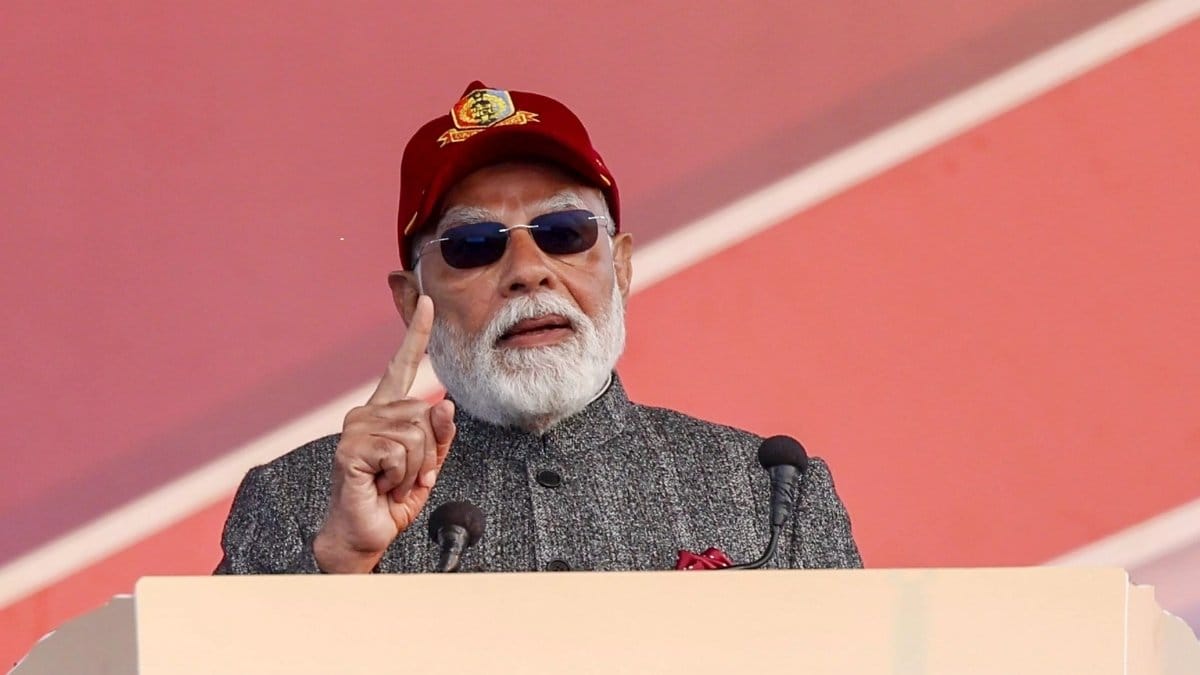
Narendra Modi turned 75 on Wednesday, the age at which senior leaders in his Bharatiya Janata Party (BJP) are supposed to retire. Instead he presides over India with fewer challengers than at any point in his decade-long rule. His authority looks unassailable precisely when the economic outlook is weakest and his party, once accustomed to single-party dominance, has been forced into coalition.
The question of succession arises not only from biology but also from party custom. The BJP has treated 75 as a marker for exit: past figures have been nudged aside on reaching it. Yet Modi shows no signs of stepping down. Party insiders say there is no bar on him contesting again in 2029, when he will be 79. With no clear heir in sight, “parlour discussions about Modi’s successor are merely that—idle talk,” observes Milan Vaishnav of the Carnegie Endowment for International Peace.
This durability rests on two foundations: his near-total grip on the BJP and his continuing hold over the electorate. Inside the party, Modi has sidelined rivals and kept full control. J.P. Nadda’s term as party president has been repeatedly extended, showing that no leadership changes happen without Modi’s approval. The Rashtriya Swayamsevak Sangh (RSS), the Hindu-nationalist movement that incubated the BJP, hints at retirement norms but retreats when Modi asserts control. The RSS benefits from his rule and has little appetite to engineer instability.
Among voters, Modi remains popular despite headwinds. Opinion polls in August gave him an approval rating near 60%, barely lower than before the 2024 election setback. A four-day border clash with Pakistan in May, a tariff war with America in August and the slowest economic growth in five years have not affected his standing. For many Indians, he embodies strength and continuity, even when outcomes are mixed.
The economy is the most fragile element of his rule. Growth has cooled and the rupee hovers near record lows. Indian equities trail emerging-market peers. Donald Trump’s 50% tariff on Indian exports was a jolt to a government that had invested heavily in ties with Washington. Domestic fiscal policy has also shifted. Modi has eased consumption taxes and cut income tax rates, signalling a turn towards cushioning households rather than pursuing the structural reforms promised earlier. For a leader once seen as a market moderniser, the tilt is notable.
Yet coalition politics, rather than global shocks, may matter most. Last year’s election denied the BJP an outright majority, forcing Modi to govern with allies. Such arrangements have undone strongmen before. Modi, however, has managed the bargain shrewdly, offering partners cabinet posts and project funds. Andhra Pradesh’s ruling party, for instance, secured resources for a new capital city in return for its loyalty. That transactional politics keeps the coalition intact, at least for now.
The risks lie in over-centralisation. Modi relies on a tight circle of advisers and rarely delegates. Cabinet ministers remain largely subordinate, lessening the scope for internal correction. The RSS, once a check, finds itself marginalised. Without a mechanism for grooming successors, the BJP faces a future in which Modi’s departure—whether through retirement or ill health—creates a vacuum. As Nilanjan Mukhopadhyay, his biographer, notes: “For the BJP, Modi poses a kind of existential crisis.”
Globally, India’s partners are adjusting to a reality in which Modi dominates the landscape. Washington and Delhi are already seeking to patch up the tariff spat. Moscow and Tel Aviv send effusive birthday greetings. Abroad, as at home, Modi projects resilience. The impression of invincibility matters: it deters rivals and reassures allies that policy will not shift abruptly, whatever the turbulence.
When Modi eventually steps aside, whether in four years or a decade, the scramble to replace him will test whether the BJP is a party of institutions or one man’s creation. ■