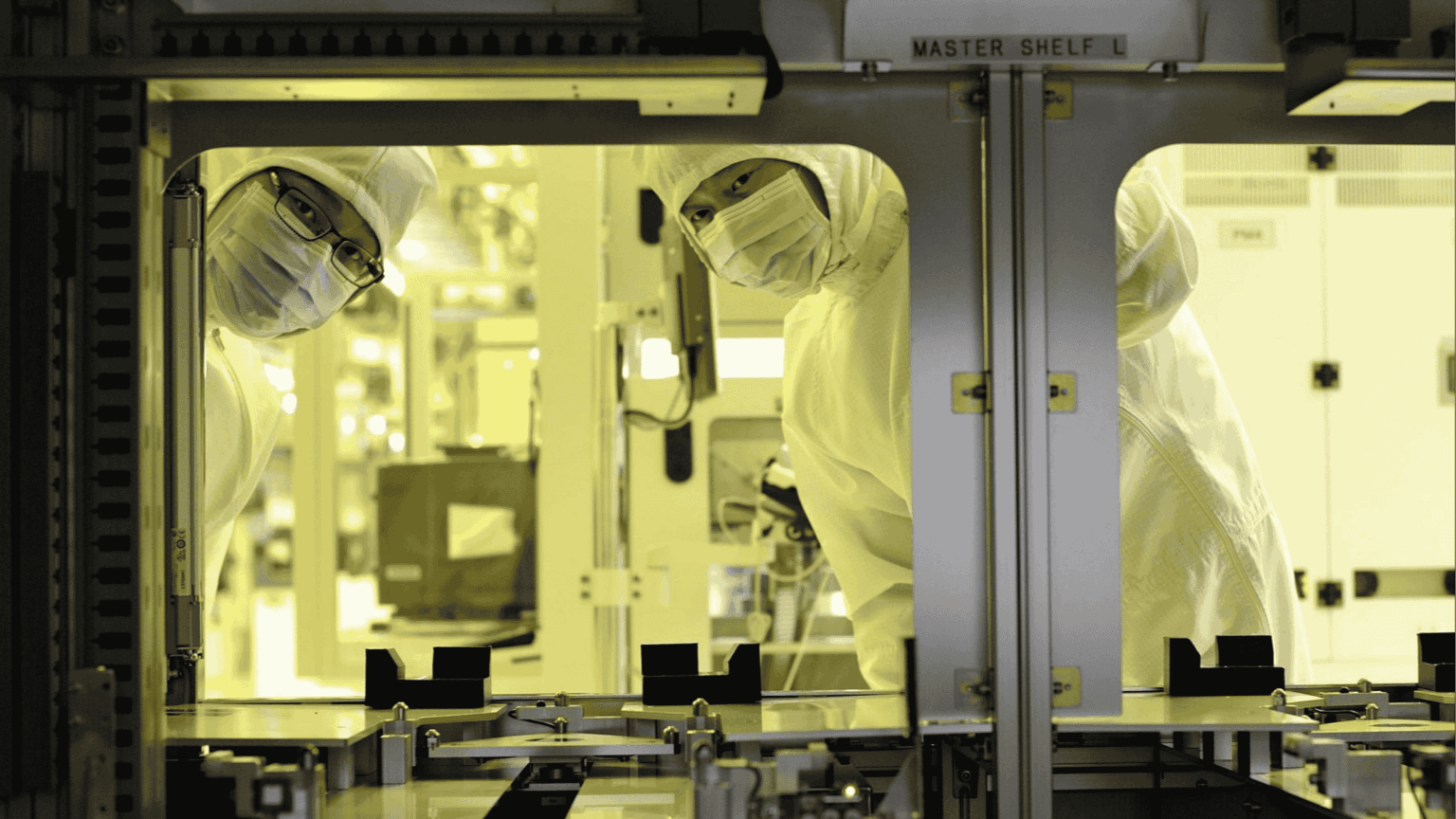
Photo: SK Hynix
In the 1960s, South Korea was as poor as Nepal. By 2024 it had leapfrogged most of Europe in income per head. It did not achieve this by emulating Silicon Valley or by betting early on its own start-ups. Rather it climbed a ladder with careful sequencing: heavy investment first, foreign technology infusion next and innovation only later. Nepal, still in the foothills of the same development climb, appears to have missed the memo.
The World Bank’s 2024 World Development Report distils decades of postwar catch-up growth into a blunt insight: to escape the “middle-income trap”, countries must pass through two distinct transitions. First, scale up investment in infrastructure and human capital. Then—and only then—enable the widespread diffusion of foreign technology into domestic firms. The third step, innovation, comes much later. Most developing economies either skip the second stage or attempt the third prematurely. Nepal risks both.
Nepal’s recent development story has the hallmarks of stage one. Between 2000 and 2020 electricity generation doubled, mobile phone penetration reached near-universal levels as well as paved roads began to replace the potholed tracks that defined rural life. Remittance-fuelled consumption helped reduce poverty and headline growth rates ticked upwards, averaging 4-5% per year since the 1990s. These gains, while welcome, now face diminishing returns. Physical infrastructure is no longer the binding constraint on growth.
But if Nepal has passed the investment stage, it has not entered the infusion stage. Productivity—how efficiently workers and firms use capital—remains anaemic. Agriculture still employs around 60% of the workforce, but contributes under 25% of GDP. Manufacturing’s share of output has tumbled over the last two decades. Nepal’s firms are small, informal and largely disconnected from international supply chains. Labour productivity in manufacturing is roughly one-fifth of India’s, and one-tenth of Vietnam’s.
The stagnation is down to a serious structural weakness. Nepal is not short on capital or workers. What it lacks is the institutional and managerial capacity to translate inputs into higher-value output. That is precisely the role of technology infusion: the gradual adoption and adaptation of existing know-how, imported from more advanced economies and embedded into local practice. It is a silent process—not visible in ribbon-cuttings or export tallies—but one that eventually determines whether a country industrialises or stalls.
South Korea understood this. In the 1970s it did not seek to invent its own semiconductors; it licensed Japanese and American technologies, then trained engineers to replicate and refine them. The state subsidised royalty payments and pressured firms to export, on top of penalising underperformance. Productivity soared from smart imitation backed by strong institutions.
Vietnam has followed a similar arc. Since the mid-2000s, it has aggressively courted foreign direct investment (FDI), especially in electronics. But instead of seeking to develop local unicorns, Vietnam focused on embedding foreign firms into its economy—building industrial parks, improving logistics and training workers, among others. As foreign firms set up shop, domestic suppliers emerged, transferring knowledge in the process. Exports exploded, but more importantly, productivity rose.
Nepal has not laid the groundwork for such a transition. FDI inflows remain negligible—less than 0.5% of GDP in 2023—thanks to red tape and uncertainty. Its industrial zones remain underutilised. Firms face erratic power supply and unreliable transport, as well as a regulatory regime that favours incumbents over competition. Most damningly, there is no coordinated effort to integrate domestic firms into global value chains. The government speaks of innovation, but skips over the harder, unglamorous work of capability-building.
Even promising sectors remain disconnected. Nepal’s hydropower potential is enormous—its rivers could theoretically generate over 40GW, fifteen times current capacity. But the sector is mired in inefficiency and vulnerable to external shocks. Moreover, there is little focus on backward linkages: no domestic turbine manufacturing, no technical training institutes, no export strategy beyond selling to India, and now Bangladesh. The sector generates electricity but not know-how.
Nor is education alone the fix. Nepal’s tertiary enrolment has risen, but graduates are mismatched to industry needs. Vocational training is underfunded and fragmented. Managers complain of “book-smart” workers with little practical skill. Worse, firms rarely offer formal training to employees. Without in-firm learning and external exposure, paper qualifications offer little productivity boost.
The temptation to leapfrog—to skip straight to innovation—is understandable. Policymakers invoke buzzwords like digital transformation and start-up ecosystems.Tech incubators in Kathmandu have attracted media attention, and donors eagerly support hackathons and coding bootcamps. But this top-heavy approach puts the cart before the horse. True innovation emerges from the accumulation of absorptive capacity: firms that have mastered existing technologies.
Chile offers a sobering parallel. After liberalising in the 1980s, it invested heavily in mining and natural resources. But it did not stop there. The Chilean government worked with universities and firms to adapt foreign techniques: creating, for instance, a salmon farming industry from scratch using Norwegian inputs. Productivity improved and exports diversified. Chile is not a tech hub, but it is a middle-income country that learnt to play to its strengths while gradually upgrading them.
The lesson is that the “missing middle” in development is not infrastructure or innovation. It is the capacity to absorb. That means building institutions that reward efficiency rather than size. It means courting FDI for competition and knowledge transfer. It means focusing more on supply chains.
Nepal still has time. Its population is young and its geopolitical position confers strategic leverage. But none of that will matter unless policy catches up with economic logic. Growth will not come from skipping steps. It will come from mastering the second one. ■
An earlier version of this story incorrectly said South Korea in the 1960s was as poor as Nepal is today. In fact, both were equally poor.