
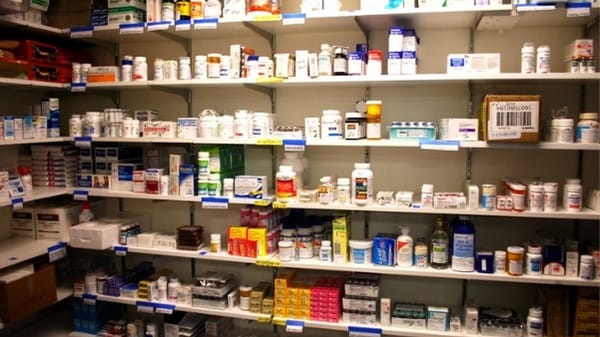
The antibiotic handed over the counter in a tidy pharmacy in Nepal’s Saptari district comes with no leaflet and no box. The drug is licenced and locally produced—technically legally. But odds are, it will do little to fight the infection it claims to treat. And the patient, unaware of its poor quality, will go home thinking the problem lies elsewhere—perhaps with their body, or their diet, or the doctor.
A recent study examining 241 medicine samples from pharmacies in Saptari and Kathmandu found that one in ten failed laboratory quality tests. None were fake. All were real products. They were simply substandard.
The distinction—between falsified and substandard drugs—matters more than it seems. Falsified medicines are counterfeits: intentionally mislabelled and easier to spot with proper scrutiny. Substandard medicines are more elusive. They are legally manufactured but poorly made or stored, and they make up the vast majority of poor-quality pharmaceuticals in low- and middle-income countries (LMICs). The World Health Organisation estimates that 10.5% of all medicines in LMICs fall into one of these two categories. But substandard medicines are six times more common and harder to catch.
The consequences go beyond individual patients. Faulty drugs sap public trust in healthcare and contribute to rising antimicrobial resistance. Economically, they cost billions: estimates of the global burden range from $10bn to $200bn a year, depending on how one counts lost productivity, prolonged illness and resistance-related costs. But their most damaging feature is their invisibility. A drug that fails to cure does not look different, nor is it necessarily cheaper or more suspect than one that works.
Nepal illustrates the challenge vividly. Home to 30 million people, the country imports most of its medicines from India and China. But local production is soaring. In the recent study more than 70% of the medicines sampled were made domestically. The drugs tested—azithromycin, cefixime, esomeprazole and losartan—are widely used, covering both infectious and chronic diseases. Researchers visited 91 licenced private pharmacies and found problems scattered across regions and vendors plus manufacturers. The culprit was not cost-cutting alone: substandard samples were not consistently cheaper than quality ones.
This is a crucial point. In theory, markets should self-correct: consumers ought to demand higher-quality medicines, and suppliers should respond accordingly. But that only works if quality is visible—and in Nepal, it isn’t. The study found no meaningful correlation between price and performance. Some of the worst-performing drugs cost slightly more than the compliant ones. Losartan, the cheapest medicine sampled (at just over six cents per pill), had multiple failures. But esomeprazole, with its much wider price range, showed no predictable link between price and efficacy.
Packaging provided slightly more insight. Over 57% of the samples came only in blisters—no box, no leaflet, no detailed labelling. Although not illegal, this absence of information makes it harder to detect expired batches or improper storage. Worse, field conditions tended to undermine the medicine’s shelf life. In five sites, temperatures reached or exceeded 30°C. One location hit 75% humidity, far beyond the tolerances most formulations are designed for. Storage conditions like these hasten expiry and degrade drugs that otherwise would have worked.
A medicine may be properly labelled and formally licenced, but if the regulator cannot enforce storage guidelines, or audit production lines, or de-register faulty producers, the paper trail is meaningless. Nepal’s Department of Drug Administration (DDA) sits at WHO “maturity level 1”—the bottom rung of regulatory competence. Registration records are incomplete or outdated. Licences remain active long after vendors cease operating or violate standards.
Nor is the private sector picking up the slack. Patients in Nepal pay out of pocket for nearly all medicines, creating incentives for pharmacies to stock affordable drugs—but not necessarily effective ones. Brand, price and packaging are poor proxies for quality. And because failures tend to be pharmacological, not visual, even diligent pharmacists struggle to identify problematic batches. In this market consumers are blind and so too often are regulators.
Yet the study offers glimmers of hope. Field-based screening, particularly small-scale dissolution kits, could be deployed more widely. Combined with targeted lab audits, they could help identify problem manufacturers or weak spots in the supply chain. And digital tracking tools could bring Nepal’s vendor registry into the 21st century, helping weed out inactive or non-compliant pharmacies.
But tools are not enough. Institutions must act on the data they gather. And that means funding and political will. A medicine that fails a dissolution test is not a theoretical problem—it is a sick child left untreated, a blood pressure patient with no relief, a course of antibiotics that nudges bacteria closer to resistance.
The medicine may come blister-packed or boxed, cheap or costly, local or imported. It may even bear the right name and contain the right compound. But if it dissolves too slowly, or not at all, its effect is the same as doing nothing. Until Nepal can spot the difference in time, so will the patients. Too late. ■




