Image via The Telegraph
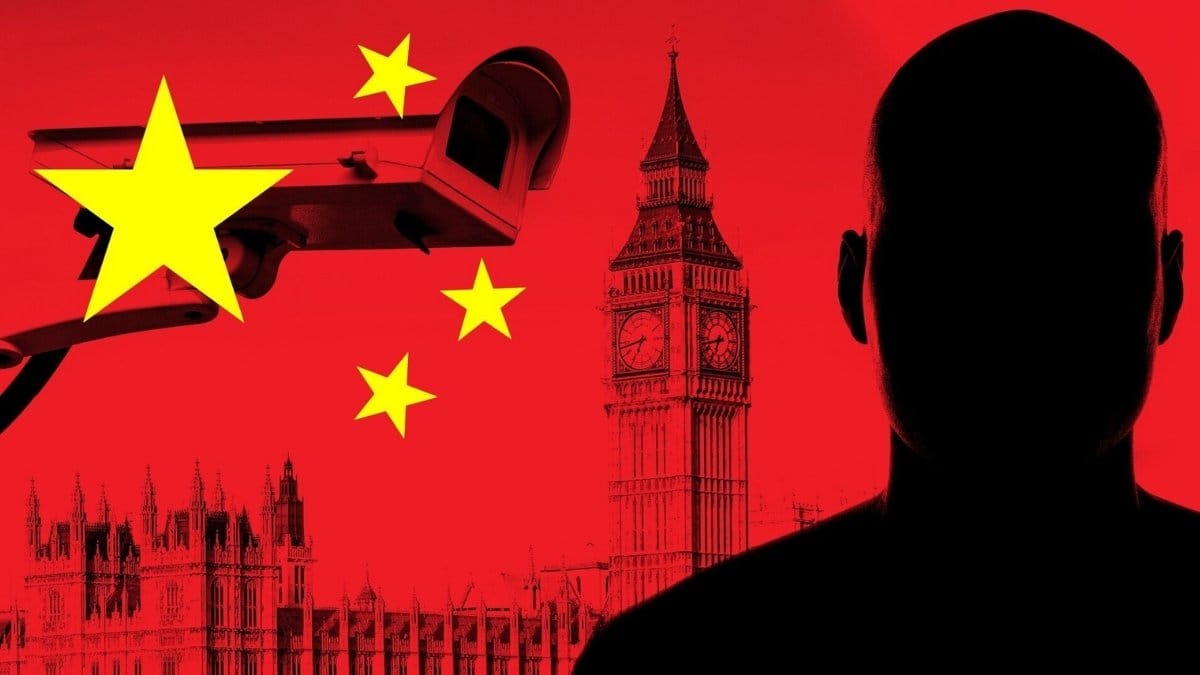
It is a strange kind of failure when a state’s legal system cannot convict those it suspects of spying for a country its security chiefs call a major threat. Yet that is what happened in Britain recently.
Prosecutors dropped a high-profile case against two British men accused of spying for China. The reason was that for the charges to stick, the government would have had to have formally declared China an “enemy” under the Official Secrets Act of 1911. It had not. The collapse of the trial lays bare an uncomfortable truth. Britain’s intelligence agencies see China as a primary adversary. Its government, however, is reluctant to treat it as one, lest it jeopardise a trading relationship worth some £100bn ($127bn) a year.
The tension is not new but it is intensifying. The head of MI5, the domestic intelligence service, has described China as an “epoch-defining” challenge and a persistent threat. Think-tanks such as Chatham House warn that China’s operations represent a “whole-system” challenge, targeting not only official secrets but also businesses, universities as well as critical infrastructure. In 2020 Britain banned Huawei, a Chinese telecoms giant, from its 5G networks over security fears, reversing an earlier embrace. The legal framework is also being updated. Yet the government’s overarching posture remains caught between alarm and avarice.
There is little economic alternative. Post-Brexit Britain is economically vulnerable, with sluggish growth and a pressing need for foreign investment. China is its fifth-largest trading partner. British carmakers, financial-services firms and educational institutions covet access to China’s vast market. Previous Conservative governments touted a “golden era” of Sino-British trade. Although the political mood has soured since, the commercial attraction endures. China, for its part, knows how to wield its economic clout. It can redirect investment, impose tariffs on British exports or favour other countries’ service industries. The potential for retaliation makes British officials hesitant.
Nowhere is this hesitation more visible than in the legal sphere. The dropped espionage case exposed a gap between the security establishment’s assessment and the government’s formal classifications. To declare China an “enemy” would have profound diplomatic and economic repercussions. So the state let the case fall apart, leading to accusations from opposition politicians that the government was putting trade before security.
A similar balancing act is under way in diplomacy. China’s plan to build a sprawling new embassy on a sensitive site near the Tower of London has raised security concerns, including fears about intelligence-gathering from its proximity to fibre-optic cables. The project has been delayed, but not cancelled. The British government appears to be calculating that it can manage the risks without severing ties. This is the essence of the British approach: to compartmentalise, treating China as a partner in some areas and a competitor in others.
The problem is that China does not compartmentalise so neatly. Its intelligence operations are deeply enmeshed with its commercial and diplomatic activities. Influence campaigns target British institutions across the board. For Britain, and other middle powers like it, the dilemma is structural. Economic interdependence with an authoritarian state complicates national security. Open, liberal economies thrive on foreign capital and trade, but they are vulnerable to states that use economic ties as a cover for espionage and coercion.
Britain’s struggle to reconcile these competing interests is a sign of things to come. The country is not alone in facing this trade-off; many American allies in Asia and Europe grapple with similar choices. The lesson is that in an era of great-power competition, economic and security policies can no longer be kept in separate boxes. For the moment Britain is trying to have it both ways: welcoming Chinese money while fending off Chinese spies. It is an unstable equilibrium, and one that is becoming harder to maintain. ■