
Image: Online Khabar
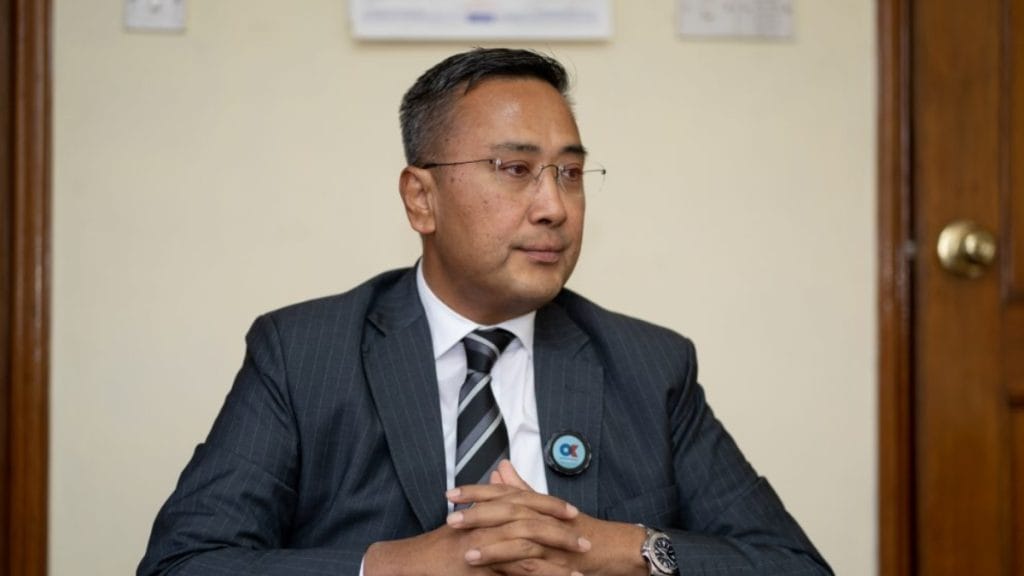
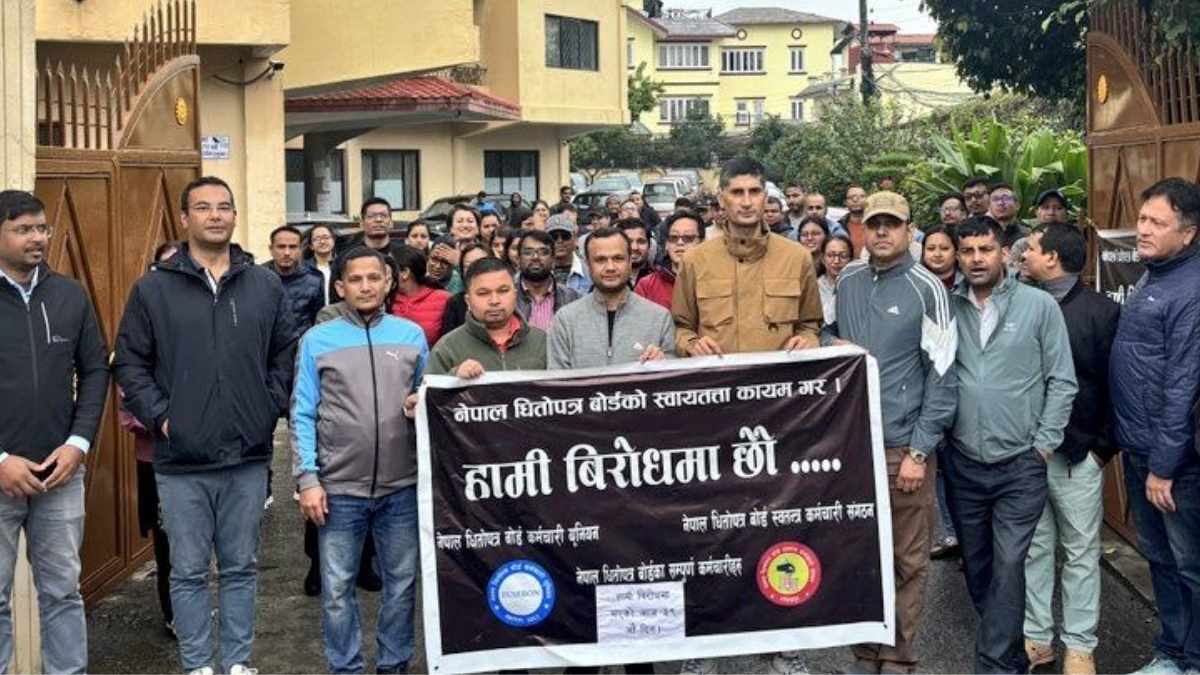
Tensions are rising inside Nepal’s capital-markets regulator. The chairman of the Securities Board of Nepal (Sebon), Santosh Narayan Shrestha, arrives for work escorted by police. He is met by his own staff, who block the entrance and are demanding his resignation. They have been on strike for weeks, halting the agency’s work. They are not protesting against their boss, exactly. They are protesting on behalf of the institution he leads, and against the government ministry to which he is seen to be subservient. The empty offices of Sebon have become the stage for a wider drama about governance, autonomy and the difficulty of building credible institutions.
The cause of the strike was a letter from the Finance Ministry. It ordered Sebon to scrap internal funds it had created for employee welfare and security, and to recover past payments. The ministry argued that the regulator had not sought approval for the funds. To the staff, however, the move was an existential threat. The demand for retroactive repayment was seen as a punitive assertion of control, one that undermined Sebon’s legal status as an autonomous regulator.

Nepal’s laws grant certain agencies operational independence to insulate them from political interference. In practice the boundaries of this autonomy are ill-defined and frequently tested. The Finance Ministry continues to treat many such bodies as subordinate departments. Sebon’s employees perceive the ministry’s order as an attempt to turn their institution into just another government office, stripping it of the self-governance promised by law. Their protest is a defence of that principle. By halting work and locking out their chairman, they are protesting what they believe is an abuse of power.
The chairman finds himself in an impossible position. Employees accuse him of timidity for failing to challenge the ministry’s order, perhaps through the courts. Instead Mr Shrestha appeared to acquiesce. His decision to return to work under police protection, rather than through negotiation, reinforced the impression that his loyalties lie with his political masters in the ministry, not with the institution he leads. This perception is worsened by long-standing rumours about the political nature of his appointment and allegations of misconduct, which he denies and which are under investigation. The strike is now about whether people trust him or not.
The problem reaches further than the regulator being stuck. Sebon licenses new securities, monitors the market and approves public offerings. All this is now frozen, denting investor confidence and stalling Nepal’s capital-markets development. The precedent is what truly alarms observers, however. If the Finance Ministry can dismantle Sebon’s autonomy so easily, other independent regulators—for banking, insurance or telecommunications—could face similar intrusions. The situation shows a basic flaw in how Nepal is governed.
The government has remained largely silent for wow, perhaps hoping the protest will dissipate. But the underlying tension will not vanish. For Nepal to build the trustworthy institutions essential for economic development, it must decide where autonomy truly lies, and then defend it. Without that clarity the regulators meant to oversee the markets may remain unable to govern themselves. ■




