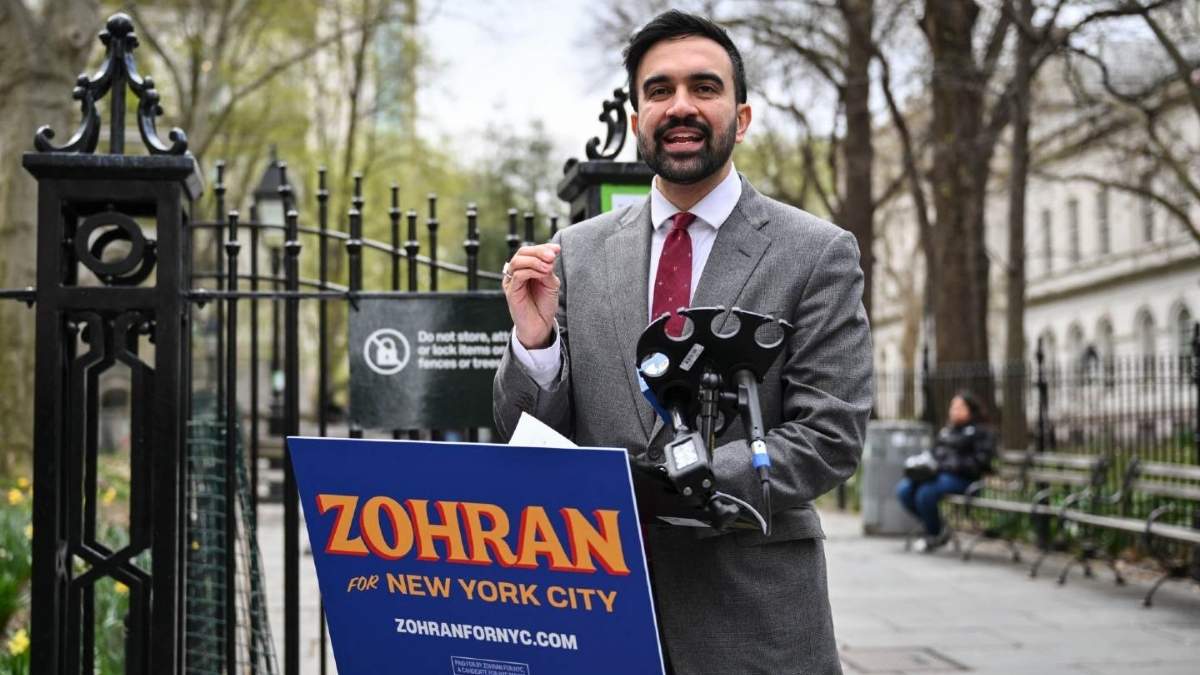
Photo: Angela Weiss/AFP via Getty Images
The recipe for a successful mayoral campaign seems simple enough. Promise to fill potholes, keep crime down and manage the city’s budget with care. The winning candidate is typically a seasoned public servant, known to the electorate and trusted by the business community. Zohran Mamdani, a 34-year-old state assemblyman until recently unknown to most New Yorkers, has followed none of these rules. Yet he stands on the brink of becoming the next mayor of America’s financial capital on November 4th. His campaign provides a blueprint for political success, one that relies on charisma, a tightly focused message and an ability to capitalise on the failures of the political establishment.
The first ingredient is timing. Mr Mamdani’s ascent was made possible by a vacuum in the Democratic party. The incumbent mayor became a hate figure after striking a deal with Donald Trump, and a former governor (who is running as an independent, and was recently endorsed by Mr Trump), Andrew Cuomo, was disgraced by scandal. Into this void stepped a fresh-faced outsider. A socialist of Indian descent, born in Uganda, he offered a clear contrast to the old guard. His campaign harnessed a deep-seated desire for change, proving that an establishment in disarray presents a golden opportunity for an insurgent candidate.
The second is a simple, resonant message. Whereas his rivals debated complex municipal issues, Mr Mamdani focused relentlessly on the soaring cost of living. He honed his platform through conversations with New Yorkers about their struggles with rent, groceries and bus fares. His promises of a rent freeze, free buses and universal child care may have seemed ambitious, but they spoke directly to the daily concerns of voters. A campaign built on bread-and-butter issues, it turns out, can drown out more complicated policy debates.
The third lesson is in building a movement. Mr Mamdani’s campaign is powered by more than 50,000 volunteers. He is a master of social media, commanding attention in a fragmented media landscape with an almost Trump-like flair. His youth and energy have galvanised young and working-class voters who feel overlooked. He has proved that a groundswell of grassroots support can overcome a lack of financial backing from traditional power brokers. Enthusiasm, it seems, can be a currency more valuable than donations.
Yet the final, and most nuanced, lesson lies in the art of the pivot. After winning the primary (the internal party election that decides who will represent the party in the main race), Mr Mamdani set about broadening his appeal. He met with hundreds of sceptical business leaders, assuring them he was not intent on “socialising their businesses”. He suggested his proposed tax rises were not ideological dogma, but one option among many. He apologised to police officers for past inflammatory remarks and signalled he would retain the competent police commissioner appointed by the current mayor. This demonstrates a crucial campaign truth: bold vision attracts core supporters, but pragmatic flexibility wins over the sceptics.
Mr Mamdani’s model may not be directly applicable to every city; New York is uniquely liberal. His lack of government experience remains a vulnerability his opponents eagerly highlight. Yet his campaign reveals a modern political truth. Voters are drawn to candidates who project authenticity and listen to their struggles. They reward a clear, compelling message over a long, cautious record. A successful campaign for mayor, it appears, is about understanding a mood. The politicians who learn this will be the ones who invent the future. ■