Photo: Bikram Rai
Nepal runs on money sent home by its citizens who have gone away. The remittances they post back—equivalent to a quarter of GDP—fill shops with goods and streets with motorbikes. But this flow of cash is a sign of failure rather than success. It props up consumption without creating the productive capacity to sustain it. The country’s factories have withered; its exports have collapsed. For a growing population of young people, seeking work abroad has become the default rather than a choice. If the next government wishes to keep them at home, it must make Nepal manufacture again.
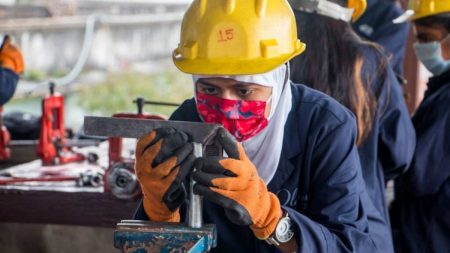
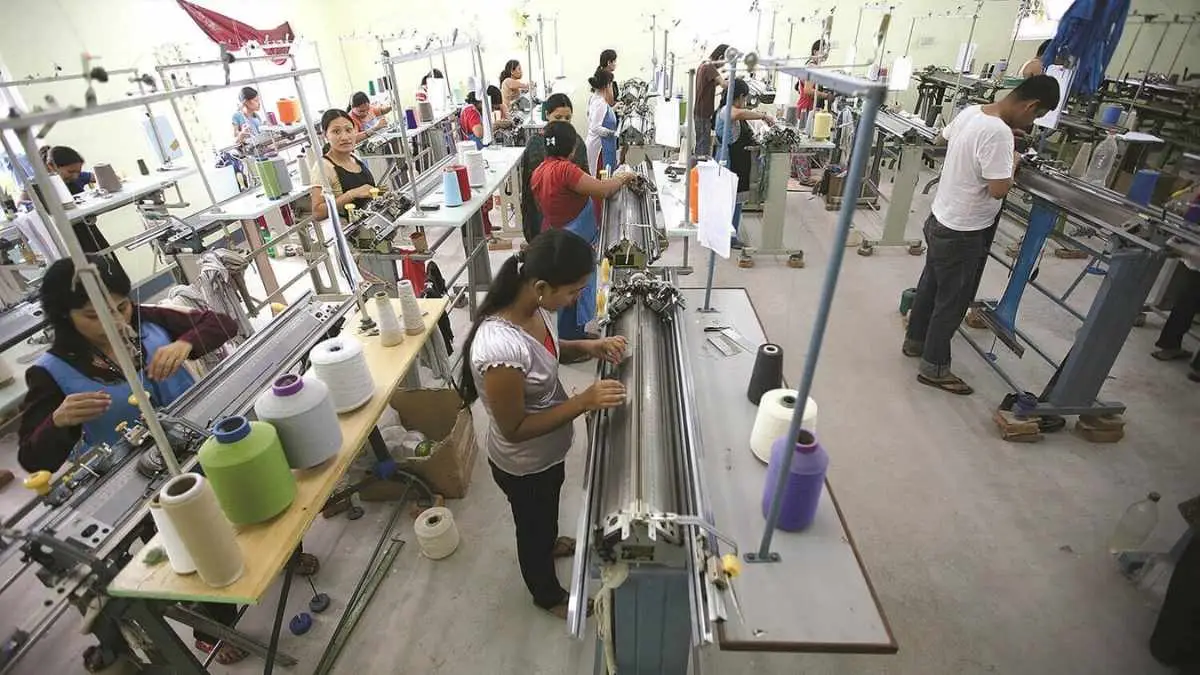
This is not a call for a nostalgic return to the smokestack industry, a fantasy for which Nepal has neither the capital nor the infrastructure. It is a pragmatic case for fostering light, labour-intensive production that can absorb workers and lift productivity. Manufacturing matters because it reliably raises output per person, generates useful things that can be sold abroad as well as creates a ladder of semi-skilled jobs for the non-graduate majority.
Most historical job growth in emerging economies has come from exactly this sort of activity. Remittance-fuelled consumption, by contrast, mostly pays for imports and produces few spillovers. It leaves the economy shallow and brittle.
The scale of the trouble is brutal. Each year more than 450,000 Nepalis join the labour force. The domestic economy creates perhaps 80,000 decent jobs. The rest must look elsewhere, perpetuating the cycle. The country’s manufacturing base has been eviscerated with exports falling from over a quarter of GDP in the 1990s to less than 7% today. The primary constraint is not a lack of workers, but rather a dearth of firms that can grow beyond a micro-size. Scaling up invites bureaucratic hassle, as well as demands for bribes and regulatory risk. Manufacturing is the sector that most naturally creates enterprises of 50 to 500 people, where skill ladders and capital accumulation begin.
A credible revival would focus on clusters of such firms outside the choked Kathmandu Valley, in growth corridors like Mugling-Pokhara or Itahari-Biratnagar. Promising sectors include processing agricultural produce (tea, coffee, spices) as well as apparel, basic pharmaceuticals and simple electrical components. Small factories that replace predictable consumer imports, like furniture and household goods, would improve the trade balance. The goal should be modular and attainable: 100 firms averaging 80 workers each creates 8,000 jobs. Multiply that by several dozen clusters over a decade, and adding modernised construction, a target of 1m new jobs by 2035 is plausible.
The real competition for these factories is not Bangladesh or Vietnam: it is the migration pipeline itself. They cannot initially match Gulf wages. So the local offer must be a package: predictable contracts, clear career progression, some social protections and a better quality of life. This calls for a sequenced policy push. Immediately, the government must unblock the system. A one-stop digital platform for business formalisation would help, as would time-bound labour-law clarifications and pilot clusters with reliable power. Next, technical education should be reoriented towards practical skills, and a national apprenticeship system created.
To pay for this Nepal should mobilise its greatest financial asset: the remittances themselves. Diaspora bonds and “remittance-matching” schemes, where the state provides partial funding for migrant investments in local enterprise, could channel this capital productively. In the medium term, industrial roads, reliable electricity and credit-guarantee facilities for small firms are critical. Reforms like tax credits for employers offering childcare would help bring more women into the workforce.
The political barriers are scary. Rent-seeking and red tape are endemic. The antidote is digitisation and transparency—publishing processing times and sanctioning officials who demand bribes. Resistance from import lobbies can be overcome by phasing in substitution policies with sunset clauses tied to export targets. Clientelist politics might even be harnessed by earmarking cluster benefits to specific constituencies, creating visible local wins.
There are risks, of course. Nepali firms may struggle to compete on cost. The answer is to focus on domestic substitution, regional niches and “ethical” exports rather than commodity goods. Remittances could dry up; manufacturing wages must gradually become a buffer. Policy reversals can be mitigated by transparent audits and legal sunset clauses.
Nepal does not need a miracle. It needs to build things others want to buy, and in doing so provide its youth a future at home. The alternative is to remain a nation sustained not by its own industry, but by the sweat of its citizens sent back from foreign lands. That is a recipe for perpetual dependence.■