ILLUSTRATION: KATMANDU JOURNAL
OVER 500,000 young Nepalis hit the labour market every year. Some 2,200 walk out of the country every day hunting work. Nepal has spent 35 years coaxing private enterprise, flinging markets open and begging for investment. Its economy still shits out companies too small to employ the people it educates. The country breeds traders and tiny firms by the million. It breeds industrialists willing to build at scale by the handful.
Some estimates suggest only a few Nepali business groups employ more than 10,000 people each. Golchha Organisation, Chaudhary Group, IME Group, Vishal Group, Shankar Group, Golyan Group and Bhatbhateni make the list. Some directly employ more than 20,000. Their empires sprawl across manufacturing, retail, energy, banking, hospitality and trade. They are the familiar names in an economy that has failed to produce many new ones at comparable scale.
Nepal started liberalising in the early 1990s, wrenching itself away from state controls towards private investment as well ascompetition and international trade. Reforms opened industries to private participation and slashed import restrictions. The plan was to make private enterprise the engine of growth. In several respects it worked. Banks multiplied, telecoms exploded, supermarkets appeared, private hospitals, schools and hotels became ordinary. The country got spectacularly good at distributing and flogging goods. It stayed pathetic at making them at scale.
That bites. A trading company earns money importing products and dumping them on Nepali shelves. A manufacturer must sink cash into machinery, factories, skilled workers, logistics and export markets before seeing a rupee back. The risks run higher, the payback drags longer. Nepal’s business environment has rewarded the first activity far more reliably than the second.
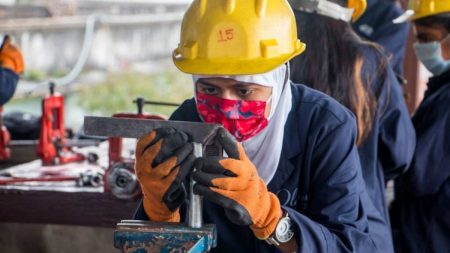
Manufacturing has consequently failed to become a serious employer. The World Bank’s 2025 Nepal Country Economic Memorandum traced the sector’s long slide from an already puny base. Crap transport links, crushing logistics costs, stifled competition and regulatory roadblocks make Nepali products expensive to build and a bastard to export. Hydropower promises cheap electricity yet industrial users still battle distribution failures, reliability nightmares and costs.
The rot starts with business size itself. Nepal’s National Economic Census 2018 counted 923,356 establishments. Nearly half operated unregistered. Micro, small and medium-sized enterprises accounted for 99.8% of establishments and 84.7% of employment. That sounds like a roaring entrepreneurial economy. In reality, most enterprises stay too small to buy machinery, hire formal management, fund research or chase new markets. A huge share exists to keep a household fed, rather than to grow into a substantial company.
New business formation has collapsed into something uglier. Department of Industry figures show registrations of micro, cottage and small enterprises crashing from 83,386 in 2020-21 to 21,029 in 2025-26—a fall of nearly 75%. Entrepreneurs bleat about scarce finance and lousy market access that never reaches genuine businesses. Nearly half of establishments stay outside formal registration, which makes securing bank finance or expanding beyond the immediate market a nightmare.
Money sits around. Productive investment crawls. The private sector’s share of total investment fell to 19% in 2025-26, according to reporting based on National Statistics Office estimates. Private-sector credit growth has stayed feeble too. The World Bank reported private credit inching up to 95.9% of GDP in FY2026 from 95.7% a year earlier, despite historically low lending rates. Banks have cash to lend; businesses lack the nerve or the appetite to borrow for expansion.
Political instability has poured petrol on the mess. Nepal has burned through 32 governments since multiparty democracy returned in 1990. Each change drags in fresh regulations and priorities. The International Monetary Fund’s April 2026 assessment fingered weak contract enforcement, corruption, administrative delays and constant political and bureaucratic churn as obstacles to long-term private investment. An entrepreneur weighing a factory that takes a decade to repay its cost finds uncertainty over the rules brutally expensive.
The result is an economy where migration has become the substitute for domestic enterprise. Remittances prop up household consumption and poverty reduction. They also let the country import goods its own factories might otherwise build. That helps families and the balance of payments yet it breeds a bizarre dependence: Nepalis leave to earn abroad and finance consumption in an economy that fails to create enough productive jobs for them.
Successful entrepreneurs exist, obviously. Chaudhary Group has marched from food and consumer goods into hotels, energy and financial services. IME Group has built across remittances and infrastructure. Golchha Organisation has shifted from jute manufacturing into steel, automobiles, technology and beyond. Their success proves large Nepali enterprises can compete and diversify. It also exposes the queue of companies failing to follow them.
The political response has largely meant flogging entrepreneurship through subsidised loans and investment jamborees. Such measures achieve sweet bugger all if businesses cannot obtain land, secure permits, enforce contracts or move products cheaply. The government also needs to spend its own development budget instead of sitting on it. Public investment in roads, electricity, industrial infrastructure and trade facilities cuts costs for thousands of firms at once. In FY2026, capital expenditure execution slumped to just 46.8%, according to the World Bank.
Nepal’s new government has inherited a rare parliamentary mandate and loud promises to fix the business climate. Its success hinges on making the rules predictable enough for companies to invest beyond the next financial year. It needs firms that manufacture, export, employ thousands and plough profits back in. A country cannot build an industrial economy out of small shops alone, however gutsy their owners.
Nepal threw its economy open to private enterprise in 1990. Thirty-five years later, the central question is why so few businesses have grown large enough to transform it. The next generation of Nepali entrepreneurs neeeeds a country where building one is worth the risk. ■