Image via Google
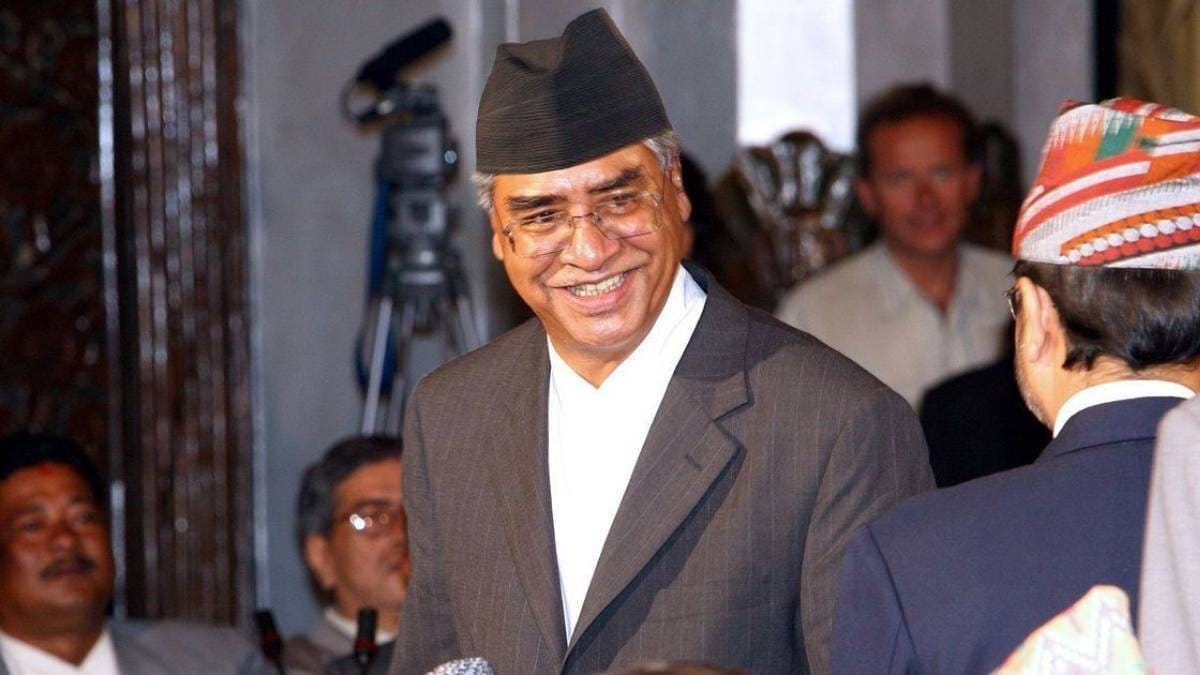
A POLITICAL PARTY, like any organism, has a choice: renew or perish. For the Nepali Congress, the party that midwifed Nepal’s democracy, that moment of truth is now. It must either convince its 79-year-old president, Sher Bahadur Deuba, to retire gracefully before an election in March, or accept a slide into terminal decline. The signs are that Mr Deuba, a five-time prime minister, would rather take his party down with him.
The drama kicks off where it always does in Nepal: inside the bureaucracy. To register his party for the election, Mr Deuba recently signed a form for the Election Commission himself. This was a claim to ultimate authority: the power to hand out candidacies, the lifeblood of political patronage. Angered, Gagan Thapa and Bishwa Prakash Sharma, the party’s two general secretaries and the standard-bearers for reform, flatly refused to accept it. Their demand is that a special party convention must be held first to elect a new leader. Over half the party’s convention representatives have signed a petition agreeing. Mr Deuba’s camp wants to wait until after the election. The stand-off is pure brinkmanship.
Why would a party risk electoral drubbing for the sake of one man’s pride? The answer is that the Nepali Congress is no longer a vehicle for ideas, but for comfort. Founded by exiles and revolutionaries, it once fought monarchs and made peace with Maoists. Its legacy is real. But that legacy has become a trap. The party machinery is such that it is content to preserve a gerontocracy. Delegates vote for patrons who control local perks, rather than for policies or vision. Under Mr Deuba the party has settled into a bland and brainless stasis, mumbling about “development” while Nepal’s youth flee abroad for work and its federal structure stutters.
Into this vacuum have stormed Mr Thapa and Mr Sharma. They hold senior titles but lack executive power. Their strategy is to mobilise the party’s base, proving that Mr Deuba’s patronage network is fraying. Mr Thapa, 49, is the only Congress leader with genuine appeal among the urban youth. He is digitally savvy and policy-literate—a brutal contrast to the old guard. Their argument is not about age per se, but about relevance. The median Nepali voter is 24. A party led by a man who entered high politics before that voter was born is screaming its own irrelevance.
The establishment’s calculation is cynical, though plain. By delaying a convention, Mr Deuba keeps control of election tickets. Loyalists get picked, win seats and, after the vote, form a parliamentary bloc that can defend his presidency. It is a plan to preserve the king even if it burns the kingdom. For the reformists are surely right: leading a party into a crucial election with a deeply unpopular leader is a suicide pact, especially after the brutal “Gen Z” protests that erupted in early September where over 70 young men were killed by bullets. The Congress’s main rivals, the communists, are divided and disliked. This should be a moment of opportunity. Rather the party is poised to snatch defeat from the jaws of defeat.
The tragedy is that the Nepali Congress has become the very thing it once fought. It battled autocratic kings in the name of popular sovereignty; yet runs itself like a court. It championed the rule of law yet treats its own internal statutes as suggestions. Mr Deuba has had a stunning career, surviving insurgencies and royal massacres. But his final foe is time and time is undefeated.
If the party’s elders care for its future, they must force a convention now. A new leader would not be a cure-all. Mr Thapa’s earnest policyism sometimes veers into its own kind of populism. But it would allow the Congress to democratise itself, to articulate a vision beyond patronage and to speak to a new generation. Otherwise the party will learn the hardest lesson in politics: that those who cling to power past their time usually end up losing everything (just ask Joe Biden). Mr Deuba should go. If he won’t his party must push him. ■