Image via Facebook
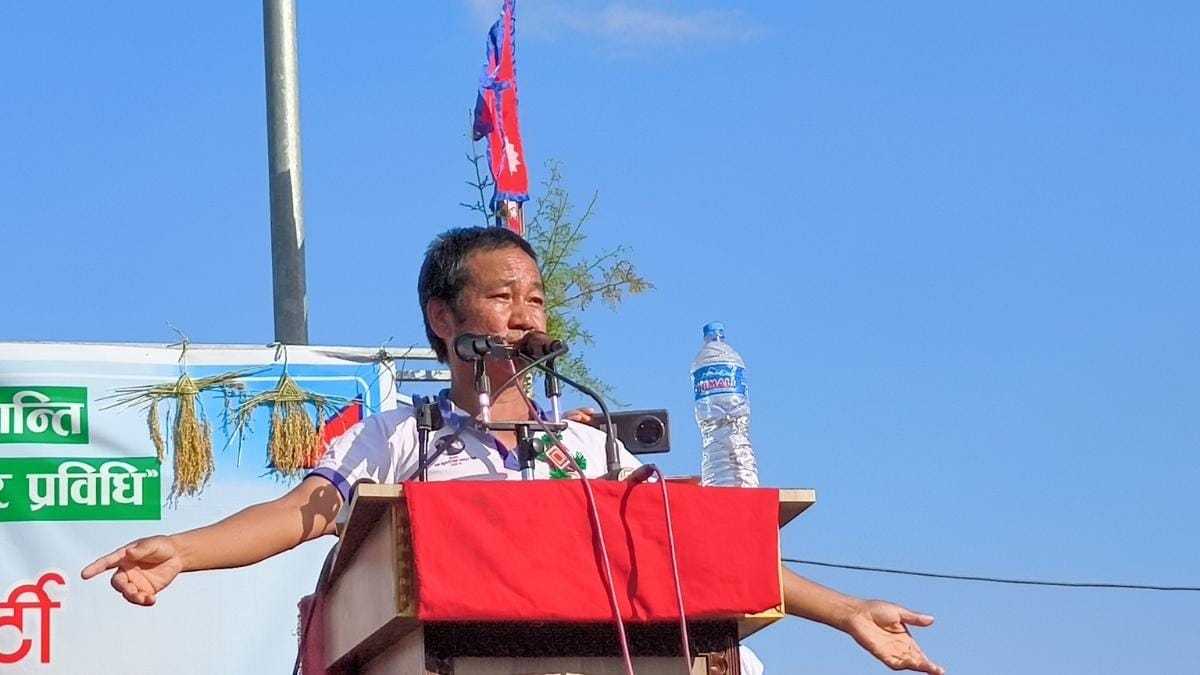
IN KATHMANDU power is usually measured by the size of one’s motorcade. The country’s political elite, a rotating cast of ageing men in tailored suits, prefer to govern from behind the tinted glass of sport-utility vehicles, flanked by security details and sycophants. But in Dharan, a city in the eastern foothills, power looks different. It looks like Harka Sampang, a mayor who wears rubber slippers and carries a shovel. He tells his constituents that if they want development they must dig for it themselves.
Mr Sampang, an independent who shocked the establishment by winning the mayoral seat in 2022, is now the most disruptive force in Nepali politics. He is not only a populist: he is the frontman for a cultural experiment he calls Shram Sanskriti, or “labour culture”. His proposition is stinging: Nepal is not poor because it lacks resources. It is poor because its citizens have forgotten the dignity of sweat. Whereas the central government in Kathmandu begs international donors for loans and aid, Mr Sampang promises to mobilise an army of volunteers to build infrastructure for free, should he win the March 5th elections. The effort is spearheaded by the newly-formed Shram Sanskr̥ti Party, or Labour Culture Party, which he leads.
Also read: Meet the man who could be Nepal’s next prime minister
To the polished graduates of the capital’s private schools, Mr Sampang’s methods appear rustic, even archaic. He rejects the trappings of office, viewing the “suit-boot” lifestyle as a sign of corruption and detachment. He argues that decades of foreign aid and remittance-fuelled consumption have turned Nepalis into a nation of dependents, waiting for outsiders to fix their pipes and pave their roads. His antidote is a dose of Calvinist austerity applied to the Himalayas: shun luxury, reject debt and pick up a tool.
This message strikes a chord in a country weary of the status quo. Since the introduction of democracy in 1990, and the subsequent end of the brutal civil war in 2006, Nepal has been governed by a cartel of parties—the Nepali Congress, the UML and the Maoists—whose leaders swap the prime ministership with dizzying frequency but achieve little. Corruption is endemic; the state bureaucracy is sclerotic. Mr Sampang mercilessly mocks these leaders, noting that while they cannot protect the Singha Durbar (the seat of government) from fires or decay, they claim to protect the nation. Their vision, he quips, is limited to taking loans from the Asian Development Bank and the World Bank to pay their own cadres.
Mr Sampang offers a visceral alternative. In Dharan he has led thousands of locals to the hills to lay water pipes, bypassing the cumbersome public procurement process. He claims to have achieved in months what the central planning commissions failed to do in years, all without a budget. By turning development into a festival of civic duty, he has tapped into a reservoir of nationalism that the old parties have neglected. His symbol for the upcoming elections is a handful of mato (soil). He makes voting feel like an act of love for the country.
Yet there are risks to governance by volunteerism. A modern state cannot run solely on enthusiasm and pickaxes. Complex infrastructure needs technical expertise and institutional funding, not only “two hands” and a good attitude. Critics worry that Mr Sampang’s rejection of institutional process borders on the messianic, and that his disdain for the rule of law—however broken that law may be—sets a dangerous precedent. There is also the question of scale: what works in a mid-sized hill town may prove impossible to replicate across a fractured nation of 30m people.
Nevertheless, the mayor in slippers has exposed a terrifying truth to the men in suits. He has demonstrated that the barrier to development in Nepal is a lack of trust, rather than a lack of money. The old parties treat voters as clients to be bought; Mr Sampang treats them as partners to be mobilised. Should the establishment fail to rediscover the art of honest public service they may find that the ground beneath them—the very soil Mr Sampang reveres—is shifting faster than they can run. ■