Illustration: Alvaro Bernis
It took only minutes. On October 10th, as Donald Trump outlined a plan for punishing tariffs on China, financial markets convulsed. The S&P 500 had its worst day in months. But the most violent reaction occurred in a newer, brasher asset class: cryptocurrency. Roughly 10,000 digital tokens plummeted, shedding nearly half their value on average within hours. Over $19bn in leveraged bets was vaporised by automated selling. This showed how cryptocurrency, once a niche curiosity, had become entangled with the workings of global finance and vulnerable to its shocks.
The first tremor came from investors trimming risky bets. Mr Trump’s proposed 100% tariffs sent investors scrambling for safety. Cryptocurrencies, which tend to rise and fall with investors’ appetite for risk, were hammered. Yet the scale of the collapse laid bare a specific vulnerability: extreme leverage. Many speculators use instruments called perpetual futures, which allow bets with borrowings of up to 100 times the original stake. When prices dipped, a cascade of automatic margin calls triggered forced selling. Market-makers, the firms that provide liquidity by constantly providing to buy and sell, retreated en masse. The fallout was a temporary breakdown in reliable pricing, as values for identical assets diverged wildly across trading platforms.
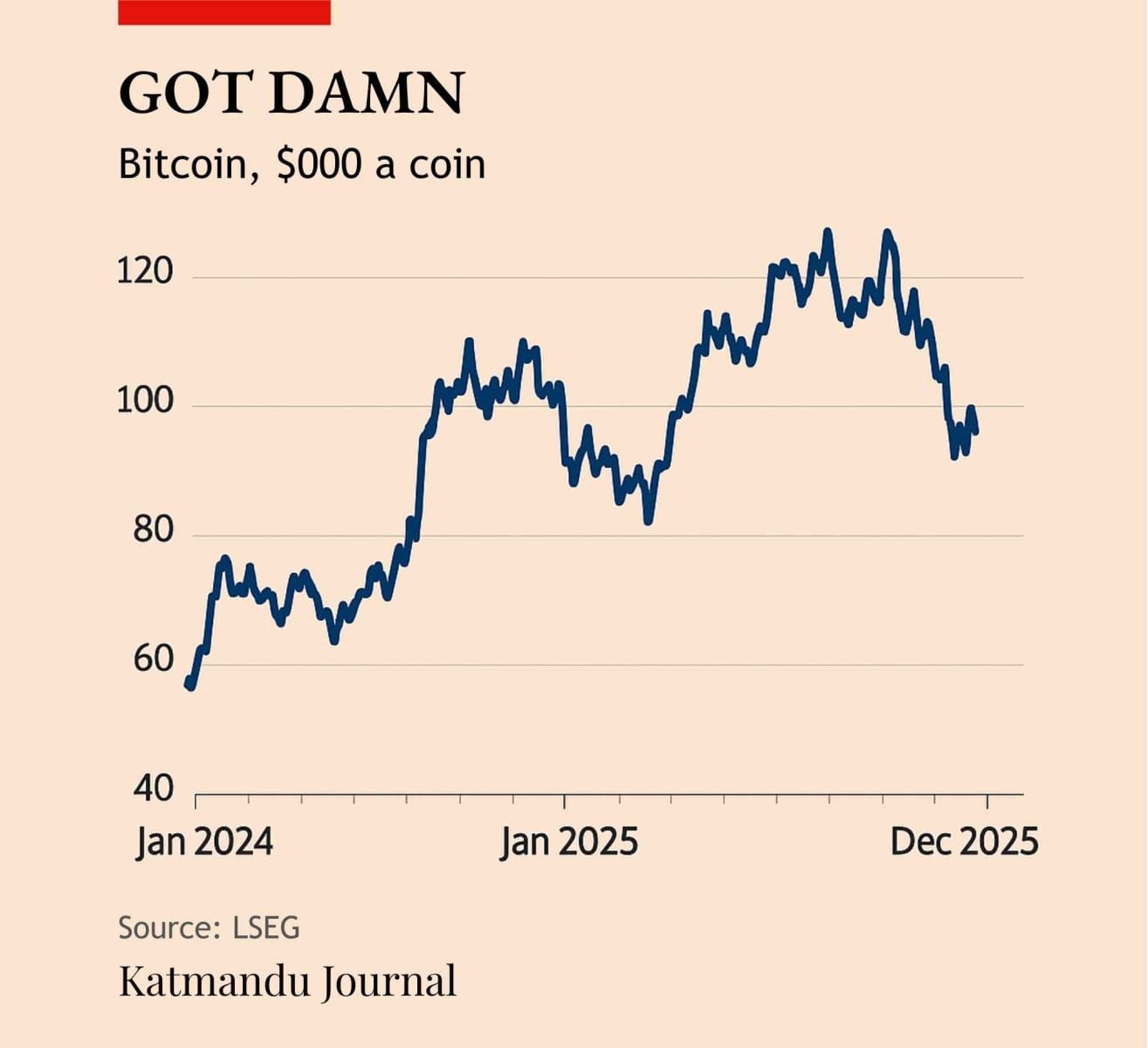
This structural frailty collided with an unfriendly macroeconomic backdrop. Earlier in the year, expectations of interest-rate cuts by the Federal Reserve had buoyed risky assets. Those hopes have faded. Higher rates on safe government bonds make speculative holdings like bitcoin less appealing. The cryptocurrency boom of 2020 was fuelled by near-zero rates; the reverse is now applying pressure. As institutional investors reassessed their exposure to overvalued technology stocks, they also trimmed their positions in digital assets.
The involvement of these big, traditional financial players is a critical change. Three years ago crypto markets were dominated by retail enthusiasts. Today BlackRock’s spot-bitcoin exchange-traded fund holds a stash of bitcoin worth over $50bn. Endowments and major banks have big exposure, too. This institutional embrace has provided legitimacy and capital, but it also means that trouble in crypto now seeps into wider portfolios. When prices tumbled, these professional managers faced withdrawals and de-risked their holdings, accelerating the sell-off.
A second wave of selling then came from ordinary investors. In November outflows from bitcoin ETFs hit a record $3.5bn. Retail holders, seeing the panic of professionals, sold their direct holdings. The parallel plunge in meme stocks like GameStop suggested a broad retreat from speculative assets. “The market is repricing risk across the board,” noted one portfolio manager in London. “Crypto is simply the most sensitive gauge.”
This sensitivity now cuts both ways. Analysis shows bitcoin’s price movements frequently precede dips in the S&P 500 or the Nasdaq by several minutes. A $1.8trn asset is visibly influencing a $32trn index. This tight correlation undermines the old argument that digital assets provide diversification; instead they amplify systemic swings.
Even supportive politics could not counter these forces. Despite Mr Trump’s pro-crypto stance, including proposed regulatory reforms and talk of a national bitcoin reserve, the market’s slide continued. Policy tailwinds were overwhelmed by macroeconomic and structural headwinds. Confidence was further rattled by renewed unease around the industry’s plumbing, specifically the stablecoins that act as its settlement layer. Traders flocked to Tether’s USDT token as a safe harbour during the panic yet its issuer faces lingering questions. S&P Global, a ratings agency, has expressed concern about the quality of the reserves backing the coin, noting a rise in riskier assets like corporate debt and secured loans. Although Tether says it is robust, the lack of a full, independent audit sustains doubt. A failure here would be catastrophic.
The collective behaviour of institutions and retail investors has thus created a feedback loop of volatility. Hedge funds cut positions, market-makers withdrew and although some sovereign wealth funds bought the dip, their purchases were insufficient to stabilise prices. The perception of the downturn has in turn shifted. What optimists called a healthy correction is now being discussed as a potential “crypto winter”, reminiscent of the prolonged freeze that followed the collapse of FTX, an exchange, in 2022.
Over $1trn has been erased from the total value of digital assets since October. Bitcoin itself is down by a quarter. Cryptocurrency has grown into a financial system of its own, with leverage and ties to global markets. Yet its base is still fragile, meaning the next jolt will travel widely. ■